
DIR Floortime for Apraxia of Speech: Where Play Fits in Your Child's Care
October 18, 2026
Explore DIR Floortime for apraxia of speech, its role alongside speech therapy, and practical ways to support communication through play.
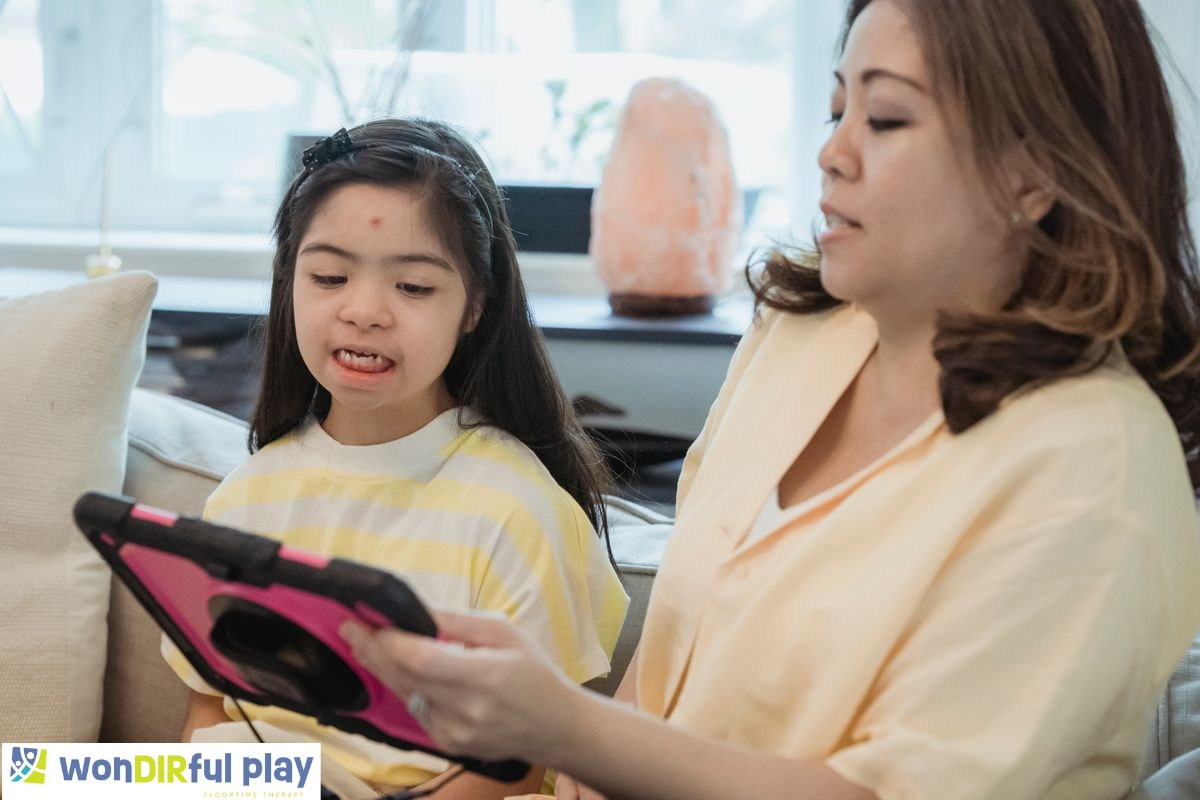
Key points:
- Apraxia affects planning the movements for speech and requires assessment by a speech-language pathologist.
- Floortime can support shared engagement, but it does not replace treatment for speech motor planning.
- Your child needs ways to communicate now, including gestures or a communication system when helpful.
Your child knows what they want to share. Getting the words out may still feel difficult. You might hear a word clearly one day and struggle to recognize it the next. That uncertainty can make conversations tiring for both of you.
If you are exploring DIR Floortime for apraxia of speech, start with a clear distinction. Play can create opportunities for connection. Apraxia also needs care that addresses the movements involved in speaking. Your child may benefit from both kinds of support within a coordinated plan.
This guide explains where Floortime therapy can fit. You will learn what a speech-language pathologist does and how to keep home interactions supportive. You will also find ways to recognize communication beyond spoken words.
You don't have to make every game a speech exercise. The aim is a practical plan that respects your child's effort and gives their message a way through each day.
Understand DIR Floortime for Apraxia of Speech
Childhood apraxia of speech affects how the brain plans speech movements. It does not reflect effort. Speech-language pathologists assess and treat the speech movement difficulties associated with childhood apraxia. Ask for someone with experience in childhood motor speech disorders.
Floortime focuses on interaction and development through relationships. It does not replace speech assessment or treatment.
Separate communication from speech production
Communication includes getting a message across. Speech production involves making spoken sounds. Progress in one area can outpace the other. Understanding Floortime and speech therapy together helps you ask more useful questions.
When exploring childhood apraxia and autism therapy, remember that these are different conditions. Autism does not automatically mean apraxia. Limited speech alone does not confirm either diagnosis.
For Floortime and motor speech planning, keep this boundary clear: enjoyable interaction can support participation. A qualified speech professional must guide the work on speech movements.
Get the Right Assessment Before Choosing Activities
Start with an evaluation. Ask the speech-language pathologist to explain what they observe. They may examine repeated speech attempts and responses to help. They also consider other explanations for unclear speech.
Speech apraxia therapy for toddlers may begin while the diagnosis remains uncertain. Young children sometimes produce too little speech for a firm conclusion. Ask what the findings mean.
Bring examples from daily life
Prepare a short list before the appointment:
- Words your child attempts often.
- Situations when speaking seems easier.
- Changes you notice across repeated attempts.
- Ways your child communicates without speech.
Share recordings only through an agreed private channel. Don't repeatedly test your child to collect perfect examples. Ask your care team who will coordinate information with the evaluating professional.
Ask how each service contributes
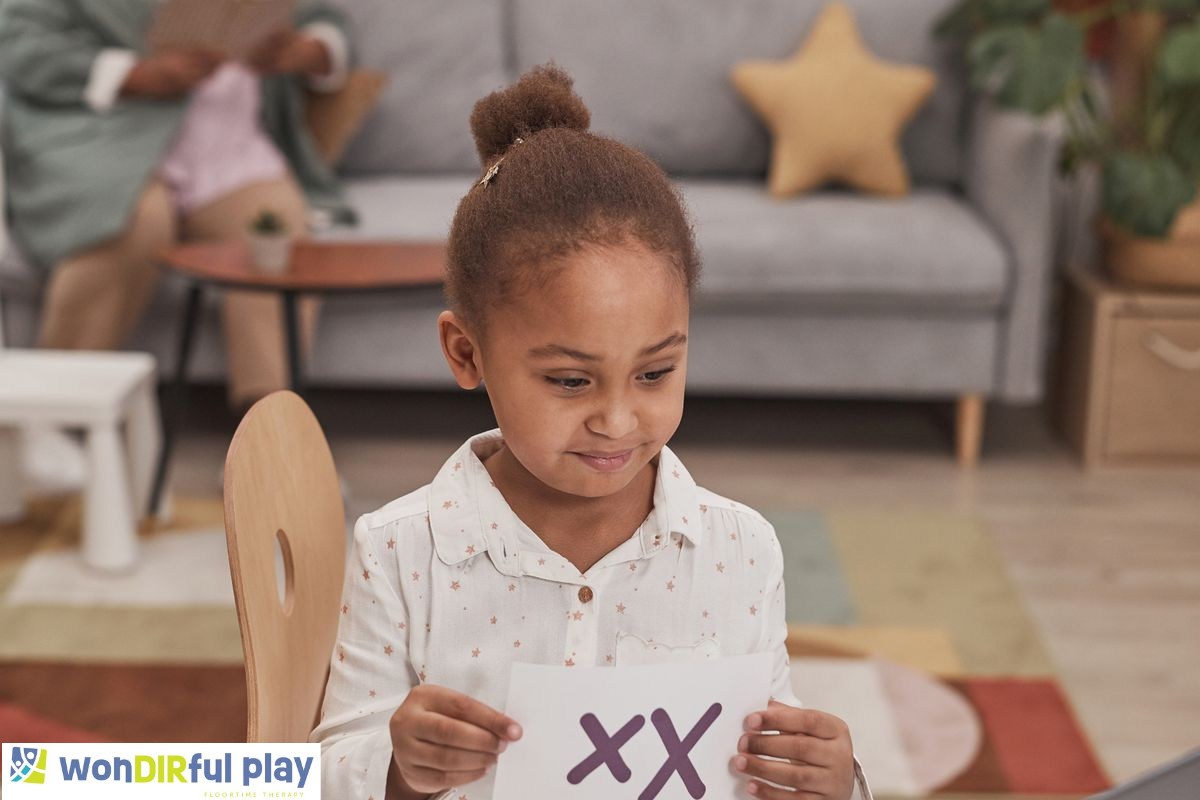
When comparing autism and apraxia treatment options, request a clear role for each provider. One may support engagement during play. Another may work directly on speech movement patterns.
Floortime for speech delay and apraxia should never become a reason to postpone a speech evaluation. Coordinate childhood apraxia and autism therapy across organizations too. Ask for coordination with your consent.
Use Play to Support Participation
DIR Floortime for apraxia of speech works best as a discussion about supportive interaction alongside appropriate speech care. Follow an interest your child already enjoys. Join without demanding a word first. Give your child time to notice your contribution.
For example, your child might push a car down a ramp. You can send another car after it. Pause for a gesture or sound. Respond to the message instead of turning the moment into a test.
Keep the interaction comfortable
When combining apraxia of speech and play therapy support, try these adjustments:
- Offer a choice your child can show you.
- Leave a short pause for a response.
- Accept a gesture without demanding repetition.
- Stop when your child signals they need a break.
Home-based sessions can help a provider understand familiar routines. Ask them to demonstrate a gentler interaction. Your child shouldn't need perfect speech to keep playing.
Follow speech guidance for practice
Ask the speech-language pathologist to choose any practice words. Request a demonstration of the help they want you to give. Don't add mouth movements or touch cues on your own.
Floortime and motor speech planning involve different treatment questions. The speech professional still decides how that target should work. Keep your child connected, not cornered.
Give Every Message a Way Through
Your child needs communication during speech development. Augmentative and alternative communication, or AAC, includes tools that support or replace speech. A simple picture board is one example. A device that speaks selected messages is another.
AAC can support communication without preventing speech development. Ask a qualified professional which options your child can access comfortably in daily life.
Make communication available during play
Consider these practical starting points with your child's provider:
- Keep the communication tool within reach.
- Include ways to request help or a break.
- Show a message while you speak naturally.
- Respond when your child uses the tool.
With AAC during Floortime, access should continue across the activity. Don't remove the system to encourage talking. Speech can remain a goal without becoming an entry requirement.
Help other caregivers respond consistently
Parent coaching can help you practice responding to different communication attempts. Invite the speech professional's guidance into that conversation. Share a few usable examples with other caregivers.
As you explore autism and apraxia treatment options, ask about communication access from the beginning. Your child deserves a way to participate today.
Review Progress Without Counting Only Words

Discuss separate goals for speech and shared interaction. Your child might communicate more comfortably before speech becomes clearer. That change matters. It does not prove that speech motor planning has improved.
For DIR Floortime for apraxia of speech, ask what each provider will measure. Coordinated therapy services should help you understand different kinds of progress. Request examples from ordinary routines.
Keep a brief observation record
- Note a message your child communicated successfully.
- Describe the help they needed.
- Record when an activity becomes tiring.
- Bring one question to the next appointment.
Speech apraxia therapy for toddlers should include regular review as abilities emerge. Ask whether the assessment or practice plan needs updating. Keep your observations factual. You don't need to grade your child.
When arranging care, check local service availability and relevant professional credentials separately. A nearby Floortime provider may not deliver specialist speech treatment. Floortime for speech delay and apraxia needs that distinction to stay clear. Build a team around the needs you actually have.
Frequently Asked Questions
Can DIR Floortime for apraxia of speech replace speech therapy?
No. Floortime can support engagement and communication during shared activities. Apraxia needs assessment and treatment focused on speech movements. Ask a speech-language pathologist with relevant experience to guide that part of your child's care.
How do childhood apraxia and autism therapy needs differ?
Apraxia concerns planning speech movements. Autism involves broader developmental differences that can affect communication and interaction. Your child may have either condition or both. An assessment should identify the support your individual child needs.
Does Floortime and motor speech planning work use the same methods?
No. Floortime emphasizes interaction through relationships and shared activities. Motor speech treatment uses specific practice selected by a speech-language pathologist. Play may provide a setting for that practice when the professional directs its use.
Can apraxia of speech and play therapy support work together?
Yes, when providers define their roles clearly. Play can help your child participate in enjoyable interaction. Speech treatment addresses specific movement needs. Ask the team to agree on goals and explain how home practice should look.
What should I expect from speech apraxia therapy for toddlers?
Expect an assessment that considers your child's available speech and development. The diagnosis may remain provisional at first. Ask about suitable treatment targets and communication supports. Regular review helps the provider adjust care as skills emerge.
Let Play Open the Conversation, Give Every Message Room
Your child's message matters, even when a word comes out differently than expected. Shared play can offer a calmer space for connection. Keep speech practice within your professional's guidance. Exploring DIR Floortime for apraxia of speech starts with understanding how these supports fit together.
WonDIRfulPlay offers relationship-focused Floortime services and family support. Ask how the team can coordinate with your child's speech-language pathologist. Discuss Floortime for speech delay and apraxia alongside your existing care. Clear roles help you compare autism and apraxia treatment options with confidence.
Contact us at 732-353-1616 to discuss apraxia of speech and play therapy support. Bring your questions and current goals. Take a practical step toward interactions that give your child's communication more room to grow.
Recent articles


With WonDIRfulPlay, growth feels effortless and joyful. Our DIR floortime therapy services in Lakewood, NJ focus on building emotional connections, communication, and social confidence while addressing sensory and behavioral challenges.
For compliance matters, please call 732-523-9070 or email compllance@wondirfulplay.com

