
DIR Floortime for Down Syndrome and Global Developmental Delay: Does It Work Beyond Autism
September 24, 2026
Does DIR Floortime work beyond autism? See how it supports Down syndrome, global developmental delay, and speech delays.
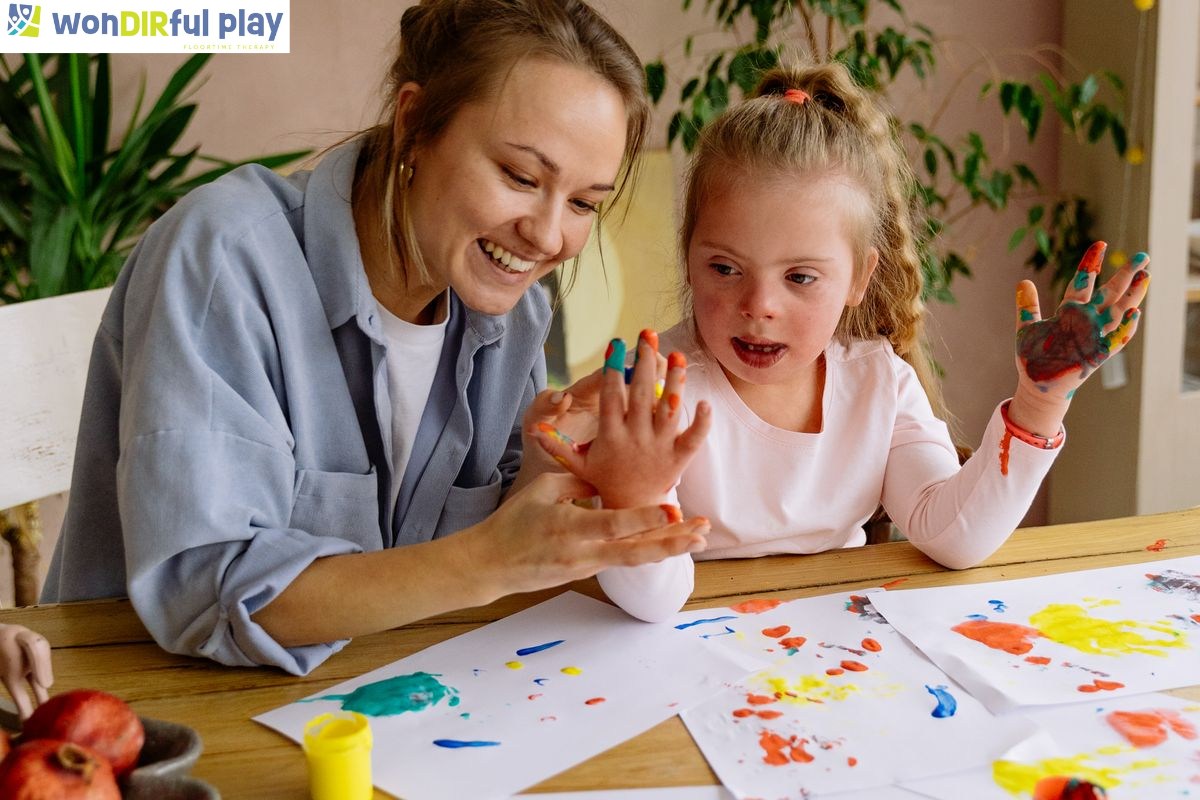
Key points:
- DIR Floortime for children with Down syndrome builds connection and communication at a pace matched to each child's own developmental profile.
- Find out if Floortime only is for autism, and how the model supports global developmental delay and speech-only diagnoses too.
- See how the DIR model for developmental delays flexes across diagnoses, ages, and starting points, not just one narrow use case.
Floortime gets talked about mostly in the context of autism, but that is only part of the story. DIR Floortime for children with Down syndrome, global developmental delay, and other conditions has quietly become one of the more flexible therapy options out there. That flexibility comes from how the model actually works. It builds on connection, emotion, and individual differences instead of targeting one diagnosis.
In this guide, we will look at whether is Floortime only for autism, how the approach applies to Down syndrome and global delays, and what parents of kids without an autism diagnosis should actually expect from DIR Floortime therapy. If your child has a different diagnosis entirely, or no diagnosis yet, this is still worth a close read.
Is Floortime Only for Autism
Short answer: no. The DIR model for developmental delays was built around a much broader idea than autism alone. It focuses on how a child processes the world, regulates emotion, and connects with the people around them, all things that matter regardless of diagnosis. That flexibility is exactly why DIR Floortime for children with Down syndrome has grown so much as a recognized option.
Who the DIR Model Actually Serves
Floortime shows up across a wide range of profiles. Providers use it with kids who have autism, speech delays, sensory processing differences, ADHD traits, and genetic conditions like Down syndrome.
The model adjusts to a wide age range, from toddlers through the early school years and beyond. Speech-only cases make up a large share of referrals too, which is why Floortime for toddlers with speech delays shows up constantly in intake calls.
Is Floortime only for autism is a fair question to ask, but the honest answer is that autism is simply the most talked about use case, not the only one. This is exactly why Floortime therapy for children without autism keeps growing as a recognized path, not an exception.
DIR Floortime Goals by Diagnosis
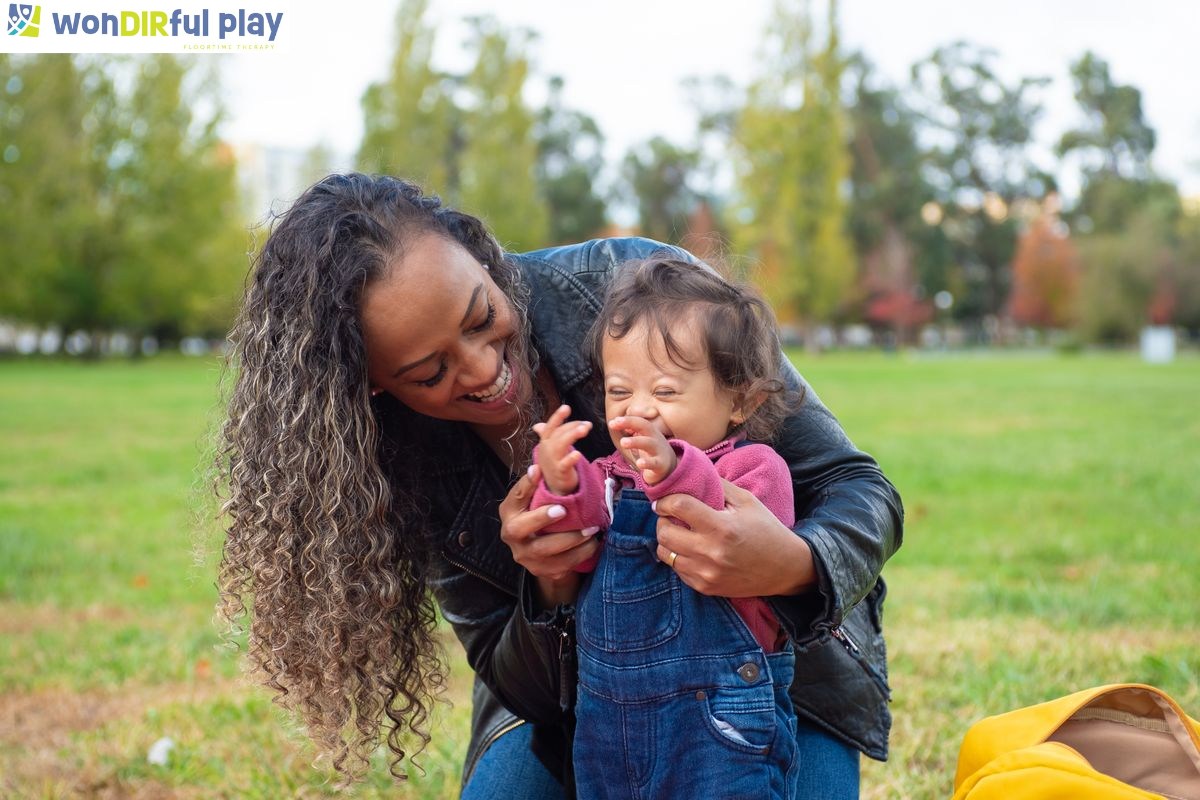
Every child's plan looks a little different, but it helps to see how goals tend to shift depending on diagnosis. None of these categories are rigid boxes. A lot of kids show traits that overlap more than one row, which is part of why the functional emotional developmental levels framework matters more than the diagnosis label itself when a provider actually builds your child's plan.
DIR Floortime for children with Down syndrome and every other diagnosis listed here all draw from the same underlying model. What changes between rows is pacing and emphasis, not the core approach itself.
DIR Floortime for Children with Down Syndrome
DIR Floortime for children with Down syndrome focuses on the same core goals as it does with any child, building connection, communication, and flexible thinking, just paced to fit each child's own developmental profile.
What Makes It a Good Fit
Families searching for developmental therapy for Down syndrome in NJ often start with exactly this kind of play-based evaluation. Kids with Down syndrome often show strong social motivation but need extra support building complex language and problem-solving skills. That mix fits well with Floortime's play-based, relationship-first structure. Resources from the National Down Syndrome Society and background from NICHD both note that children with Down syndrome typically reach milestones later, but steadily, with the right support in place.
Developmental therapy for Down syndrome in NJ increasingly includes Floortime alongside speech and occupational therapy, since the approaches complement each other well. Families often see it paired with broader developmental delay support and in-home DIR Floortime sessions that fit around a child's existing therapy schedule.
Floortime for Global Developmental Delay
Floortime for global developmental delay works a bit differently than a single-diagnosis approach, since GDD affects multiple areas of growth at once, not just one skill. Many of the same principles behind DIR Floortime for children with Down syndrome apply here too, just adjusted for a broader set of goals.
Building Skills Across Every Domain
Because Floortime is not built around one narrow target behavior, it naturally supports multiple domains inside the same play session. A single fifteen-minute play interaction might touch language, motor planning, and emotional regulation all at once. This is different from ABA-style approaches, which tend to target one specific behavior at a time.
Families managing global delays often lean more heavily on family training and support, since so much of the progress happens through daily repetition at home, not only during scheduled sessions.
Combining Floortime with Other Therapies for Down Syndrome and GDD
Floortime rarely stands alone for children with Down syndrome or global developmental delay. It tends to work best as one piece of a broader team effort, with each provider aware of what the others are working on.
- Occupational therapists often work alongside Floortime providers to support motor planning, especially early on. Some families start with occupational therapy paired with Floortime before adding more providers to the mix
- Speech-language pathologists frequently coordinate directly with a child's Floortime sessions, especially when language is the primary concern for the family
- Physical therapy sometimes joins the mix for children with lower muscle tone, which is common with Down syndrome and some cases of global developmental delay
Providers across New Jersey increasingly build these combined plans from the very start, rather than adding therapies one at a time after the fact once a gap becomes obvious. Coordinating providers this way also cuts down on conflicting advice, since everyone on the team is working from the same picture of your child instead of separate, disconnected notes.
None of this needs to happen all at once. A lot of families start with just one therapy, usually the one addressing the most pressing concern, then add others gradually as new needs become clear. There is no required order, and no penalty for starting small and building out the team over time as your child grows.
Floortime Therapy for Children Without Autism, and for Toddlers with Speech Delays
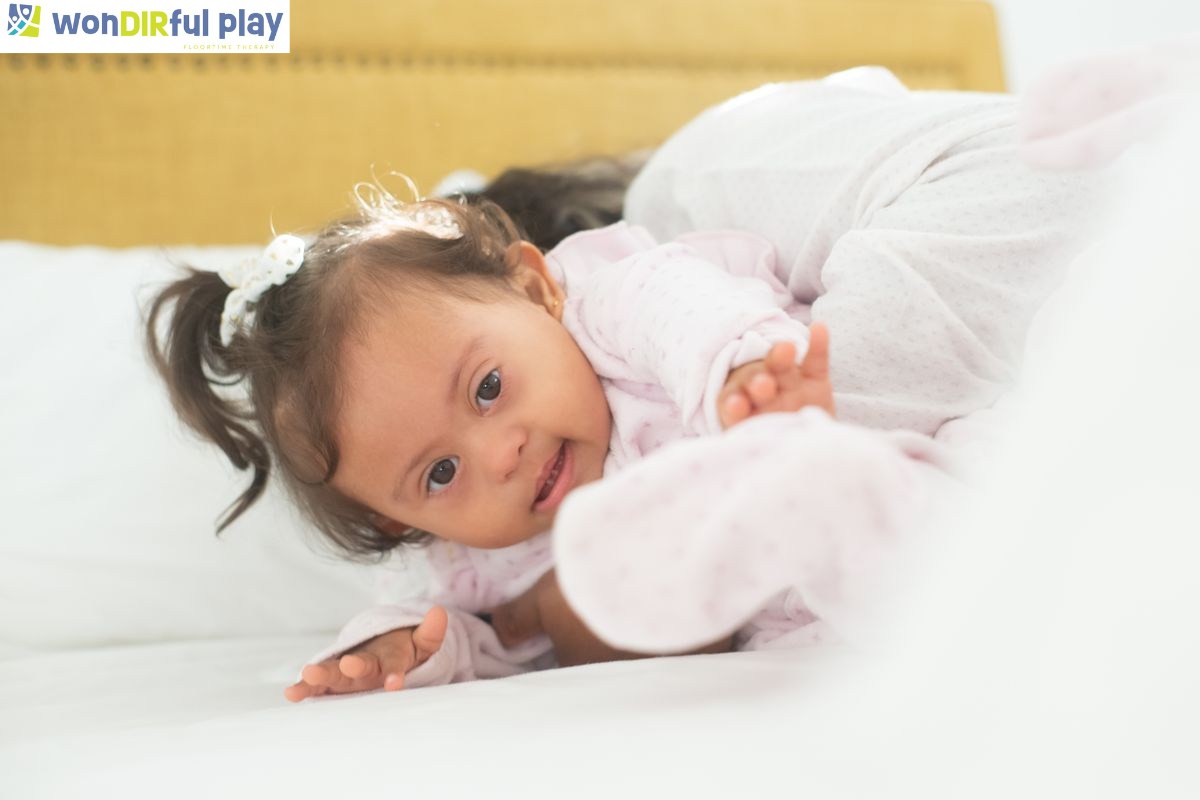
Floortime therapy for children without autism is more common than most parents realize. A large share of families come to Floortime because of a speech delay, not an autism diagnosis.
Floortime for toddlers with speech delays works especially well because so much of early language grows out of shared attention and back-and-forth play, exactly what Floortime practices session after session. Some of these kids later move into school-based support as they transition into a classroom setting, carrying the same connection-first habits with them.
It is worth saying plainly that a speech-only diagnosis, or no diagnosis at all, is more than reason enough to look into Floortime. You do not need a label on paper before starting. Many families simply notice their toddler is behind on talking, try a few sessions, and decide from there whether it feels like the right fit for their particular child.
Frequently Asked Questions
Is Floortime only for autism, or does it help with other conditions too?
Is Floortime only for autism? is a common misunderstanding. It supports Down syndrome, speech delays, sensory differences, and global developmental delay just as well.
How does DIR Floortime for children with Down syndrome differ from standard therapy?
DIR Floortime for children with Down syndrome follows the same connection-first structure as any Floortime program, just paced around each child's own developmental timeline.
Can Floortime for global developmental delay address more than one skill at a time?
Yes. Floortime for global developmental delay works well precisely because each play session can touch language, motor skills, and emotional regulation together.
Is developmental therapy for Down syndrome in NJ hard to find?
Not usually. Developmental therapy for Down syndrome in NJ is increasingly available through providers who combine Floortime with speech and occupational therapy.
Does the DIR model for developmental delays work for toddlers with only a speech delay?
Yes. The DIR model for developmental delays applies well to toddlers with an isolated speech delay, since so much of the model centers on communication through play.
One Model, Many Paths Forward
Every child's path looks different, whether the diagnosis is DIR Floortime for children with Down syndrome, a global delay, autism, or nothing formal yet at all. What matters is a therapy model flexible enough to meet your child exactly where they are, not where a textbook says they should be.
Wondirful Play works with children across a wide range of diagnoses and developmental profiles, building each plan around your child's own pace and personality.
Contact us to talk about whether DIR Floortime could be the right fit for your child, whatever their diagnosis looks like.
Recent articles


With WonDIRfulPlay, growth feels effortless and joyful. Our DIR floortime therapy services in Lakewood, NJ focus on building emotional connections, communication, and social confidence while addressing sensory and behavioral challenges.
For compliance matters, please call 732-523-9070 or email compllance@wondirfulplay.com

