
How Many Hours of DIR Floortime Does Your Child Actually Need Each Week
September 17, 2026
How many hours of DIR Floortime does your child need? See what shapes session frequency and realistic weekly totals.
Key points:
- DIR Floortime session frequency is not one fixed number. It shifts based on your child's age, goals, and how quickly skills are building.
- Get a realistic answer to how many hours of Floortime therapy per week actually tends to help, backed by real research.
- Learn how to build a Floortime treatment plan that fits your real schedule, not an idealized version of your week.
One of the first questions parents ask once they commit to therapy is simple. How much is enough? DIR Floortime session frequency varies a lot from child to child, and that is actually a good thing. This is not a program with one fixed dosage for every kid. It adjusts based on your child's needs, your family's schedule, and how quickly skills are building.
In this guide, we will break down what actually shapes session frequency, what research says about how many hours of Floortime therapy per week tends to help, and how to build a Floortime treatment plan that fits into real life, not just a chart. We will also cover DIR Floortime therapy basics so the hours make more sense in context.
What Actually Shapes DIR Floortime Session Frequency
There is no single number that fits every child. DIR Floortime session frequency depends on a mix of factors, and providers weigh them together before recommending a starting point.
Age, Goals, and Starting Point
Younger children often start with more frequent, shorter sessions, while older kids may do fewer, longer ones. Providers also look at where your child sits in the six stages of DIR Floortime therapy, since a child working on early connection and regulation may need more consistent contact than one refining more complex social skills.
Every provider's Floortime intensity recommendations start from a slightly different baseline, then adjust from there. Providers also map out a rough Floortime therapy schedule during that very first conversation.
- Your child's age and current developmental stage
- How many other therapies are already part of the week
- Your family's ability to practice family training and support strategies between sessions
- Insurance coverage and provider availability
How Many Hours of Floortime Therapy Per Week Is Typical
DIR Floortime session frequency and total weekly hours go hand in hand, but they are not the same thing. Parents often want a number, so here is a reasonable range. Many programs land somewhere between 10 and 20 hours a week when you combine direct sessions with parent-led play at home. That said, how many hours of Floortime therapy per week works best is really about consistency more than raw hours.
What Research Says
A well-known pilot study published in the journal Autism found meaningful gains in children whose families added home-based Floortime at an average of about 15 hours a week over a few months, according to research summarized on PubMed. The official DIRFloortime research page also points to multiple studies supporting consistent, moderate-intensity practice over sporadic, high-intensity bursts.
Weekly Floortime hours for autism tend to matter less than whether those hours happen regularly, week after week. A steady rhythm beats an occasional marathon session almost every time. None of this means weekly Floortime hours for autism are fixed forever; they shift as your child grows.
Structured provider sessions often pair well with parent training, and some families combine both with school-based support once their child enters a classroom setting.
DIR Floortime Hours by Age Group

Age plays a bigger role in DIR Floortime session frequency than most parents expect going in. A two-year-old and an eight-year-old are not going to follow the same weekly plan, even if they are working on similar underlying goals.
The table below gives a rough starting point by age, though your provider will fine-tune it based on your child's specific needs. If you are curious about how long it takes to see results, the hours below are usually the baseline providers reference when setting expectations.
These ranges are not strict rules, more of a starting map. A younger child working through a tough sensory phase might need more hours temporarily, while an older child doing well might taper down for a while. Weekly Floortime hours for autism almost always flex around real-life circumstances, not the other way around.
Building a Floortime Treatment Plan That Fits Your Family
A Floortime treatment plan works best when it matches your actual life, not an ideal version of it. Providers usually start conservative, then adjust hours up or down based on how your child responds. DIR Floortime session frequency often gets adjusted more than once during the first few months.
Floortime Therapy Schedule Examples
A typical Floortime therapy schedule might look like two or three provider sessions a week, plus daily short bursts of parent-led play at home. Some families use progress tracking tools to see what is actually working before adjusting the plan further.
- Two provider sessions plus daily home practice
- One in-person session paired with telehealth Floortime for flexibility
- Intensive short-term blocks during school breaks, then a lighter maintenance schedule
Floortime intensity recommendations shift over time. What your child needs in month one often looks different by month six.
What Insurance and School Programs Typically Cover
Hours from a provider are only part of the picture. Many families combine paid sessions with hours covered through insurance, early intervention, or a school IEP, which changes how many additional hours actually need to come out of pocket.
- Private insurance often covers a set number of sessions a year, depending on your plan and diagnosis code. Ask specifically whether DIR Floortime therapy is covered under your policy before assuming it is not
- Early intervention and school-based services sometimes fold Floortime-style strategies into existing occupational or speech therapy hours, especially for younger children
- Out-of-pocket sessions fill in the remaining gaps, particularly if you want more hours than insurance approves for a given year
If you are just getting started, starting an intake conversation is usually the fastest way to find out what your specific plan actually covers, rather than guessing from a policy document alone. A Floortime treatment plan built around your real coverage tends to hold up better over time than one built around a best-case guess.
How Long Is a Floortime Therapy Session, and Does It Add Up
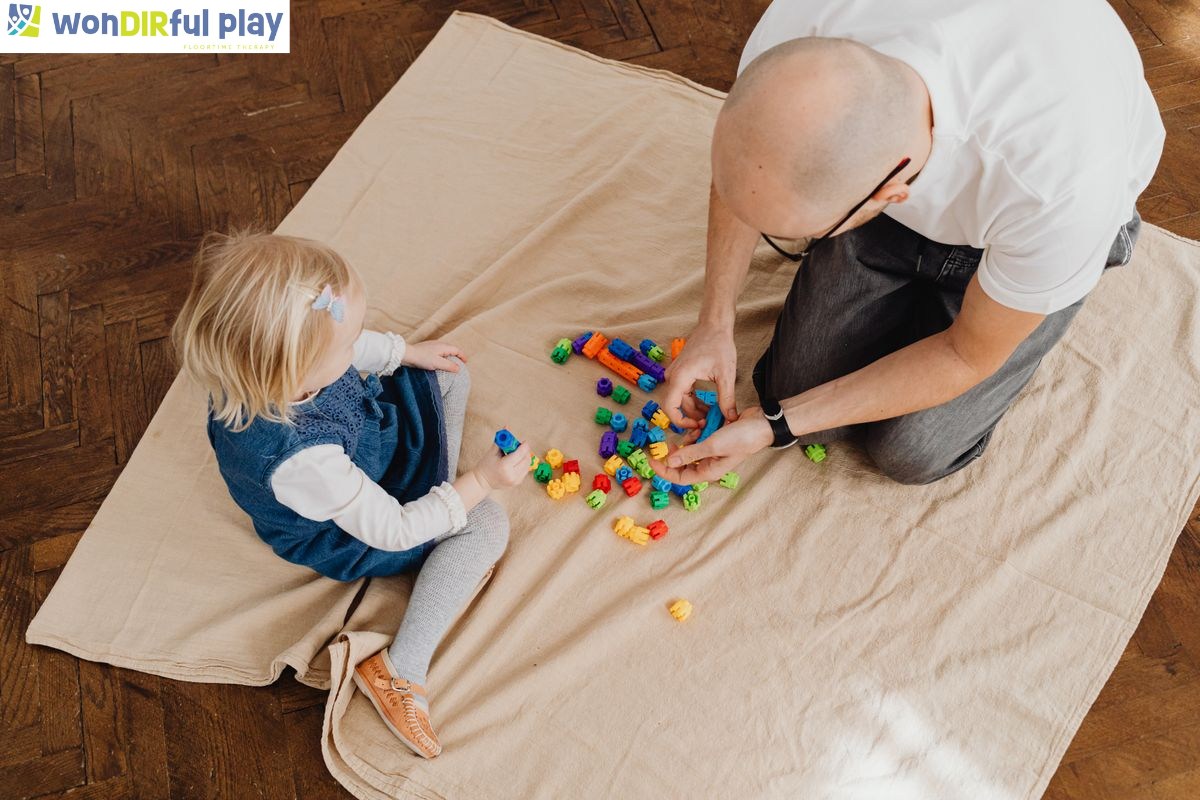
How long a Floortime therapy session usually lasts comes down to 45 minutes to an hour for most providers. Add up two or three of those a week, plus home practice, and you get a realistic weekly total without burning out your child or your schedule.
In-home DIR Floortime sessions tend to run a bit more efficiently too, since there is no travel time eating into the hour, and your child is already comfortable in the space.
Frequently Asked Questions
What is a normal DIR Floortime session frequency for toddlers?
Most toddlers start with two to three sessions a week. DIR Floortime session frequency often increases slightly if a child is working through early regulation and connection goals.
How many hours of Floortime therapy per week actually make a difference?
Research generally supports somewhere around 10 to 15 hours a week when combining provider sessions with home practice. How many hours of Floortime therapy per week matter less than consistency, and weekly Floortime hours for autism work best spread out evenly rather than clustered.
Does a Floortime treatment plan ever change?
Yes, often. A Floortime treatment plan gets reviewed regularly and adjusted as your child grows, meets goals, or needs a different level of support.
What does a typical Floortime therapy schedule include?
Most families follow a Floortime therapy schedule with a few weekly provider sessions plus short daily play at home, sometimes mixed with telehealth for flexibility.
How long is a Floortime therapy session usually?
How long a Floortime therapy session is depends on the provider, but most run between 45 minutes and an hour, a length that keeps toddlers engaged without pushing past their limit.
Finding Your Family's Floortime Rhythm
There is no perfect formula for DIR Floortime session frequency. There is only the rhythm that actually fits your week and keeps showing results. Consistency, not intensity, tends to move the needle over time.
Wondirful Play helps families build a Floortime schedule around real life, not a generic chart, adjusting Floortime intensity recommendations as your child grows and changes.
Reach out to us to talk through what a realistic weekly plan could look like for your child.
Recent articles


With WonDIRfulPlay, growth feels effortless and joyful. Our DIR floortime therapy services in Lakewood, NJ focus on building emotional connections, communication, and social confidence while addressing sensory and behavioral challenges.
For compliance matters, please call 732-523-9070 or email compllance@wondirfulplay.com

