
Does Your Child Need a Floortime Centre Or In-Home Sessions?
October 23, 2025
Explore whether your child would benefit more from a specialised Floortime centre or in-home sessions with this detailed, evidence-based guide.
Key points:
- Choosing between a specialised centre and in-home sessions depends on your child’s needs, routines and learning style.
- Evidence shows both centre-based and home-based models can yield positive outcomes when well implemented.
- Practical factors, caregiver involvement, consistency, environment and flexibility, often matter more than location alone.
Choosing between in-home sessions and a Floortime center can feel overwhelming. Both options nurture connection, but in different ways. Some children flourish in the comfort of familiar surroundings, while others thrive in structured, sensory-rich environments that stretch their social and communication skills.
DIR Floortime looks beyond convenience to match your child’s sensory profile, emotional needs, and family goals. The right setting makes all the difference in how progress unfolds day to day. In this guide, we’ll help you weigh the benefits, explore how each environment supports co-regulation, and clarify which approach can best unlock your child’s next stage of growth.
What „Floortime” is and how setting matters
The DIR/Floortime model (Developmental, Individual-differences, Relationship-based) emphasises play, relationship and developmental growth rather than simply behaviour-modification. It can improve emotional regulation, social interaction and communication in children with developmental delays or autism spectrum challenges.
When choosing a setting, centre vs-home, it is not merely the therapy model that matters but how the environment, schedule and caregiver-engagement are structured. Studies show that qualities like consistency and caregiver involvement often influence outcomes more than simply whether the setting is at home or in a facility.
Before making the decision, here are important factors to consider.
Advantages of a Centre-Based Floortime Programme

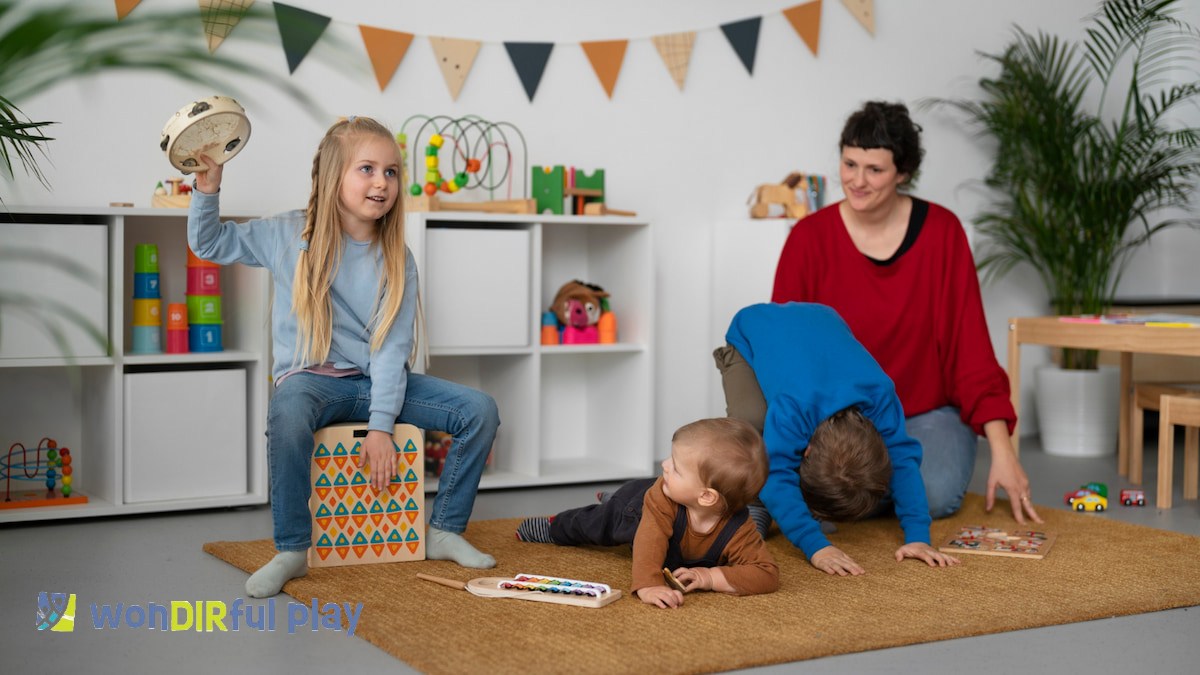
A centre-based setting offers a designated space, often with multiple children, structured schedules, and professional-led sessions. Here are key benefits:
- Structured environment: Therapy rooms are set up free of household distractions; children may find the professional space more engaging and focused.
- Peer interaction and socialisation: If the centre has multiple children, there is an opportunity for peer interactions, which are valuable for social skills generalisation.
- Team coordination: Therapists, speech and occupational specialists may be co-located, making multidisciplinary coordination easier.
- Monitoring and supervision: Because everything is contained at one site, clinical supervision and data-collection may be more consistent. Indeed one study found “participants demonstrated higher learning rates during treatment provided in a centre setting than in home-based interventions".
When a centre might be the right choice:
- If your child thrives in novel environments, engages well with new people or benefits from peer models.
- If your home environment is noisy, chaotic or lacks a dedicated space for therapy.
- If you prefer that the bulk of the therapeutic load rests with professionals, and you as caregiver have limited bandwidth.
Things to watch out for:
- Transportation or travel time can add stress and reduce consistency.
- Missing sessions due to scheduling or holidays may interrupt progress.
- Skills learned in the centre may not automatically generalise to home-life unless caregivers are involved and strategies are carried into the home environment.
Advantages of In-Home Floortime Sessions
Having therapy take place in the familiar home environment offers a different set of advantages. Key benefits include:
- Natural environment & relevance: Because the child is at home, therapists can target real-life routines (mealtime, playtime, sibling interaction) and embed Floortime principles into living-spaces Research into home-based Floortime interventions for preschoolers found improved daily living skills and parent-child interactions.
- Ease of caregiver involvement: In-home sessions allow parents and siblings to observe and participate directly, this increases generalisation of skills into everyday life.
- Flexibility & convenience: No travel needed, and sessions can often be more easily scheduled to fit family life.
- Comfort level for the child: Some children feel safer and less anxious in familiar surroundings, which may boost engagement.
When in-home sessions might be the right choice:
- If your child has a strong preference for home, struggles with change or finds new environments overwhelming.
- If you as caregiver are willing to actively engage, carry over strategies and promote generalisation of skills into daily routines.
- If your home environment can support sessions (space, minimal distractions, consistency).
Things to watch out for:
- Home settings may have more distractions (siblings, chores, noise) which can reduce focus unless well managed.
- Therapists might have less control over the environment, and peer-interaction opportunities may be limited.
- You as caregiver may need to carry more of the follow-through between sessions for optimal outcomes.
How to Decide: Matching Setting to Your Child and Family
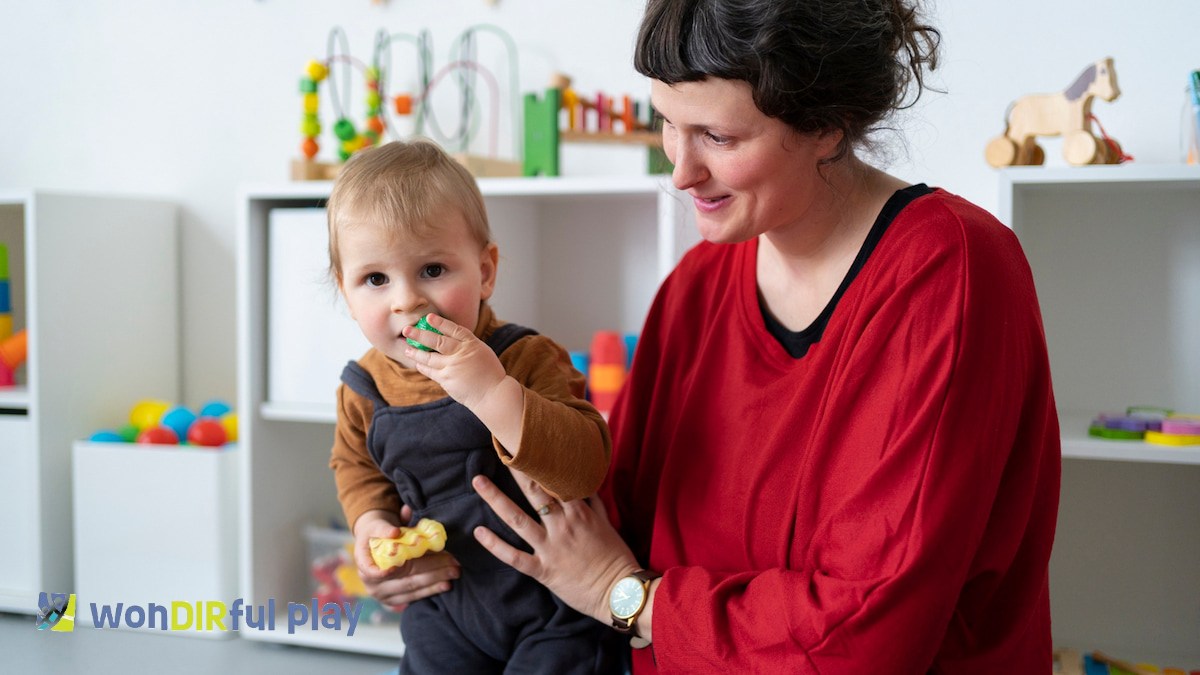
There is no one-size-fits-all solution. The ideal Floortime setting depends on your child’s comfort level, your family’s capacity, and the environment in which therapy will take place. Consider the following key factors before making your decision.
Child’s Learning Style and Comfort
Observe how your child reacts to new environments and people. If they enjoy meeting new peers and respond positively to change, a centre-based setting may provide valuable opportunities for social growth and structure.
However, if your child tends to feel anxious in unfamiliar places and thrives in predictable routines, in-home sessions may be more suitable. Understanding your child's sensory profile often determines how engaged and relaxed they feel during therapy.
Generalisation and Caregiver Role
Your involvement as a caregiver is critical in both settings. If you can actively participate by observing sessions, applying strategies between visits, and using everyday activities to reinforce learning, in-home therapy may maximize progress.
On the other hand, if your schedule is tight or you prefer therapists to manage most of the direct intervention, a centre-based programme might offer the needed consistency without overwhelming your routine.
Environment and Logistics
Assess whether your home can provide a stable, quiet, and distraction-free space conducive to therapy. Consider also the practical side of attending a centre, travel distance, session timings, and overall sustainability for your family. For some, home sessions remove these logistical challenges, while for others, the routine of visiting a centre adds beneficial structure. Balancing convenience with therapeutic quality is essential for long-term success. Balancing convenience with therapeutic quality is essential for long-term success.
Combined or Hybrid Approach
Many families benefit from hybrid models: a mix of centre sessions (for peer, structured work) and in-home follow up (for generalisation). Regardless of setting, quality of intervention, frequency of sessions and consistency matter most. One meta-analysis of play-based interventions concluded that while setting matters, intensity, fidelity and caregiver involvement are key determinants of success.
Practical Steps If You Choose a Centre or Home Setting

Here are actionable tips for making either choice work well:
If choosing a centre:
- Visit the centre, observe a session, check qualifications of therapists and peer-settings.
- Ask about generalisation: how will skills learned there transfer home, school, community?
- Clarify schedule, travel logistics and what caregiver involvement is required.
- Ensure the centre collaborates with you as caregiver: you should receive coaching, updates and strategies to reinforce at home.
If choosing in-home sessions:
- Create a dedicated, consistent, low-distraction space in your home for sessions.
- Invite caregivers and siblings to participate or observe so strategies can be integrated into everyday life.
- Ask the therapist for tools and routines you can use between sessions (mealtime, playtime, transitions).
- Monitor consistency: scheduling, regularity, carry-over and data-tracking matter for progress.
For both settings:
- Set clear developmental goals (e.g., increased spontaneous communication, improved emotional regulation) and review progress regularly with the therapist.
- Prioritise engagement over quantity: a child who is genuinely interested and motivated may learn more in fewer high-quality interactions than in many distracted ones.
- Schedule periodic reviews: e.g., every 3-6 months evaluate whether the setting remains optimal or whether a switch or hybridisation might benefit your child.
Summary: Centre vs In-Home, Which Serves Your Child Best?
- Both settings can be effective if the therapy model is high quality, consistent and matched to the child’s needs.
- Centre-based might provide stronger structure, peer interaction and professional focus; in-home provides natural context, convenience, caregiver involvement and real-life generalisation.
- The most important factors are: caregiver engagement, consistency of sessions, setting suitability for your child and how therapy is embedded into everyday life.
- Many families find a hybrid approach offers the best balance: structured therapy at a centre plus in-home sessions to embed skills.
- Ultimately the “right” choice is the one that fits your child’s learning style, your family’s routine and your capacity to support carry-over.
FAQs
Is one setting definitively better than the other for Floortime?
No single setting is universally better. Research shows both centre-based and home-based interventions can be effective when well delivered; the key is matching to your child and family context.
How much should caregivers be involved in either setting?
Caregiver involvement is essential in both settings, whether to generalise skills from a centre into home life, or to co-lead sessions in home-based therapy. The more consistent this role is, the stronger the progress.
Can we switch from one setting to another if it isn’t working?
Yes, many families adjust their approach over time. If your child is not responding as expected in a centre or the home setting is too distracting, consider revisiting the setting, increasing caregiver training, or adopting a hybrid model to best support your child’s growth.
Find the Setting That Helps Your Child Thrive
Every child’s growth story is unique, and the right environment sets the tone. Families exploring DIR Floortime in New Jersey can partner with WonDIRfulPlay to find their best-fit model, whether home-based, in-clinic, or hybrid.
Our team helps you build structure, consistency, and joy across settings, so learning transfers naturally between therapy and everyday life. Contact us today to design a plan that honors your child’s comfort while promoting steady emotional and social growth.
Recent articles






Our team is ready to answer your questions and address your concerns.


With WonDIRfulPlay, growth feels effortless and joyful. Our DIR floortime therapy services in Lakewood, NJ focus on building emotional connections, communication, and social confidence while addressing sensory and behavioral challenges.
For compliance matters, please call 732-523-9070 or email compllance@wondirfulplay.com


