
Comparing DIR vs ABA Therapy: Benefits for Preschoolers
July 3, 2026
DIR vs ABA therapy for preschoolers. Compare benefits, styles, and outcomes to choose the right autism therapy for your child.
-ink.jpeg)
Key Points:
- DIR vs ABA therapy shows two paths for early autism care. One is play-based and relationship-led. The other is behavior-focused and structured.
- Both approaches have helped many preschoolers. The right fit depends on your child's needs, your family's style, and your long-term goals.
- Many families now choose DIR or use both. Knowing the real differences helps you pick what supports your child best in the early years.
Choosing therapy for your preschooler can feel overwhelming. Acronyms fly around at every appointment. DIR vs ABA therapy is one of the biggest questions parents ask. Both are widely used. Both have research behind them. But they look very different in practice.
This article breaks down the real differences in plain language.
You'll learn how each approach works, what kids do during sessions, and which goals each one fits best. By the end, you'll have a clearer sense of what might work for your child. We won't tell you one is "right." We'll give you the facts so you can decide. If you're weighing DIR/Floortime therapy options, this guide gives you a starting point.
What ABA Therapy Looks Like
ABA stands for Applied Behavior Analysis. It's the most common autism therapy in the United States. ABA breaks skills into small steps. A therapist teaches each step, then rewards the right response.
Sessions can run 10 to 40 hours a week. That's a lot for a preschooler. The therapist uses prompts, repetition, and reinforcement, which means a reward when a target behavior happens.
Common ABA goals include:
- Pointing or asking for items
- Sitting in a chair on demand
- Following one-step instructions
- Naming objects or letters
- Reducing certain behaviors like hitting or screaming
Modern ABA has changed a lot. Many therapists now use play-based ABA, which feels gentler than older drill methods. Still, the core idea is the same. The therapist decides the target. The child works toward it. You can read more on different intervention models for a wider view.
What DIR/Floortime Looks Like
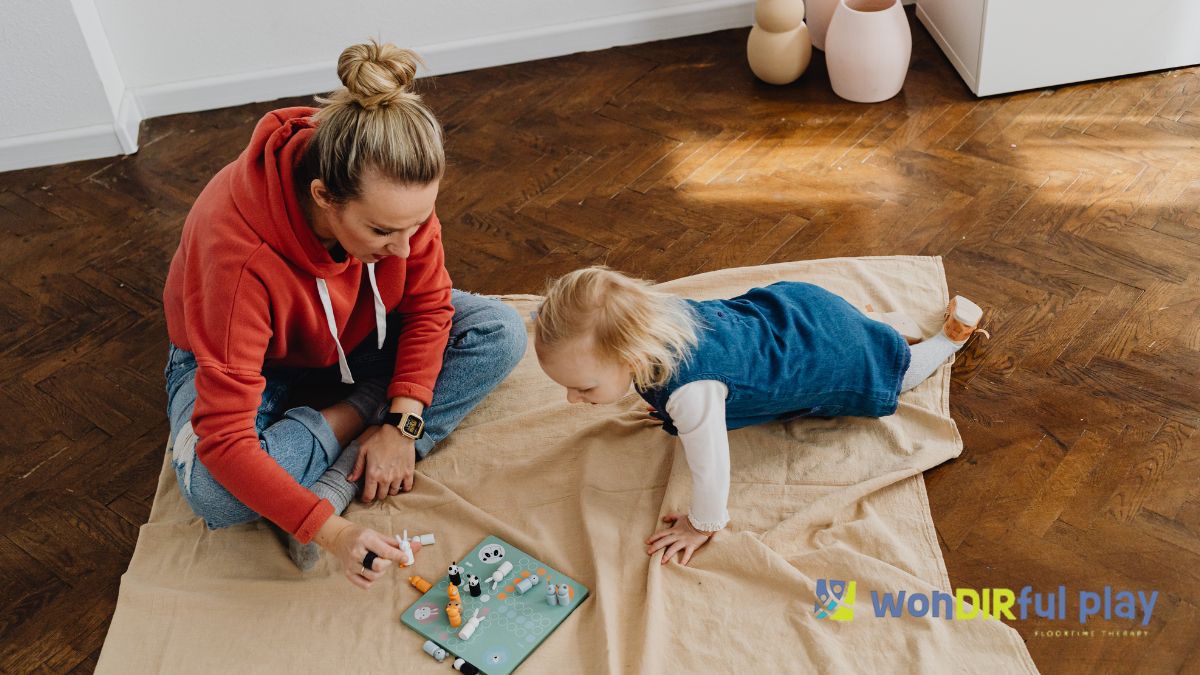
DIR/Floortime takes a different path. It's built on relationships. The therapist follows your child's lead during play. The goal is connection and back-and-forth interaction, not specific behaviors. For many families, Floortime is a real alternative to ABA that fits a different philosophy.
Sessions are usually shorter, around one to two hours at a time, a few times a week. Your child plays. The therapist joins them on the floor.
Common DIR goals include:
- Sharing attention with another person
- Engaging in longer play sequences
- Using gestures, sounds, or words to connect
- Showing emotion and reading others' feelings
- Solving small problems through play
Many therapists also work with parents in developmental therapy comparison sessions so families can carry the work home.
Key Differences Between the Two
Side by side, here's how they line up:
Who Leads the Session
In ABA, the therapist leads. They have a plan. They direct the child toward each goal. In DIR/Floortime, your child leads. The therapist joins what your child finds interesting and stretches it from there.
How Skills Are Built
ABA breaks skills into tiny parts and teaches them step by step. DIR builds skills through whole interactions. A clear look at key differences shows that DIR sees emotional and social growth as the foundation. Specific behaviors follow naturally once those are in place.
Use of Rewards
ABA uses external rewards like snacks, tokens, or toys. DIR uses the joy of connection as the reward. Many parents wonder why DIR works when rewards and consequences don't. The answer is that for some kids, intrinsic motivation matters more than treats.
Hours Per Week
ABA programs often recommend 20 to 40 hours weekly. DIR/Floortime usually runs 3 to 15 hours, with home practice filling the gaps.
Benefits of DIR/Floortime for Preschoolers
-ink.jpeg)
Preschool years are golden for social-emotional growth. Preschool autism therapy that builds connection sets the base for school, friendships, and self-regulation.
Strengths of DIR for this age:
- Builds genuine engagement, not just compliance
- Supports natural language by tying words to play
- Reduces stress by following the child's pace
- Strengthens family bonds through parent involvement
- Honors who your child is, not just what they do
Many parents who switch find this approach more sustainable. Switching from ABA to DIR in the first month offers real stories from families who made the change. Results from Floortime vs ABA outcomes research show that DIR can lead to gains in social communication and emotional growth, especially in preschool years.
Benefits of ABA for Preschoolers
ABA also has real strengths. It can produce measurable changes in specific skills, which helps when goals are clear and concrete.
Strong points include:
- Clear data tracking session by session
- Strong for teaching daily living skills
- Wide insurance coverage in many states
- Many trained providers available
- Useful for reducing harmful behaviors
Some families find that ABA suits kids who need lots of structure, especially when daily routines fall apart. It's also widely accepted by schools and insurance, which makes access easier in many places.
Which One Fits Your Child Best
There's no single right answer. Here are some questions that can guide you:
- Does your child shut down with too much structure, or do they need it?
- Are you most worried about specific behaviors, or about connection?
- How much time can your family dedicate to therapy hours?
- What does your gut say after watching a session?
Some families pick one path. Others combine both. A growing number choose DIR as an ABA alternative therapy option, especially when their child responds better to play than drills. Reading about when to consider switching to DIR/Floortime can help if you're currently in ABA and feel unsure.
Trust your instincts. Watch how your child responds during a trial session. Their face tells you more than any brochure ever can.
What the Research Shows
Studies on the effectiveness of DIR/Floortime have grown over the past two decades. Several controlled trials show real gains in language, social engagement, and emotional growth in preschoolers who got Floortime.
ABA has a longer research history. Decades of studies back its core methods. Both approaches qualify as autism early intervention services and are recognized by major health bodies.
What's less clear is which one works best for which child. That's why a thoughtful developmental therapy comparison matters. The newest research often shows that DIR aligns with neurodiversity-affirming care, which is becoming a key value for many families today.
Cost and Insurance Considerations
Money matters. ABA is usually covered by insurance in most states, including New Jersey, because it has a long track record and clear billing codes.
DIR/Floortime coverage varies. Some plans cover it, others don't. Many families pay out of pocket or use early intervention funds. If you're in Freehold, Montclair, or anywhere across the state, checking with your insurance early saves headaches later.
Some families combine school-based preschool transition support with private DIR sessions to make the cost manageable. Group sessions or parent training models can also lower the price tag.
Choosing the Best Therapy for Your Preschool Child
At the end of the day, the best therapy for preschool autism is the one that fits your child, your family, and your goals. Both DIR and ABA can help. Both can fail when forced on a child who doesn't respond.
Take time to:
- Observe a trial session in each approach
- Talk to other parents who have used both
- Watch your child's mood before and after sessions
- Check provider qualifications carefully
- Trust your own read of what's working
You can revisit the choice as your child grows. Many kids do well with DIR in the early years, then move toward other supports as their needs change. There's no need to commit forever on day one.
What a DIR/Floortime Session Looks Like
If you've never seen a Floortime session, it can be hard to imagine. Sessions usually start on the floor with toys your child already loves. The therapist sits low, watches first, then enters the play. Different types of play therapy interventions may look similar from the outside, but DIR has unique stages built in.
A typical session includes:
- A warm-up where the therapist reads your child's mood
- Open, child-led play with gentle stretching
- Specific goals woven into the play, not announced
- Parent coaching, often in real time
- A wind-down with notes on what came up
This soft structure is one of the evidence-based benefits of DIR/Floortime that parents notice quickly. Sessions feel natural, not clinical, which often suits sensitive preschoolers.
Mistakes to Avoid When Picking a Path
-ink.jpeg)
Choosing therapy is emotional. A few common pitfalls can lead families astray:
- Choosing speed over fit. A program that promises fast results may not match your child's real needs.
- Ignoring your child's reactions. Your child can't always say "no" but they can show stress through behaviors. Watch closely.
- Skipping provider checks. Ask about credentials, training hours, and ongoing supervision.
- Forgetting about you. Therapy for your child should also support your family. Burnout helps no one.
A thoughtful look at traditional behavioral approaches vs Floortime can give you a fuller view. Real DIR vs ABA therapy decisions deserve careful thinking, not snap judgments.
FAQs
Is DIR/Floortime as evidence-based as ABA?
ABA has more decades of research. DIR has solid studies too, especially over the past 20 years. Both are recognized autism early intervention services with growing support behind them.
Can my child do both DIR and ABA at the same time?
Yes, many families combine them. Just make sure both providers know about each other. Mixed messages can confuse a young child, so coordination matters a lot.
Which therapy is better for a nonverbal preschooler?
DIR often helps nonverbal kids because it doesn't require speech to participate. It builds gestures, attention, and sounds first, which lay the groundwork for spoken language later.
How do I find a qualified DIR therapist near me?
Look for providers who hold DIRFloortime certification through ICDL. Many New Jersey clinics list credentials online. Ask about hours of training and supervised case experience too.
Will my preschooler regress if I stop ABA and switch to DIR?
Most kids don't regress, but the transition takes adjustment. Plan it carefully. Many families find the first month after switching from ABA to DIR takes some adjustment. Slowly reduce ABA hours while building DIR sessions, and watch your child closely during the shift.
Find the Therapy Path That Fits Your Family
WonDIRful Play helps families weigh their options without pressure or judgment. Choosing between Floortime and ABA shouldn't feel like a maze. Our team walks you through what each path looks like, what to expect at each stage, and how to spot what fits your child.
Whether you're new to autism therapy or thinking about a switch, we offer clear, honest guidance. With strong roots in DIR/Floortime, our approach centers relationship, play, and your child's real voice.
Reach out to WonDIRful Play to talk through your preschooler's needs and find the therapy path that fits. Choose with clarity, and start your child's journey on the right foot.
Recent articles


-ink.jpg)
-ink.jpeg)

-ink.jpeg)
-ink.jpeg)
-ink.jpeg)






























With WonDIRfulPlay, growth feels effortless and joyful. Our DIR floortime therapy services in Lakewood, NJ focus on building emotional connections, communication, and social confidence while addressing sensory and behavioral challenges.
For compliance matters, please call 732-523-9070 or email compllance@wondirfulplay.com

