
Picture Exchange Communication System (PECS)
September 23, 2026
What PECS is, how its six phases work, what the research actually shows, and how it fits alongside developmental approaches.

PECS, the Picture Exchange Communication System, is a structured method that teaches children to communicate by exchanging picture cards instead of, or before, using spoken words. It was developed in 1985 by Andy Bondy, PhD, and Lori Frost, MS, CCC-SLP, and has since become one of the most widely used communication systems for children with autism worldwide.
Here's how it actually works, what the research supports, and how it fits alongside other approaches to communication.
%2520for%2520Children%2520copy%252033.jpeg)
What PECS Actually Is
PECS gives a child a concrete way to communicate before spoken language is available, by handing over a picture instead of saying a word. For a child who finds speech difficult or overwhelming, this can lower the pressure of communication significantly, since the picture does the work that a spoken word would otherwise need to do.
A few reasons families and therapists use it:
- It doesn't require speech to get started. A child can begin communicating meaningfully well before they're able to talk.
- It's structured and predictable. Each phase builds clearly on the last, which works well for kids who benefit from consistency.
- It puts the child in the driver's seat. The child initiates the exchange, rather than waiting to be prompted, which builds real communicative intent rather than just compliance.
- It's inexpensive and portable. Compared to speech-generating devices or tablet-based AAC systems, picture cards are cheap, simple, and easy to bring anywhere.
The Six Phases of PECS
PECS is taught in six sequential phases, each building on the skills from the one before it.
%2520for%2520Children%2520copy%252034.jpeg)
- Physical exchange. The child learns to hand a single picture card to a communication partner in exchange for a desired item, the most basic building block of the whole system.
- Expanding spontaneity. The child starts using pictures more independently and in more situations, not just when directly prompted.
- Picture discrimination. The child learns to choose the correct picture from a group of several, building accuracy alongside the basic exchange skill.
- Sentence structure. The child begins combining pictures into simple sentence strips, such as "I want" plus a picture of the item.
- Responsive requesting. The child learns to use pictures to answer direct questions, like "what do you want?"
- Commenting. The most advanced phase, where a child uses pictures to comment on their environment rather than only to request things.
The teaching method behind PECS draws on B.F. Skinner's work on verbal behavior and uses applied behavior analysis techniques, including careful prompting and reinforcement, while deliberately avoiding verbal prompts so the child learns to initiate on their own rather than becoming dependent on being asked.
What the Research Actually Shows
PECS is one of the more thoroughly studied communication interventions for autism, and it's worth being specific about what the evidence actually supports.
A widely cited 2010 meta-analysis in the American Journal of Speech-Language Pathology (Flippin, Reszka, and Watson) reviewed the available research and found that PECS has a real, moderate effect on helping children use pictures to communicate. However, the same review found the evidence that PECS also leads to an increase in spoken language was considerably weaker, not because PECS hurts speech development, but because the research on that specific outcome has been limited and inconsistent. A more recent 2024 systematic review looked specifically at what helps or gets in the way of implementing PECS successfully in real-world settings, which matters just as much as whether the method works in principle.
The honest summary: PECS is a solid, evidence-supported tool for building functional picture-based communication. Whether it also boosts spoken language for a given child varies, and that's worth discussing directly with your child's speech-language pathologist rather than assuming either outcome.
A Common Myth Worth Addressing
Some parents worry that giving a child a picture-based way to communicate will make them less motivated to talk. The research doesn't support this concern. There's no good evidence that PECS suppresses speech development, and for some children, having a reliable way to communicate at all seems to reduce frustration and open the door to more attempts at speech over time, not fewer.
How PECS Relates to DIR Floortime
It's worth being direct about something the PECS literature doesn't usually mention: PECS comes out of the applied behavior analysis tradition, while DIR Floortime is a developmental, relationship-based model. These two traditions approach autism intervention differently, and they're sometimes framed as opposing camps.
In practice, the goal both are working toward, real functional communication, is the same, and they aren't mutually exclusive. A child might use a picture system like PECS as a communication tool while also working on the underlying social engagement and connection that DIR Floortime helps build. Many families use both, especially when a speech-language pathologist and a developmental therapist are coordinating care rather than working in isolation. If you're weighing how these approaches fit together for your child, it's worth asking both providers directly how they'd coordinate.
%2520for%2520Children%2520copy%252035.jpeg)
Getting Started With PECS
If you're considering PECS for your child, a few things matter for success:
- Consistency across settings. PECS works best when it's used the same way at home, at school, and in therapy, not just in one setting.
- Proper training. Both educators and parents benefit from real training in the specific teaching protocol, not just picture cards handed over without guidance.
- Patience with the pace. Progress through the six phases can take time, and that's normal, not a sign something is going wrong.
- Professional guidance. A speech-language pathologist or behavior therapist trained in PECS can help troubleshoot common sticking points as they come up.
Organizations like PECS USA offer training materials and workshops for parents who want to build a stronger understanding of the system before or alongside starting it with their child.
Beyond Autism
PECS was originally developed for children with autism, but it's used well beyond that population today. It has been applied successfully with children and adults who have intellectual disabilities, cerebral palsy, and other conditions that affect spoken communication, as well as in some cases with adults who've lost speech due to stroke or injury. The core idea, giving someone a concrete way to communicate without requiring speech, applies wherever verbal communication is a barrier rather than the only place it happens to have started.
Frequently Asked Questions
Does PECS replace speech therapy?
No. PECS is typically used alongside speech-language therapy, not instead of it. A speech-language pathologist can help determine whether PECS fits into your child's specific communication plan and how to combine it with other strategies.
Is PECS only useful for young children?
No. While it was developed with preschool-age children in mind, PECS has been used successfully with individuals of all ages, including adults who are learning it for the first time. It's never too late to introduce a functional communication system.
Will using PECS stop my child from learning to talk?
No, this is a common worry but not one supported by the research. PECS is not designed to replace speech, and for many children, having a working way to communicate at all supports rather than blocks further speech development.
Explore Communication Support With WonDIRfulPlay
Whatever communication tools your child uses, building the underlying motivation and connection to communicate matters just as much as the tool itself. Our DIR Floortime therapy services in New Jersey focus on exactly that, working alongside speech-language therapy and AAC systems like PECS rather than replacing them. Contact us today to learn more.
Recent articles



-ink.jpg)
-ink.jpeg)

-ink.jpeg)
-ink.jpeg)
-ink.jpeg)





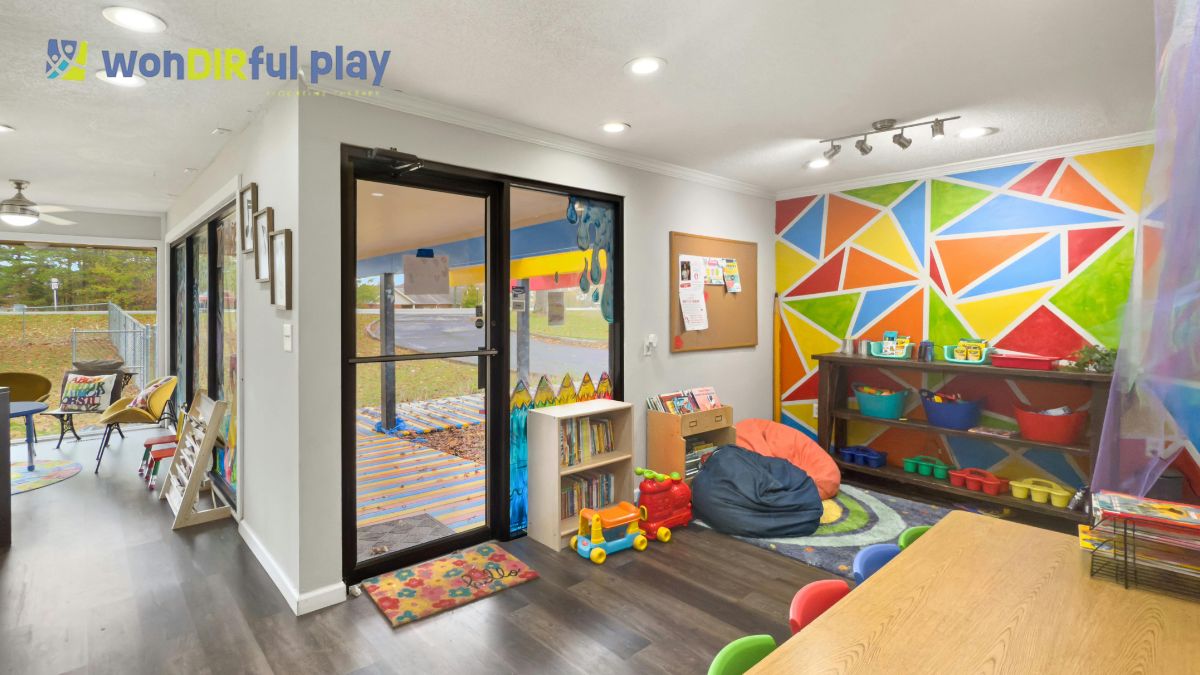



























With WonDIRfulPlay, growth feels effortless and joyful. Our DIR floortime therapy services in Lakewood, NJ focus on building emotional connections, communication, and social confidence while addressing sensory and behavioral challenges.
For compliance matters, please call 732-523-9070 or email compllance@wondirfulplay.com

