
Play-Based Therapy Social Skills: Practical Ways Parents Can Support Their Child
December 10, 2025
Play-based therapy social skills strengthen attention, reciprocity, and emotional sharing through guided play. Use proper strategies to support steady progress.

Key Points:
- Play-based therapy social skills work supports children through child-led play, emotional connection, and shared routines.
- DIR Floortime helps build joint attention, reciprocity, and emotional sharing using structured games tied to specific goals.
- Parents can support this growth at home through coached strategies, sibling involvement, and consistent communication with therapists.
Playdates, birthday parties, and even simple circle time can feel heavy when your child hangs back, avoids eye contact, or melts down after small misunderstandings. Many parents see these patterns and start searching for social skills therapy for kids that feels gentle, respectful, and practical in everyday life.
When you hear about play-based therapy social skills, understand that the work offers a different rhythm. Instead of “fixing” behavior, it builds connection through shared play, curiosity, and emotional safety.
In the next sections, you’ll see how this approach looks inside a DIR Floortime session and how you can carry the same strategies into sibling time, playground lines, and family board games at home.

How Play-Based Therapy Social Skills Grow Through DIR Floortime
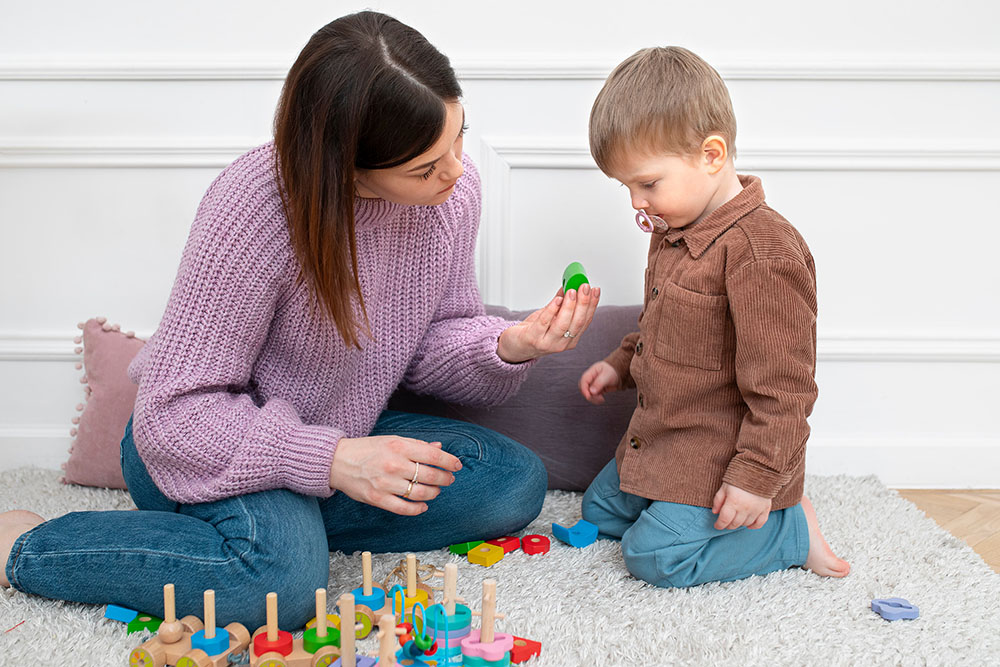
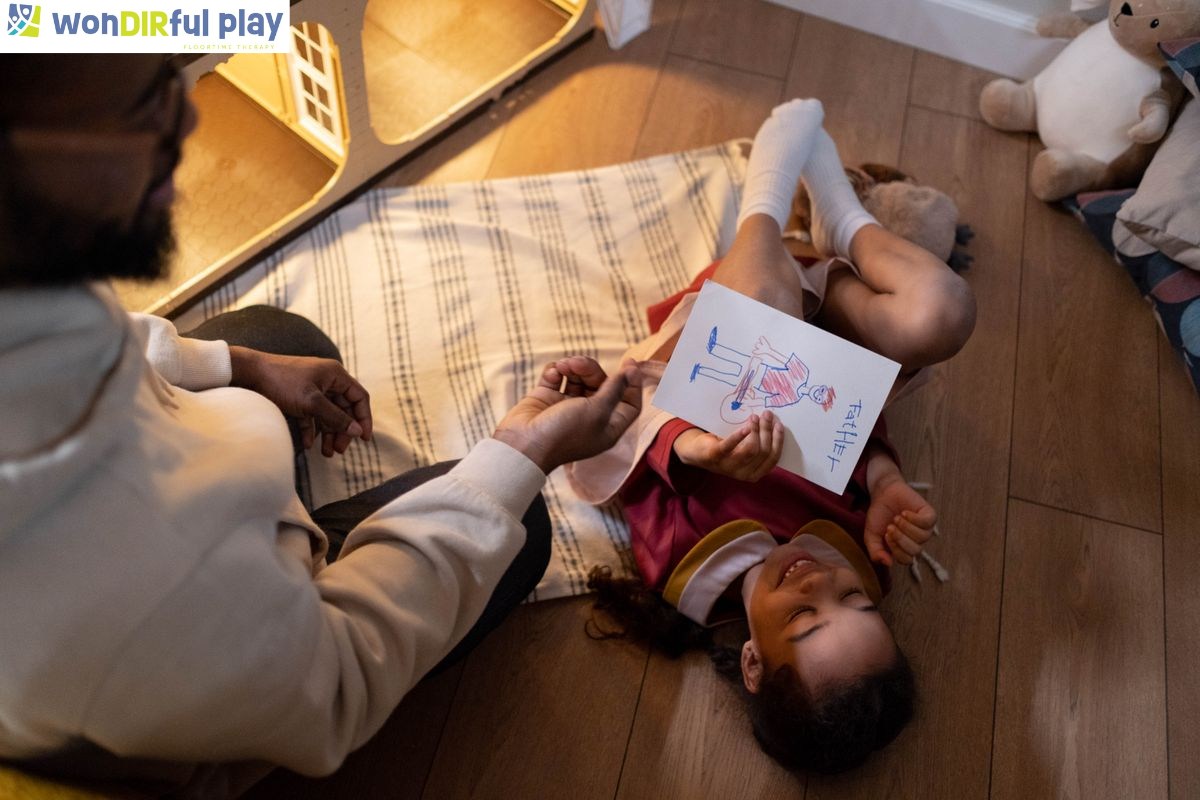
Play-based work for social growth uses the child’s interests as the starting point. In DIR Floortime therapy for autism, the therapist joins your child’s play, follows their lead, and then gently adds turns, surprises, and small challenges that invite more back-and-forth interaction.
Many autistic children experience social communication differences, including difficulty reading facial expressions, understanding tone, or knowing when to join a group game. CDC data shows that about 1 in 31 children aged 8 years has an autism diagnosis, and social communication challenges are part of that picture.
In DIR Floortime, play becomes a frame for:
- Joint attention: Looking at an object and a partner back and forth through simple circles of communication in Floortime.
- Social reciprocity: Taking turns sending and responding to signals.
- Emotional sharing: Showing enjoyment, frustration, or surprise together.
When people talk about child development play therapy in this context, they usually mean work that is:
- Child-led, so your child feels seen and safe
- Relationship-based, so growth happens inside warm interactions
- Developmentally sequenced, so goals match where your child is right now
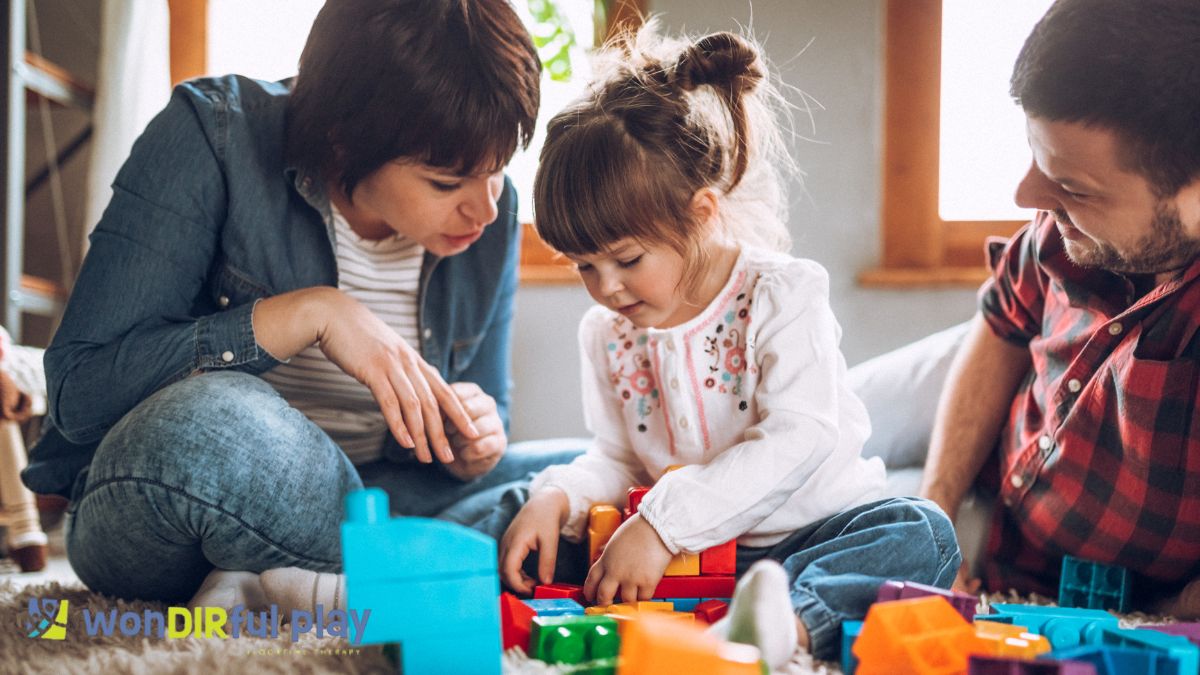
Therapists may call this “social skills therapy for kids,” but the heart of the work is often quieter than that label suggests. Many sessions look like building with blocks on the floor, playing chase with rules, or acting out favorite stories.
The difference is that every step is intentional: where the adult sits, when they pause, which cue they wait for, and how they celebrate even tiny shifts in social connection.
Which Social Skills Can Play-Based Therapy Target?
Parents often see goals on a treatment plan and wonder what they mean in real play. DIR Floortime turns goals like “initiate interaction,” “maintain a topic,” or “join peer play” into specific games that match your child’s interests and sensory profile. The result is a kind of Floortime therapy for autism interaction that stays playful rather than scripted.
A randomized trial used 10 weekly play sessions and home practice in a play-based, peer-mediated pragmatic language program with 71 children on the spectrum. Children in the intervention group showed moderate gains in social language skills, and those gains lasted three months.
How Goals Map to Specific Games
Therapists often map goals like these:
- Take turns in conversation. Turn-taking might show up in cooperative LEGO building, rolling balls back and forth, or rhythm games where each person adds a move.
- Read facial cues and emotions. Emotion cards may be folded into pretend play, like a “feelings store” where characters trade faces and voices, or puppet shows where characters overreact or misread cues on purpose.
- Join group play and stay in. Group DIR Floortime therapy sessions with treasure hunts, simple board games, or pretend café play give practice with waiting, negotiating rules, and repairing misunderstandings.
Autism social skill development in DIR Floortime focuses on helping your child connect ideas, feelings, and actions. While traditional programs may focus on scripted phrases, DIR work aims for spontaneous connection: your child notices a peer’s face, pauses, and chooses to wave, comment, or join in.
Over time, repeated practice inside play makes those small choices easier and more automatic.
How Can Parents Extend Social Skills Practice at Home?
Therapy happens a few hours a week. Your home, playground, and daily routines hold hundreds of moments where you can quietly enhance child social skills using the same types of games and cues your therapist models.
A large CDC survey found that about 1 in 6 children aged 3–17 has a developmental disability, including autism and ADHD, which means many families are doing similar work in everyday spaces.
Instead of recreating clinic activities exactly, it often helps to copy strategies:
- Waiting for your child’s signal before adding ideas
- Matching your energy and then nudging it up or down
- Turning shared interests into turn-based games
Everyday scenes you can turn into social play include:
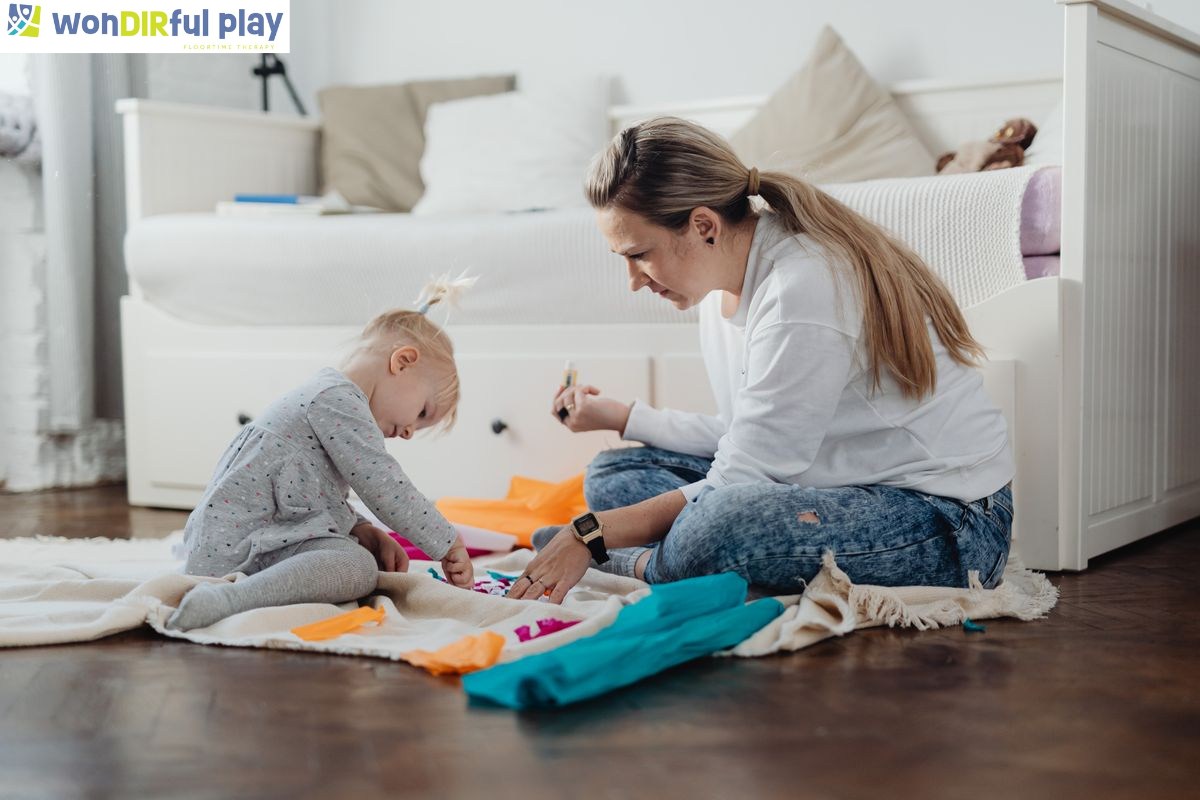
Siblings playing on the floor
Instead of separate games, invite a “builder” and “supplier” role like the cooperative LEGO play your therapist uses. Rotate roles so both children ask, answer, and negotiate.
Playground lines and equipment
Waiting for a swing or slide can become a joint attention game: point to the swing, look at your child, and label what you see in short phrases. Use simple cues like “my turn,” “your turn,” and “friend’s turn” to mirror the language from sessions.
Family board games
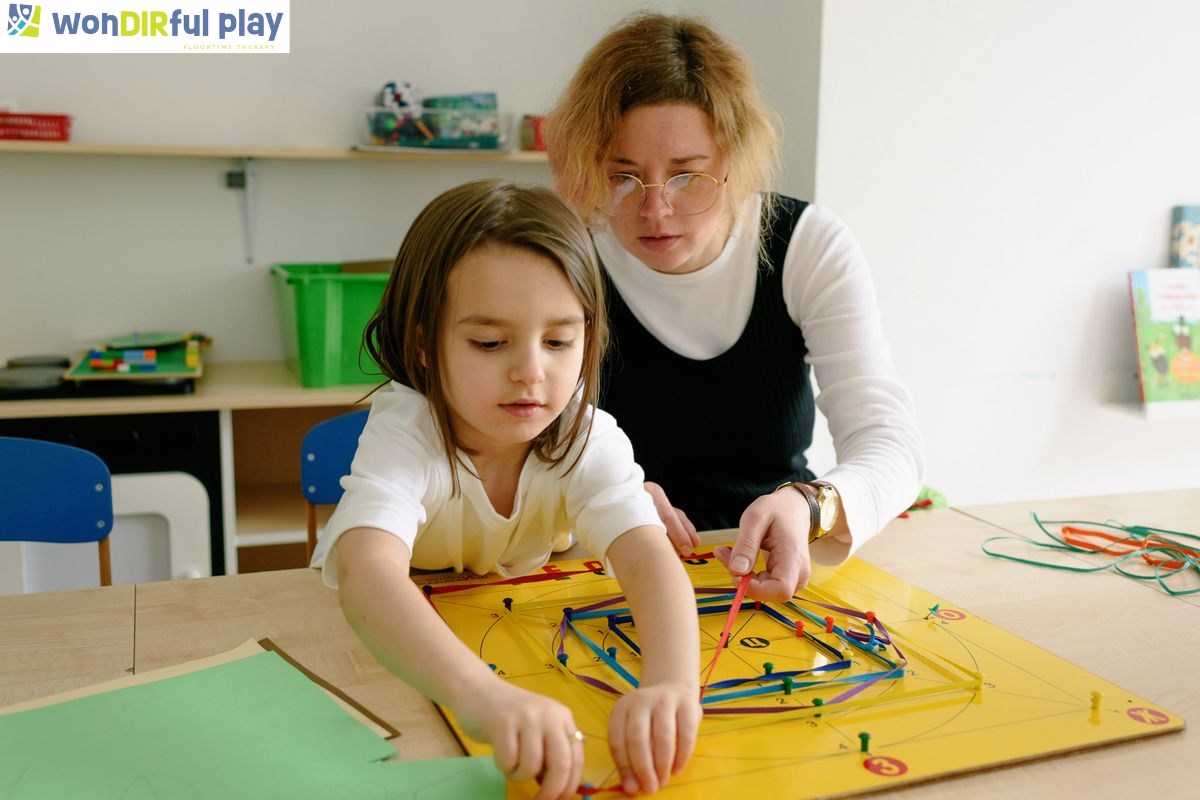
Choose games with clear turns and visible pieces. Slow the pace slightly so your child has time to notice reactions. Name social moves out loud: “You waited,” “You checked his face,” “You asked for another turn.” That low-key narration keeps social interaction play therapy grounded in real family fun rather than feeling like a separate assignment.
How Should Parents Work With a DIR Floortime Therapist?
Consistent communication with your therapist keeps social goals realistic and aligned with what you see at home and school. A parent-mediated program involving 58 parent-child pairs found that when parents received weekly coaching, their use of interaction strategies improved significantly compared with a control group.
It also found out that about a quarter of outcome differences were linked to participation in the coaching program. That kind of parent involvement is central to sustainable autism social skill development.
Questions to Ask About Social Goals
Bringing specific questions into meetings makes sessions more focused. Examples include:
- “Which social skills are the top focus for the next three months?”
- “How do our current goals show up inside the games you are choosing?”
- “What two strategies should we copy at home this week?”
These questions help you see the logic behind each activity, whether the therapist is using construction games, pretend play, or other social interaction play therapy setups.
Sharing Observations From Home
Therapists rely on your real-world observations to adjust plans. You might share:
- Short stories about playground struggles or small wins
- Notes on which games your child requests on their own
- Moments when your child surprised you with a new social move
Social skills therapy for kids works best when clinic and home feel connected. Sending a brief weekly email or sharing a quick video clip from home gives your therapist concrete material to build on. Over time, this feedback loop helps therapy shift from “things that happen in a room” to skills your child uses across school, community, and family settings.

Frequently Asked Questions
How often should my child attend play-based social skills sessions?
Children should attend play-based social skills sessions weekly for 10 to 30 weeks, with daily home practice to support repetition. The exact duration depends on age, energy, and other therapies, but consistent weekly sessions with daily carryover at home help build skills without overwhelming the routine.
What age is appropriate to start play-based social skills work?
Play-based social skills work is appropriate starting in toddlerhood and can continue through school age. Toddlers may focus on joint attention and imitation, while older children build conversation and cooperation. If social difficulties persist at any age, it is appropriate to request an evaluation and consider play-based support options.
Can siblings be involved in play-based therapy and home practice?
Siblings can actively support play-based therapy and home practice by learning to share, follow cues, and co-lead activities. Therapists can coach them to reduce pressure on the autistic child. Structured games and routines at home help siblings bond, resolve misunderstandings, and celebrate progress with clear guidance from adults.
Support Your Child’s Social Growth Through Play
Play-based therapy social skills work asks for investment, but it offers something many families deeply want: social growth that feels natural, respectful, and grounded in your child’s own interests. Families seeking DIR Floortime therapy in New Jersey can look for service options that turn everyday play into chances to communicate, share ideas, and enjoy time with others.
WonDIRfulPlay partners with families through coaching, child-led sessions, and practical home ideas so parents are never guessing about the “next step” in social play. Call us so we can review your child’s strengths, set clear social goals, and explore how structured yet joyful play can support progress across home, school, and community life.
Recent articles



.jpg)
.jpg)




.jpg)


.jpg)






.jpg)




-ink.jpeg)
-ink.jpeg)
-ink.jpeg)
-ink.jpeg)
-ink.jpeg)
-ink.jpeg)
-ink.jpeg)
-ink.jpeg)
-ink.jpeg)


.jpeg)


.jpg)
-ink.jpeg)

.jpg)

-ink.jpeg)

-ink.jpeg)
-ink.jpeg)
.jpg)
.jpg)
-ink.jpeg)
-ink.jpeg)
-ink.jpeg)
.jpg)

-ink.jpeg)
-ink.jpeg)
-ink.jpeg)
-ink.jpeg)
-ink.jpeg)
-ink.jpg)
-ink.jpeg)
-ink.jpeg)
-ink.jpeg)
-ink.jpeg)
.jpg)
.jpg)
-ink.jpeg)
-ink.jpeg)
.jpg)
-ink.jpeg)
-ink.jpeg)
-ink.jpeg)
-ink.jpeg)
-ink.jpeg)
-ink.jpeg)
-ink.jpeg)
-ink.jpeg)
-ink.jpeg)
-ink.jpeg)
-ink.jpeg)
-ink.jpeg)
-ink.jpeg)
Our team is ready to answer your questions and address your concerns.


With WonDIRfulPlay, growth feels effortless and joyful. Our DIR floortime therapy services in Lakewood, NJ focus on building emotional connections, communication, and social confidence while addressing sensory and behavioral challenges.
For compliance matters, please call 732-523-9070 or email compllance@wondirfulplay.com


