
Why DIR Floortime Outperforms Traditional Therapy for Communication in Autistic Children
February 18, 2026
Discover why DIR Floortime strengthens communication skills in autistic children through relationship-based, play-driven strategies that build lasting language growth.
-ink.jpeg)
Key points:
- DIR Floortime builds communication through emotional connection, not drills, helping children develop meaningful, spontaneous language in daily life.
- Child led communication in autism strengthens motivation, engagement, and confidence, leading to more consistent progress across home and community settings.
- Relationship based therapy for language development supports two way communication, joint attention, and affect signaling, essential foundations often overlooked in traditional models.
Communication is one of the greatest concerns for families of children on the autism spectrum. Many parents seek therapy hoping their child will speak more, connect more, and express needs with confidence. While traditional approaches often focus on structured skill training, many families find that progress can feel mechanical or limited to therapy sessions.
DIR Floortime offers a different path. Grounded in developmental science, this play based communication therapy for autism prioritizes emotional connection, shared attention, and joyful interaction. Rather than teaching language as isolated words or scripts, it builds the foundations that allow communication to grow naturally.
In this article, you will learn why DIR Floortime communication in children with autism often leads to deeper, more lasting outcomes than traditional therapy models, and how this approach supports real world communication at home, school, and in the community.
Understanding What Communication Really Requires
-ink.jpeg)
Before comparing approaches, it helps to understand what communication truly involves. Communication is not only speech. It includes:
- Eye contact and shared attention
- Gestures and facial expressions
- Emotional tone and affect
- Back and forth exchanges
- Intentional problem solving with another person
Research in developmental psychology shows that joint attention and communication skills are strong predictors of later language ability. Children who can share focus on a toy or activity and shift attention between a person and an object are more likely to develop flexible speech and social language.
DIR Floortime communication therapy in NJ emphasizes these early developmental capacities. Instead of beginning with drills or flashcards, therapists and parents follow the child's interests and build circles of communication by Greenspan, the core developmental building blocks of interaction. Each back and forth exchange, even a glance or gesture, counts as a circle. Over time, these circles expand into complex conversations.
Traditional models sometimes prioritize compliance or discrete language targets before these foundations are fully established. Without emotional engagement and shared attention, language may remain limited or scripted.
Child Led Communication in Autism Builds Motivation
One of the biggest differences in autism communication therapy vs. ABA style models is who leads the interaction. In many traditional therapies, adults choose the activity, prompt responses, and reward correct answers.
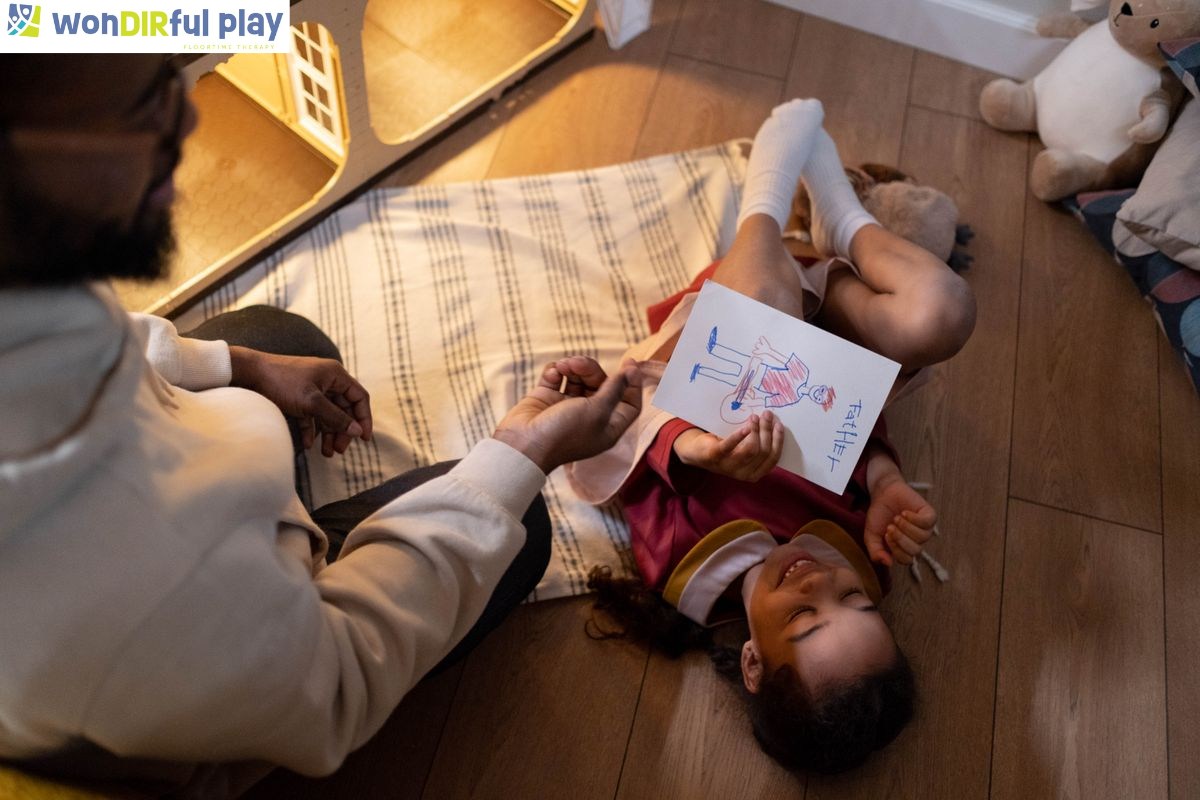
DIR Floortime for language development takes the opposite approach. The child leads, and the adult joins.
When a child becomes deeply interested in spinning wheels, lining up toys, or building blocks, that interest becomes the entry point for communication. The adult does not interrupt it. Instead, they expand it, add emotion, and create playful challenges that invite interaction.
This child led communication in autism does several important things:
- Increases intrinsic motivation
- Reduces resistance and shutdown
- Encourages spontaneous language
- Builds trust and emotional safety
Children communicate more when they feel understood. When therapy respects their interests, communication becomes meaningful rather than required.
Families who explore autism language therapy in New Jersey often notice that children begin initiating more interactions at home when therapy aligns with what genuinely excites them.
Emotional Connection Drives Language Growth
Language does not develop in isolation from emotion. Neuroscience research shows that emotional engagement activates brain networks responsible for learning and memory. Children learn best when they feel connected.
DIR Floortime emphasizes affect signaling in autism, which refers to using facial expression, tone of voice, rhythm, and gesture to convey emotion. Many autistic children struggle to interpret or use affect. Without emotional signaling, words can feel flat or confusing.
In reciprocal communication therapy for autism, adults exaggerate emotional tone in a warm and natural way. They match the child's effect and gradually expand it. For example, if a child is excited about a toy train, the adult mirrors that excitement, adds playful suspense, and pauses to invite a response.
This approach strengthens:
- Emotional regulation
- Social referencing
- Two way communication in autism
- Flexible thinking
Traditional speech therapy may focus on articulation or vocabulary lists. While those skills matter, they are most effective when rooted in emotional exchange. Floortime for speech development in autism integrates speech goals within relational experiences, helping language stick.
Circles of Communication Create Real Conversations
-ink.jpeg)
The concept of circles of communication by Greenspan is central to why DIR Floortime outperforms traditional therapy in many cases.
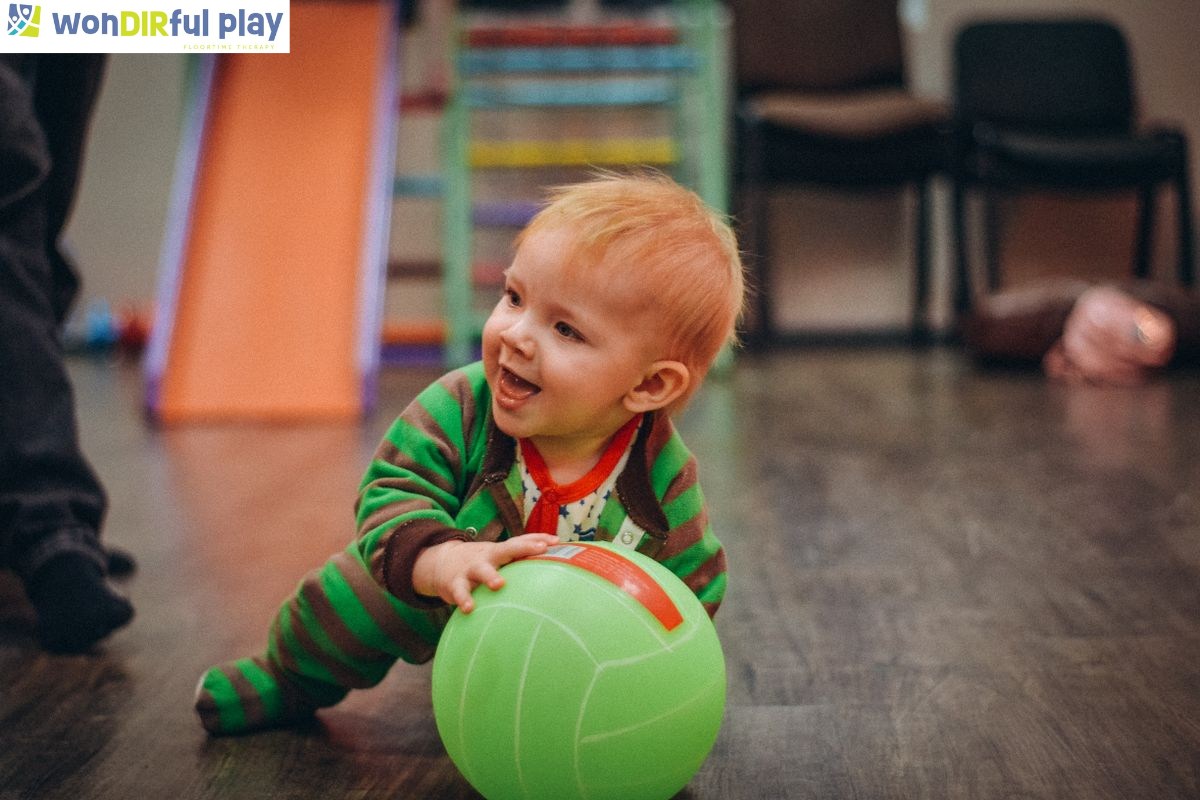
A circle begins when a child sends a signal, such as a look, sound, or movement. It closes when the adult responds and the child reacts again. These back and forth exchanges build the architecture for conversation.
In early sessions, a child might complete only a few circles. Over time, with support, they may complete dozens within a playful interaction. As circles expand, so do language complexity and problem solving skills.
DIR Floortime communication in children with autism deliberately stretches these circles by:
- Adding playful obstacles
- Waiting for initiation
- Encouraging gestures before words
- Supporting repair when communication breaks down
This focus on process, not just output, builds flexible communication. Instead of memorized responses, children learn how to sustain interaction.
Comparing Autism Communication Therapy vs. ABA
Many families wonder about autism communication therapy vs. ABA. Both approaches can support children, but their methods differ significantly.
Traditional ABA based communication often emphasizes measurable targets such as labeling objects or answering questions correctly. This structure can help some children acquire specific skills quickly.
However, challenges sometimes include:
- Limited generalization outside therapy
- Scripted or prompted language
- Reduced spontaneity
- Overreliance on adult direction
DIR Floortime focuses on developmental progression rather than isolated behaviors. It addresses the root skills that allow communication to grow across contexts.
Instead of asking, "Can the child label five pictures?" the focus becomes, "Can the child initiate, sustain, and expand interaction with emotional engagement?"
For families seeking play based speech therapy in Edison, NJ or autism speech therapy in Lakewood, NJ, understanding this difference helps clarify what kind of progress they hope to see. If the goal is genuine connection and flexible communication, relationship based models often align more closely with that vision.
Strengthening Nonverbal Communication First
Many autistic children are minimally verbal or non speaking. In these cases, pushing speech too quickly can create frustration.
Nonverbal communication strategies for autism are foundational in DIR Floortime. These include:
- Gestures and pointing
- Facial expression matching
- Body orientation
- Shared gaze
- Use of visual supports integrated into play
By strengthening nonverbal communication, children build the skills necessary for symbolic language later. Research consistently shows that joint attention predicts later spoken language outcomes more strongly than early vocabulary drills.
DIR Floortime communication therapy in NJ often supports families in recognizing subtle communication attempts that might otherwise be missed. When those attempts are validated and expanded, children feel heard, which encourages further interaction.
Relationship Based Therapy for Language Development
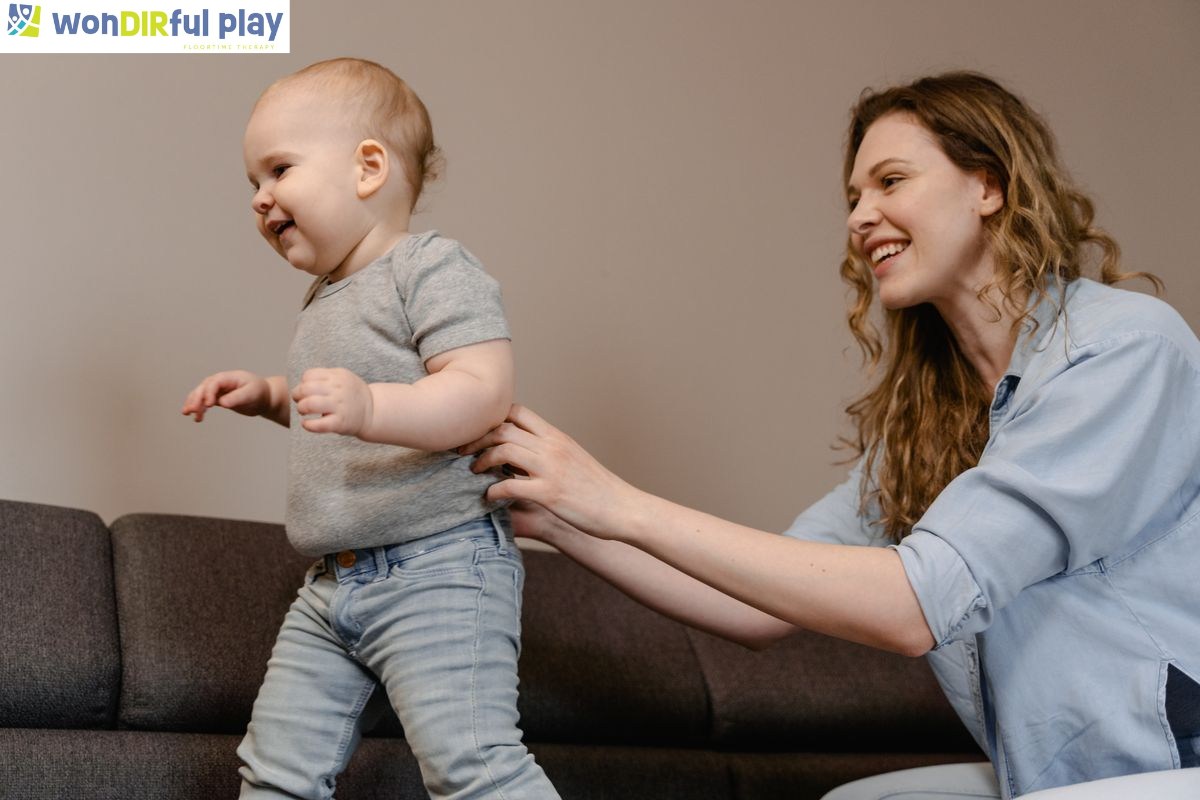
A relationship based therapy for language development acknowledges that parents are the most powerful communication partners in a child's life.
DIR Floortime actively coaches families to:
- Follow their child's lead
- Expand play themes
- Increase circles of communication
- Use affect to deepen engagement
- Create playful challenges that invite problem solving
This parent involvement increases the amount of meaningful communication a child experiences daily. Instead of language practice being limited to therapy hours, it becomes woven into routines like mealtime, bath time, and outdoor play.
The WonDIRfulPlay communication approach for autism reflects this philosophy by integrating developmental principles into natural settings. When communication is practiced in real contexts, children are more likely to use skills spontaneously.
Real World Impact for Families in New Jersey
-ink.jpeg)
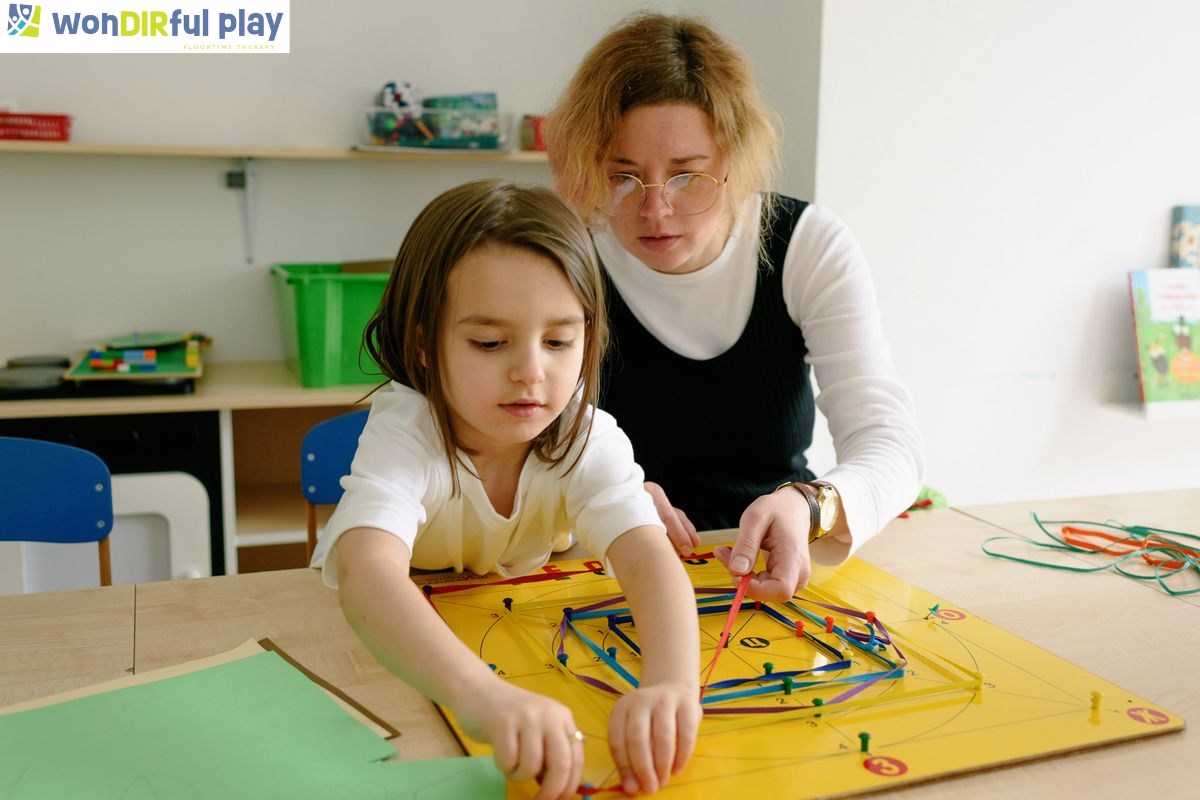
Families exploring autism language therapy in New Jersey often want support that extends beyond clinic walls. They want progress that shows up in:
- Playground interactions
- Sibling play
- Classroom participation
- Family gatherings
DIR Floortime for language development prepares children for these real life moments by emphasizing flexible thinking and emotional reciprocity.
Whether families are searching for play based speech therapy in Ridgewood, NJ or autism speech therapy in Fair Haven, NJ, they increasingly prioritize approaches that respect individuality and promote connection.
Child led communication in autism in NJ is gaining attention because it aligns with what research continues to reinforce, meaningful communication grows from relationships.
FAQs
1. Is DIR Floortime effective for nonverbal children?
Yes. DIR Floortime builds nonverbal communication strategies for autism first, such as gestures and shared attention, which form the foundation for later spoken or alternative communication systems.
2. How is Floortime different from traditional speech therapy?
Traditional therapy often targets specific words or articulation. Floortime for speech development in autism embeds language goals within emotional, play based interactions that strengthen two way communication.
3. Does DIR Floortime replace ABA?
Some families choose it instead of ABA, while others combine elements thoughtfully. The key difference in autism communication therapy vs. ABA lies in child led interaction and relationship focus.
4. Can parents use DIR Floortime at home?
Absolutely. Parents are central partners. Learning to expand circles of communication and use affect signaling in autism allows families to support development during everyday routines.
5. How long does it take to see progress?
Progress varies by child. Many families notice increased engagement and spontaneous communication within months, especially when relationship based therapy for language development is practiced consistently at home.
Spark Real Conversations With DIR Floortime Communication Therapy in NJ
Meaningful language begins with connection. DIR Floortime for language development helps children move from single words to shared conversations by strengthening affect, engagement, and joint attention. When therapy prioritizes reciprocal communication, speech development becomes more spontaneous and flexible.
WonDIRfulPlay offers play-based speech therapy in Edison, NJ and surrounding communities, supporting children through a relationship-centered model. Families seeking autism speech therapy in Lakewood, NJ often appreciate how our communication approach builds confidence while honoring each child’s pace.
Reach out to explore autism language therapy in New Jersey that supports authentic interaction, not rehearsed responses. Let’s help your child turn moments of connection into lasting communication growth.
Recent articles


.jpg)
.jpg)



.jpg)


.jpg)






.jpg)

-ink.jpeg)
-ink.jpeg)
-ink.jpeg)
-ink.jpeg)
-ink.jpeg)
-ink.jpeg)
-ink.jpeg)
-ink.jpeg)
-ink.jpeg)


.jpeg)

.jpg)
-ink.jpeg)

.jpg)

-ink.jpeg)

-ink.jpeg)
-ink.jpeg)
.jpg)
.jpg)
-ink.jpeg)
-ink.jpeg)
-ink.jpeg)
.jpg)

-ink.jpeg)
-ink.jpeg)
-ink.jpeg)
-ink.jpeg)
-ink.jpeg)
-ink.jpg)
-ink.jpeg)
-ink.jpeg)
-ink.jpeg)
-ink.jpeg)
.jpg)
.jpg)
-ink.jpeg)
-ink.jpeg)
.jpg)
-ink.jpeg)
-ink.jpeg)
-ink.jpeg)
-ink.jpeg)
-ink.jpeg)
-ink.jpeg)
-ink.jpeg)
-ink.jpeg)
-ink.jpeg)
-ink.jpeg)
-ink.jpeg)
-ink.jpeg)
-ink.jpeg)
-ink.jpeg)


With WonDIRfulPlay, growth feels effortless and joyful. Our DIR floortime therapy services in Lakewood, NJ focus on building emotional connections, communication, and social confidence while addressing sensory and behavioral challenges.
For compliance matters, please call 732-523-9070 or email compllance@wondirfulplay.com

