
What to Expect in Your Child’s First DIR Floortime Session
October 28, 2025
Your child’s first DIR Floortime session builds connection through playful turns and real coaching. Explore how therapists guide parents to support growth.
Key Points:
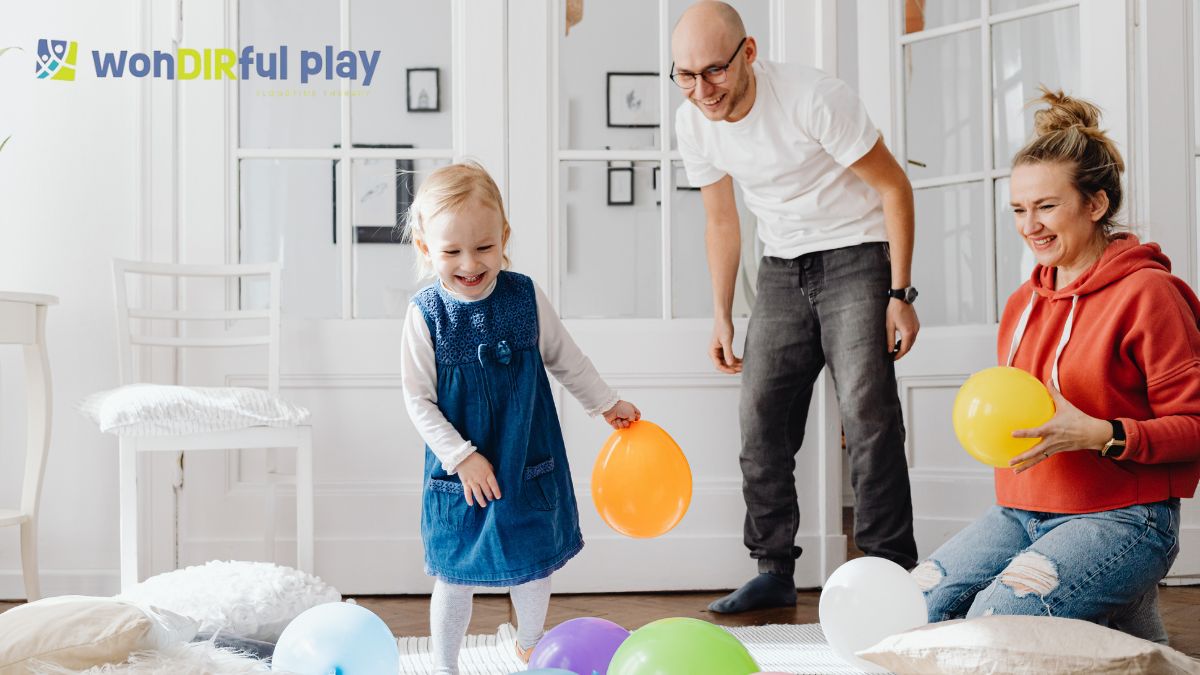
- A first DIR Floortime session begins with a short chat to learn about your child, followed by observation and child-led play to build engagement and communication.
- The therapist models how to join and expand play, then coaches parents to do the same.
- Families leave with simple home actions linked to therapy goals.
The first appointment often feels unclear. Parents want to know who talks first, how play turns into therapy, and what to do at home. DIR Floortime uses child-led play to build regulation, engagement, communication, and problem solving. The approach sits within DIR education ideas that many therapists and teachers use day to day.
Readers can expect a friendly setup, a clear flow, and simple next steps. The sections below explain the room, the play, the roles, and how the plan links to goals used in clinics and some DIR schools or DIR Floortime schools.

First DIR Floortime Session: What actually happens?
The visit begins with a short chat. The therapist asks about your child’s likes, triggers, routines, and communication. The goal is a fast picture of what calms your child and what sparks interest. The therapist explains that play will start from your child’s lead. DIR Floortime therapy sessions often last 45 to 60 minutes.
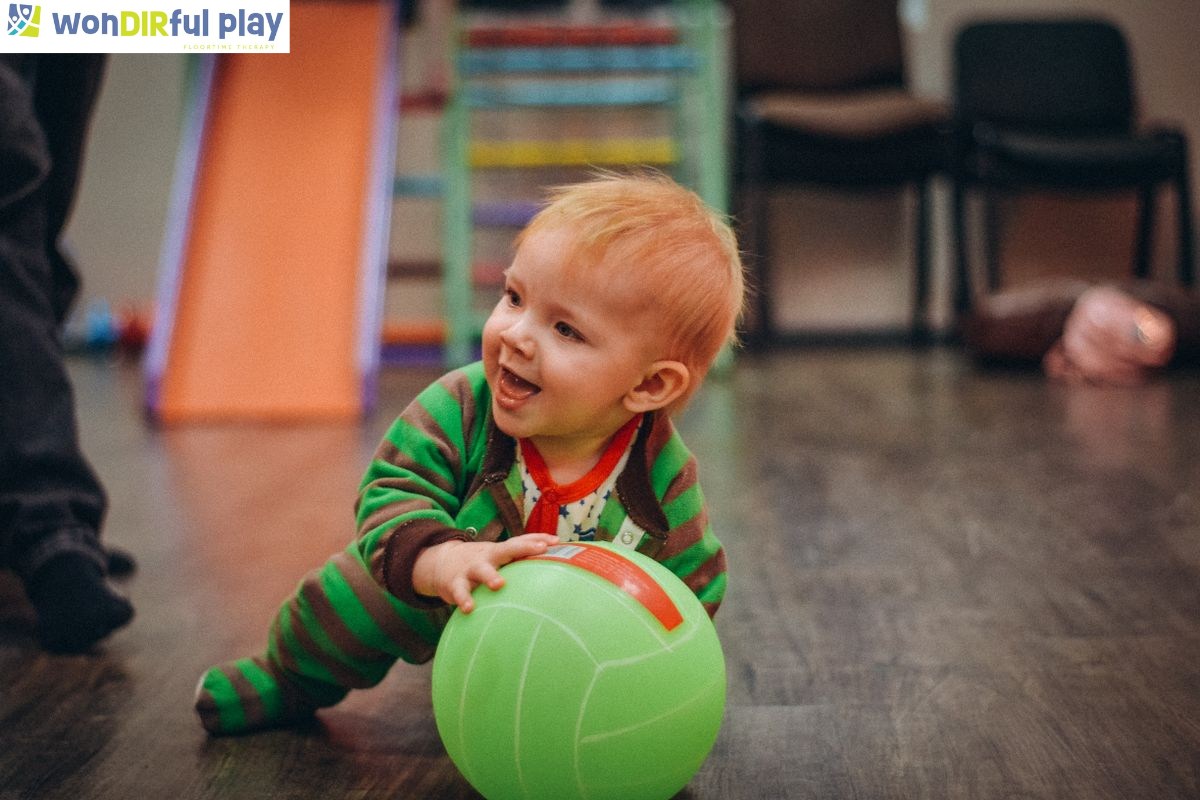
Observation starts as soon as your child enters. The therapist watches how your child warms up, notices sensory needs, and tracks how attention shifts. The first DIR Floortime session focuses on joining your child’s play, not testing skills one by one.
Parents often ask how this connects to need. Autism is common and many families seek early help. The latest CDC estimate reports about 1 in 31 children aged 8 years identified with autism in U.S. monitoring sites.
Expect these parts of the session:
- Warm welcome: Meet the therapist, share a quick history, and set one small goal for the hour.
- Play scan: Watch what your child chooses and how they show interest, comfort, or stress.
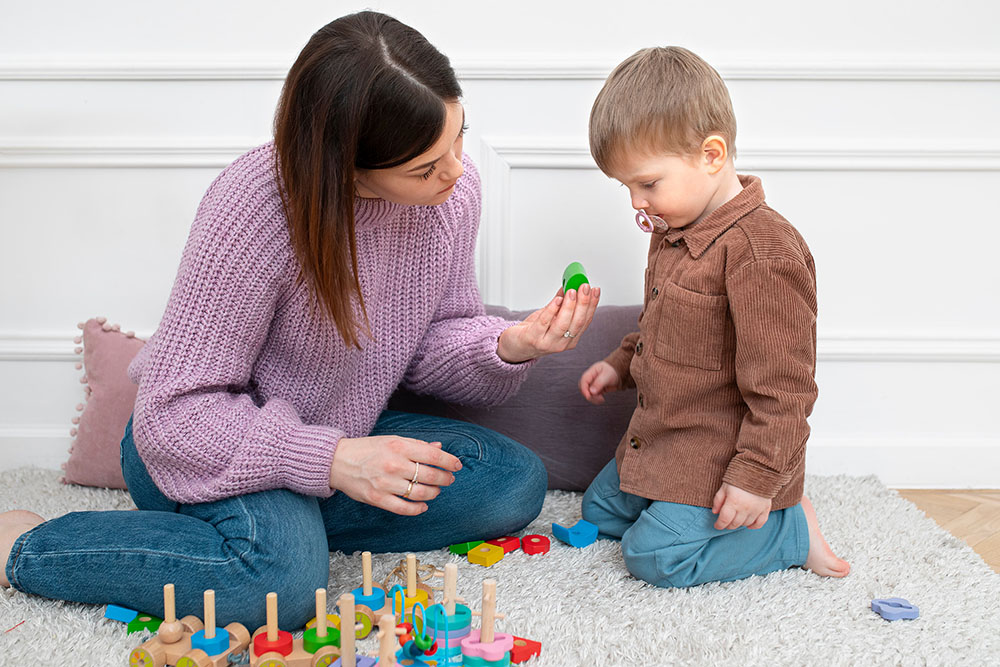
- Join and expand: Enter the play at your child’s level, then add short turns to grow interaction.
- Parent turn: Try the same moves while the therapist coaches in real time.
- Micro-plan: Leave with three tiny actions to practice at home between visits.
What will the therapist look for during play?
The therapist uses the DIR Floortime model: Developmental capacities, Individual differences, and Relationships. No long forms are needed during the hour. The focus stays on how your child relates and how adults can help open and close circles of communication.
Developmental capacities include self-regulation, engagement, two-way communication, shared problem solving, and early ideas. Individual differences include sensory profile, motor planning, and language. Relationships cover how adults adjust their style to help your child stay engaged.
Common observations to expect:
- Regulation cues: Signs your child needs movement, pressure, quiet, or more space.
- Interest cues: Looks, smiles, body shifts, or sounds that say “keep going.”
- Turn-taking growth: Small increases in the number and length of back-and-forth interactions.
DIR Floortime research reports gains when families add regular home play. A pilot randomized trial found that adding parent-implemented DIR/Floortime about 15 hours per week for three months led to significantly greater gains on measures of functional development and autism symptom severity than routine care alone.
How should parents prepare before day one?
Preparation keeps the hour smooth. Pack a few favorite toys, snacks if allowed, and comfort items. Share recent videos of home play if your child needs time to warm up in new spaces. List peak interests, places where play usually works, and moments that derail play.
Plan to join the floor work. The therapist will coach you with short prompts. This is similar to parent training in DIR Floortime that teaches you how to respond in real time. The aim is to help you feel natural in play so you can repeat the moves at home. Families who engage with daily practice often report progress faster than practice limited to clinic time.
Bring or set up:
- Top three interests: Simple props that fit those interests.
- Sensory notes: What calms and what overloads (sound, light, touch, movement).
- Video clips: Short home clips that show real routines or brief wins you want to grow.
What will parents do during the session?
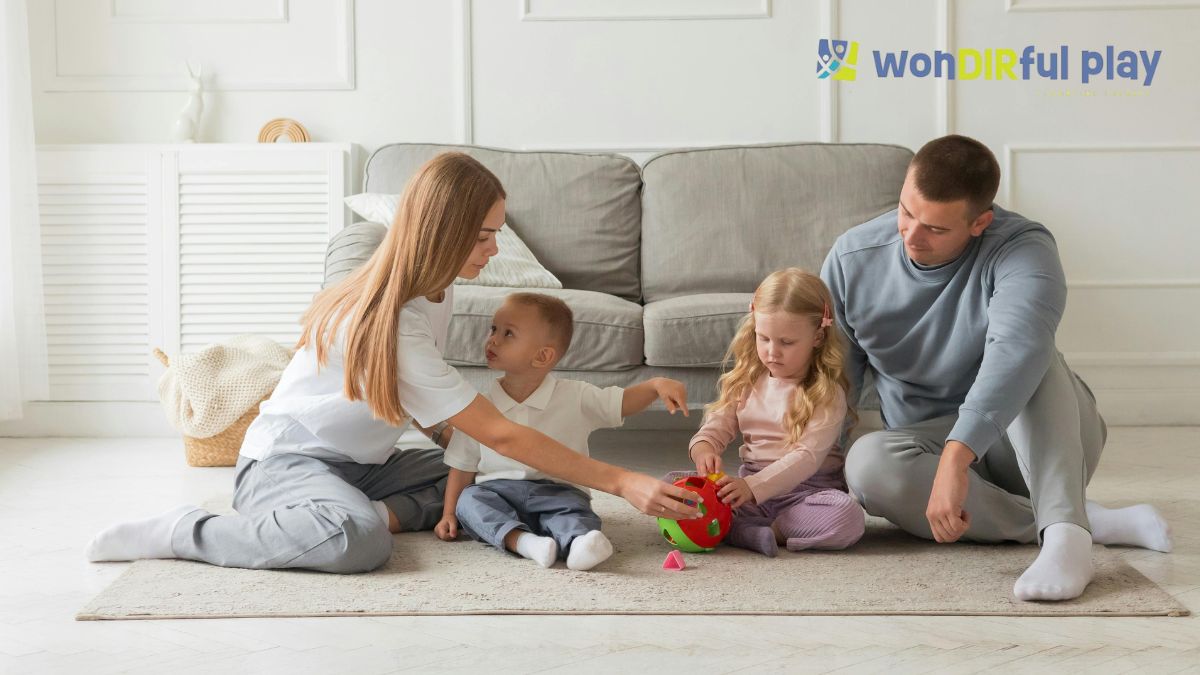
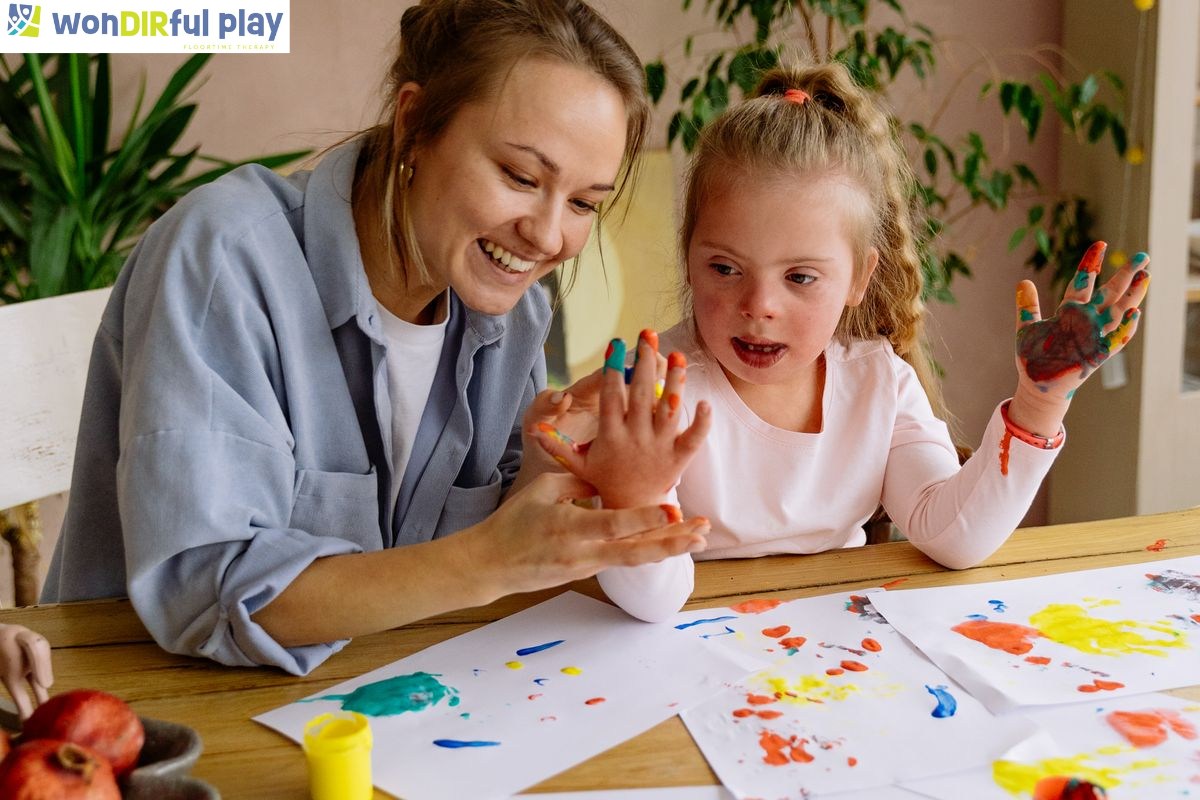
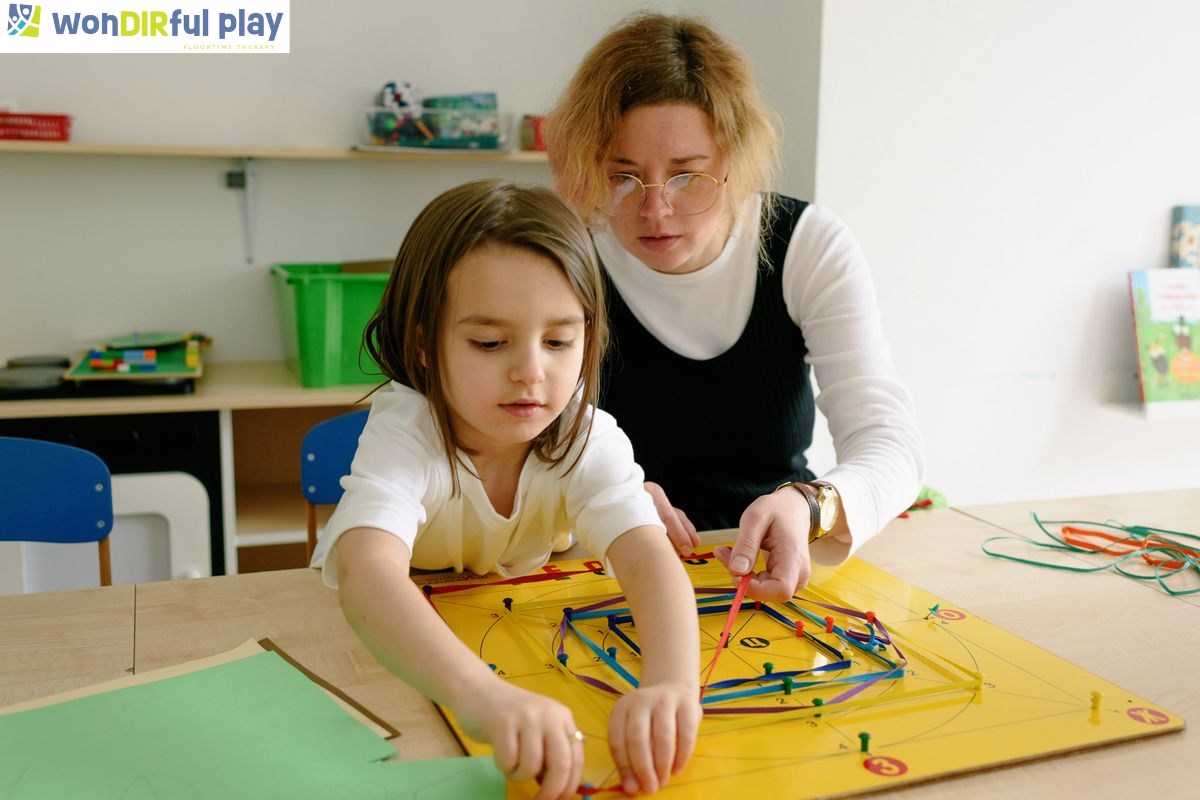
Parents join the play. The therapist models how to join, match, and expand. You practice the moves in short cycles while the therapist coaches. Each cycle aims to stretch engagement by one or two turns.
Parents also learn how to wait for a cue instead of rushing to prompt. Waiting opens room for your child to signal in their own way. You will see how the right pause leads to a look, a gesture, or a sound, which you can then build into a full back-and-forth.
A randomized trial with toddlers showed that parent-mediated coaching improved joint engagement compared to an education control, pointing to the value of coaching on back-and-forth play.
Parent moves practiced in session:
- Join with joy: Copy your child’s action to show “I see you.”
- Add a small twist: Slightly change the action to invite a response.
- Pause for a cue: Hold, look, and wait for any signal before the next move.
- Label naturally: Use short phrases tied to the play and your child’s intent.
- Celebrate effort: Mark tiny wins to make coming back to play feel good.
How is progress tracked after the first visit?
Progress is seen in small, repeatable wins. Early goals include more circles of communication, longer engagement, and more flexible play. The therapist may count turns, track how long your child stays with you in play, and note which sensory tools help. This step follows progress tracking in DIR Floortime that looks for longer engagement and more circles of communication.
Studies that followed families for a year suggest consistent home Floortime works. One prospective follow-up reported that with about 14 hours per week of home DIR/Floortime across a year, 47% of children made good improvement in functional developmental levels and autism severity decreased.
Simple ways to track at home:
- Turns per play burst: Count how many back-and-forth rounds you reach.
- Time on shared play: Note minutes spent in engaged play before a break.
- Idea growth: Jot new actions, sounds, or gestures that your child uses to keep the game going.
How does the clinic plan link with school supports?
Families often ask how clinic work fits with class time in DIR schools or programs influenced by DIR Floortime schools. The same principles can fit IEP goals: regulation supports, engagement goals, and social problem-solving targets. Many general classrooms also borrow parts of DIR by building sensory supports and pairing peer models with shared play.
Share the clinic micro-plan with teachers. Agree on two or three everyday moments where the same play moves can happen. Circle times, centers, and playground games offer natural spaces to grow communication. A short daily routine in class can mirror a short routine at home.
Ways to connect clinic and class:
- Shared language: Use the same words for join, expand, and pause.
- Shared tools: Send a small photo ring or a choice board that matches the clinic plan.
- Shared data: Swap quick notes on turns, time engaged, and new ideas each week.
What does a realistic first-month plan look like?
The first month builds routine. Families keep sessions weekly or biweekly and practice at home on most days. The picture after four weeks usually includes stronger regulation, more circles of communication, and clearer cues. The plan adjusts based on what worked and what stalled.
First-month targets that many families use:
- Daily play bursts: Three short play times on weekdays and two on weekends.
- Turn growth: Two extra circles of communication each week compared to week one.
- Flexibility trial: One new play theme per week that still links back to a favorite.
What should families ask during the debrief?
The debrief clarifies the plan. Ask for the top two strategies that worked and why they worked. Ask how to spot your child’s early stress cues. Ask how to adjust play without breaking engagement. Ask how the plan supports long-term goals like peer play, classroom routines, or early academics.
Helpful debrief questions:
- Which play moves sparked the longest engagement today?
- Which sensory supports kept regulation steady?
- What are the three home actions to repeat before the next visit?
Frequently Asked Questions
What does a DIR Floortime session look like?
A DIR Floortime session looks like playful, child-led interaction where the therapist joins in, follows the child’s lead, and gently expands the play to build engagement and communication. Parents participate, learn to pause, read cues, and add small challenges. Sessions end with home activities tied to daily routines.
What age group is DIR Floortime for?
DIR Floortime is for all ages but begins most often with toddlers and preschoolers. The model adapts based on developmental level, not age, and supports school-age children and teens by matching play and interaction to their interests and abilities. Core principles apply across home, school, and peer settings.
Is Floortime better than ABA?
Floortime and ABA differ in methods, and neither is universally better. Floortime builds engagement through play, while ABA targets specific behaviors through structured teaching. Outcomes depend on fit with your child’s needs, consistent practice, and clear goals. Many families combine both approaches with coaching and progress tracking.
Start Play-Based Progress in New Jersey
Families ready to begin can schedule DIR Floortime therapy in New Jersey and plan the first visit around your child’s interests. WonDIRfulPlay supports parents during the session and at home so gains build across the week. Many families appreciate a clear plan, short daily play bursts, and steady coaching.
We partner with you and your child to turn everyday play into stronger engagement and communication. Reach out to us to set up your child’s first appointment.
Recent articles



.jpg)
.jpg)




.jpg)


.jpg)






.jpg)



-ink.jpeg)
-ink.jpeg)
-ink.jpeg)
-ink.jpeg)
-ink.jpeg)
-ink.jpeg)
-ink.jpeg)
-ink.jpeg)
-ink.jpeg)


.jpeg)

.jpg)
-ink.jpeg)

.jpg)

-ink.jpeg)

-ink.jpeg)
-ink.jpeg)
.jpg)
.jpg)
-ink.jpeg)
-ink.jpeg)
-ink.jpeg)
.jpg)

-ink.jpeg)
-ink.jpeg)
-ink.jpeg)
-ink.jpeg)
-ink.jpeg)
-ink.jpg)
-ink.jpeg)
-ink.jpeg)
-ink.jpeg)
-ink.jpeg)
.jpg)
.jpg)
-ink.jpeg)
-ink.jpeg)
.jpg)
-ink.jpeg)
-ink.jpeg)
-ink.jpeg)
-ink.jpeg)
-ink.jpeg)
-ink.jpeg)
-ink.jpeg)
-ink.jpeg)
-ink.jpeg)
-ink.jpeg)
-ink.jpeg)
-ink.jpeg)
-ink.jpeg)
Our team is ready to answer your questions and address your concerns.


With WonDIRfulPlay, growth feels effortless and joyful. Our DIR floortime therapy services in Lakewood, NJ focus on building emotional connections, communication, and social confidence while addressing sensory and behavioral challenges.
For compliance matters, please call 732-523-9070 or email compllance@wondirfulplay.com


