
How to Use DIR Floortime to Support Sensory and Emotional Regulation in Autism
December 4, 2025
DIR Floortime sensory regulation helps children calm their bodies before engaging in emotional play and communication. Try sensory-first steps for better focus.

Key Points:
- DIR Floortime supports sensory and emotional regulation by starting with calming input like deep pressure or slow movement.
- Once regulated, children engage more easily in shared play.
- Short, parent-led sessions at home link sensory comfort to communication and emotional growth.
Families often see their child leave the room, cover ears, or shut down right when play is supposed to start. That is a sensory problem before it is a social one. DIR Floortime sensory regulation gives children space to calm their bodies so they can relate, communicate, and think.
This guide shows how to set up home Floortime sessions that begin with sensory safety and grow toward emotional regulation and shared play.
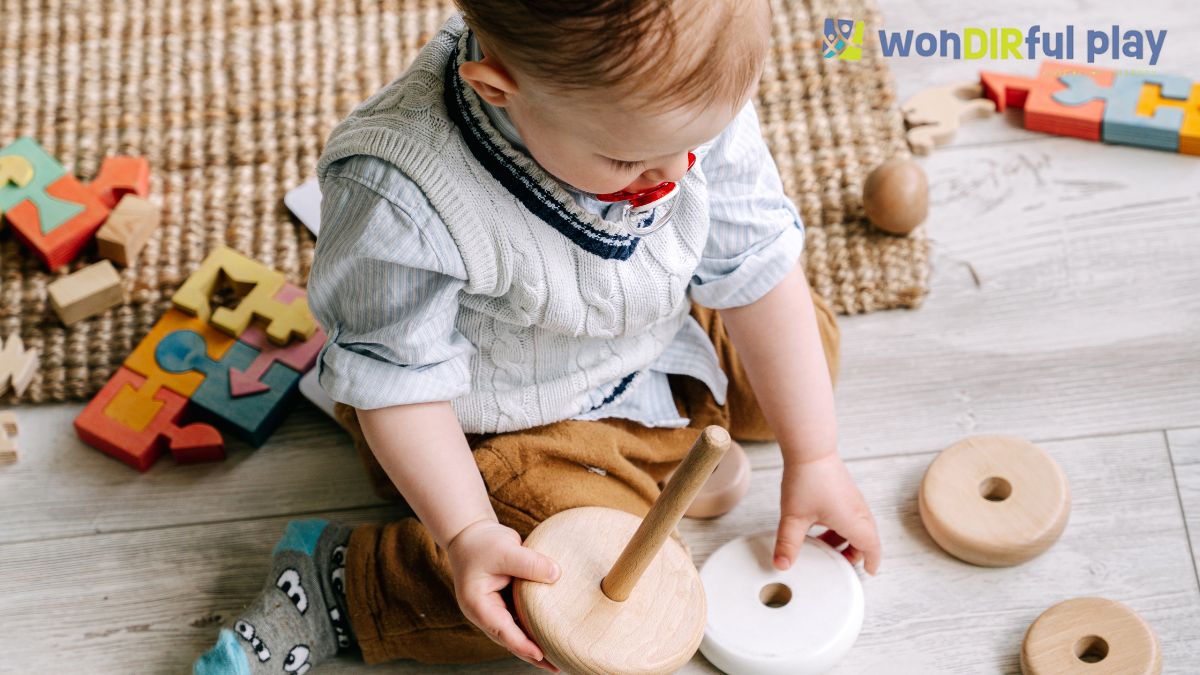
Why Start With Sensory Regulation in DIR Floortime?
Autism is now identified in about 1 in 31 children in the United States, so more families are trying developmental approaches that work in daily life. Sensory differences show up in most of these children, which means regulation has to come early in the session.
DIR (Developmental, Individual-differences, Relationship-based) already says every child processes sound, touch, movement, and visual input in their own way. When a child is under-responsive or over-responsive, emotional skills like joint attention or shared problem solving do not hold.
DIR Floortime sensory regulation is the bridge, and DIR Floortime for sensory processing keeps sensory work tied to relationship play. Start by observing what revs the child up and what organizes them.
- Notice the sensory triggers. Sounds from the TV, siblings’ toys, or kitchen clatter can push the child into fight, flight, or freeze.
- Notice the regulating input. Some children relax with deep pressure, others with slow movement, and others with water play.
- Notice the timing. Many children self-regulate better in the morning than late afternoon.
A 2024 study found that 73% of autistic children showed definite sensory processing problems, so it is realistic to plan for sensory-first sessions. Sensory-first is not a bonus. It is the condition that lets the child relate.
When regulation is in place, DIR Floortime emotional development becomes easier because the child is available for co-regulation, eye contact, and shared affect.
How to Prepare the Home for Sensory-First Floortime
Home is the best place to practice because parents can control noise, light, and activity level. The goal is to make engagement the easiest thing to do in that space.
Use a simple prep routine:
- Choose a low-clutter area. Fewer visual demands make it easier to look at the adult.
- Reduce sound competition. Turn off the TV, close doors, or use soft music if the child calms with rhythm.
- Place regulating tools nearby. Use sensory diet ideas with DIR Floortime techniques like weighted lap pads, therapy balls, chewies, soft tunnels, or beanbags.
Then layer in DIR Floortime sensory regulation activities that match the child’s profile.
- For movement seekers: Slow swinging while the adult sings and waits for eye contact.
- For tactile seekers: Put small toys in kinetic sand and wait for the child to show or request.
- For auditory-sensitive kids: Start with whisper play or sound games using the child’s name.
Keep the parent’s role steady. The adult follows the child’s lead but stays close, watches for stress signals, and opens circles of communication when the child looks organized. This is how Floortime benefits for kids show up at home without changing the whole routine.
Step-by-Step Play Sessions That Grow Emotional Regulation
After the child is calmer, the session can move toward co-regulation and shared affect. Emotional regulation in autism therapy needs practice in tiny, repeatable steps, and DIRFloortime emotional regulation strategies give parents a sequence they can repeat.
Use a 4-part flow:
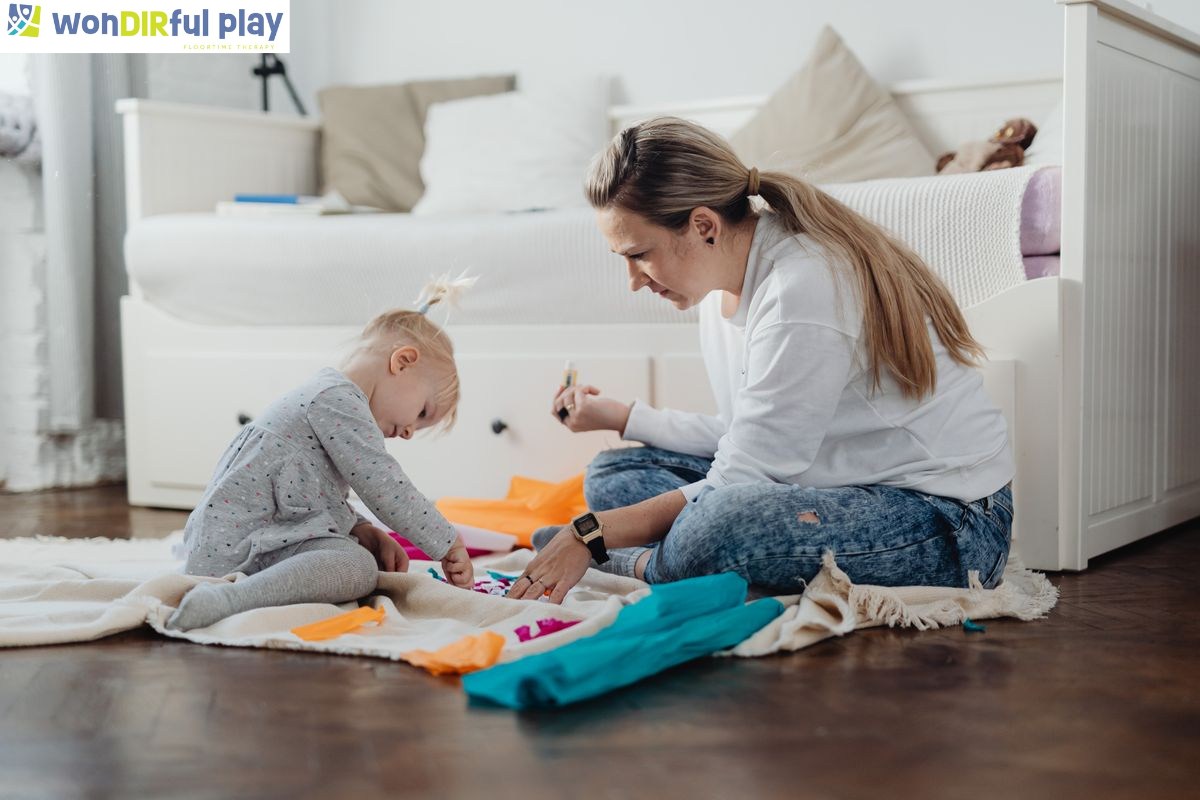
- Join the child’s play. Sit on the floor, copy their action, and match energy.
- Add small emotional cues. Change facial expression, add surprise, or widen eyes to invite shared feeling.
- Wait for a cue back. A look, sound, gesture, or bringing the toy to you counts.
- Expand the emotion. Turn it into a short pattern like “car crashes, car fixes, car crashes again.”
A review of home-based Floortime showed that after a year of parent-led sessions, 47% of children made good progress, 23% made fair progress, and 29% made some progress, which tells parents that steady practice pays off.
In this stage, add keywords in a natural way:
- Autism therapy emotional support is present when the parent mirrors the child’s feeling and helps it calm down.
- Floortime therapy effects appear when the child starts to initiate more circles of communication.
- Social development DIR Floortime becomes possible because the child is already emotionally organized.
Keep each play burst short. Two to three minutes of strong shared affect are more useful than 15 minutes of overstimulation.
How to Link Sensory Calm to Social Engagement
Many families see a gap: the child enjoys sensory play but does not yet enjoy people. DIR therapy social skills grow when the adult connects regulation to interaction.
Try building up in layers:
- Layer 1: Parallel sensory play. This is similar to understanding parallel play in autism, where two players stay side by side before interacting. Both of you scoop beans or roll cars without pressure to talk.
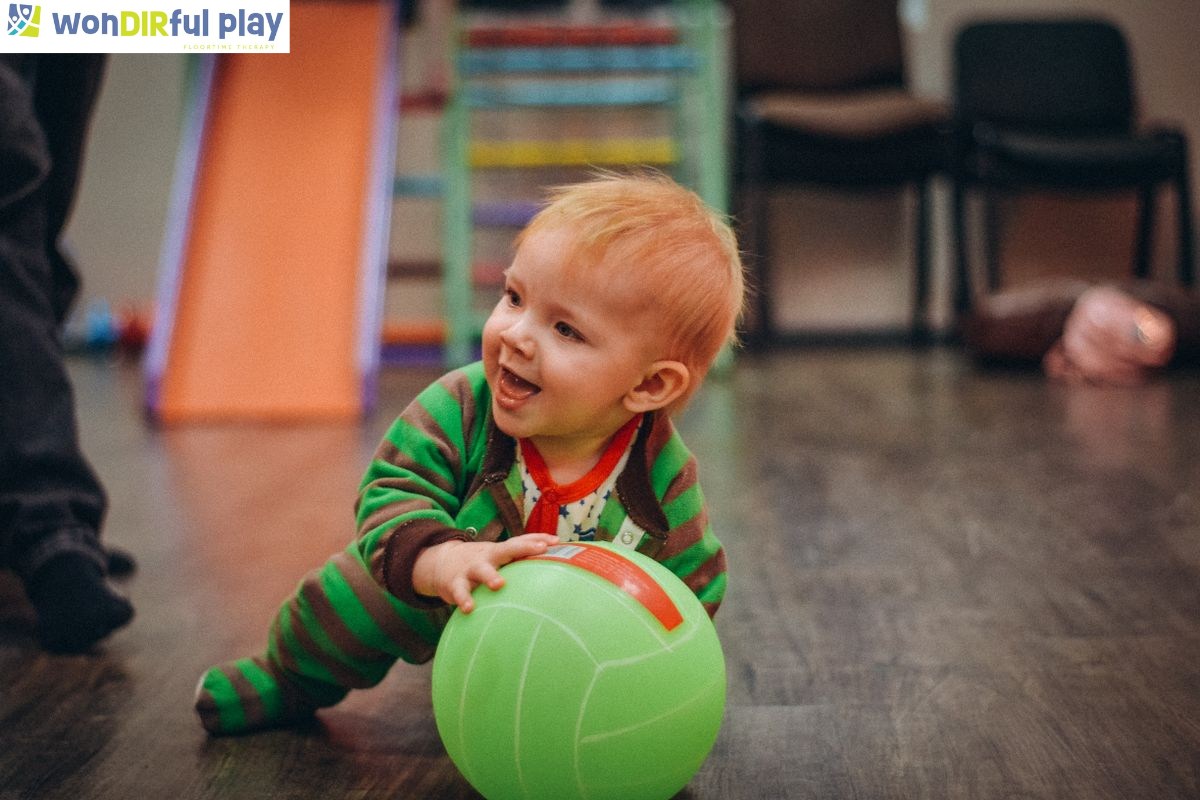
- Layer 2: Turn-taking on the sensory item. You roll the ball, the child rolls the ball.
- Layer 3: Add simple roles. You build, the child knocks; you hide, the child finds.
- Layer 4: Add pretend. The beanbag is now a boat and the child has to invite you in.
Every time you add a social demand, watch for sensory overload. If eye contact drops or movement speeds up, return to the regulating piece. That shows the child that social play will always be paired with sensory safety. This is the heart of DIR Floortime sensory regulation.
Short phrases help social linking:
- “Your turn, then my turn.”
- “You roll slow, I roll fast.”
- “You hide, I find.”
This keeps the play reciprocal without long instructions.
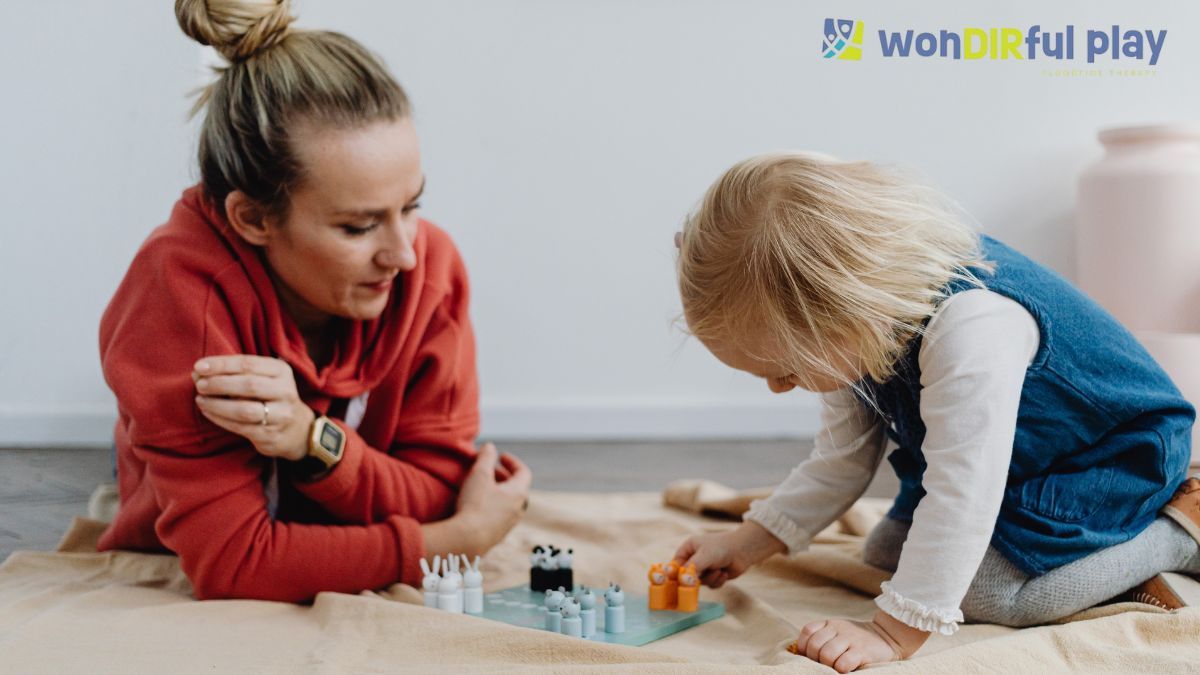
When and How to Adjust for Individual Differences
The DIR approach for autism means no single script. Some children reach engagement in five minutes. Others need 20 minutes of sensory work before trying a circle of communication. Parents can adjust by watching four signals:
- Arousal level. If the child looks wired, go back to deep pressure or slow rocking.
- Interest in people. If the child is only interested in objects, pair every object with a face or voice.
- Tolerance for challenge. If the child cries when the plan changes, use leveled challenges:
- Level 1: Change a small detail.
- Level 2: Change the order.
- Level 3: Add a new person. - Response to repair. If the child recovers quickly after dysregulating, you can move on to emotional themes.
Parents can also track which sensory-emotional pairings work best, like “swinging before pretend play” or “deep pressure before turn-taking.” You can pull from these practical DIR Floortime examples for child development to keep sessions varied. Over time, this approach becomes the family’s Floortime recipe.
Frequently Asked Questions
How many DIR Floortime sessions a day help sensory regulation most?
DIR Floortime sensory regulation benefits from several short sessions per day. DIR Floortime sessions last 20–30 minutes. DIR Floortime schedule uses 2–4 play windows spaced across waking hours to prevent overstimulation. DIR Floortime window anchors to the child’s strongest time of day. DIR Floortime parent-led delivery maintains engagement.
What if my child avoids touch or sound during Floortime?
Child avoidance of touch or sound during Floortime signals sensory overload. Lower sound levels, dim lights, and begin with movement or visual play that does not require touch. Start interactions at arm’s length and move closer once the child appears calm. Pair all new sensory input with warm facial expressions to build comfort.
Can DIR Floortime work together with occupational therapy for sensory issues?
Yes. DIR Floortime can work with occupational therapy for sensory issues by using OT’s sensory strategies to support shared emotional play. Therapists can apply the same calming tools from home sessions. Coordinating sensory input across both approaches helps children regulate more consistently and reach social interaction goals more quickly.
Start Sensory-Focused Floortime in New Jersey
Children who learn to calm first can connect longer. Families looking for DIR Floortime therapy in New Jersey can get guidance on designing sensory-first play, choosing regulating tools, and keeping emotional goals realistic for home life. WonDIRfulPlay supports parents so they can open more circles of communication and help their children enjoy social moments.
Reach out today to set up a plan that begins with regulation, moves to engagement, and keeps growing into shared problem solving.
Recent articles



.jpg)
.jpg)




.jpg)


.jpg)






.jpg)




-ink.jpeg)
-ink.jpeg)
-ink.jpeg)
-ink.jpeg)
-ink.jpeg)
-ink.jpeg)
-ink.jpeg)
-ink.jpeg)
-ink.jpeg)


.jpeg)


.jpg)
-ink.jpeg)

.jpg)

-ink.jpeg)

-ink.jpeg)
-ink.jpeg)
.jpg)
.jpg)
-ink.jpeg)
-ink.jpeg)
-ink.jpeg)
.jpg)

-ink.jpeg)
-ink.jpeg)
-ink.jpeg)
-ink.jpeg)
-ink.jpeg)
-ink.jpg)
-ink.jpeg)
-ink.jpeg)
-ink.jpeg)
-ink.jpeg)
.jpg)
.jpg)
-ink.jpeg)
-ink.jpeg)
.jpg)
-ink.jpeg)
-ink.jpeg)
-ink.jpeg)
-ink.jpeg)
-ink.jpeg)
-ink.jpeg)
-ink.jpeg)
-ink.jpeg)
-ink.jpeg)
-ink.jpeg)
-ink.jpeg)
-ink.jpeg)
-ink.jpeg)
-ink.jpeg)


With WonDIRfulPlay, growth feels effortless and joyful. Our DIR floortime therapy services in Lakewood, NJ focus on building emotional connections, communication, and social confidence while addressing sensory and behavioral challenges.
For compliance matters, please call 732-523-9070 or email compllance@wondirfulplay.com

