
How DIR/Floortime Therapy Supports Emotional Regulation in Young Children
February 9, 2026
Learn how DIR/Floortime therapy helps young children build emotional regulation through play, connection, and developmentally supportive strategies.
-ink.jpeg)
Key points:
- Explains how dir floortime emotional regulation works through play-based, relationship-focused strategies that support everyday emotional growth.
- Shows parents how emotional regulation develops in early childhood and why connection-based therapy matters.
- Offers practical, research-informed guidance for families seeking emotional regulation therapy for children.
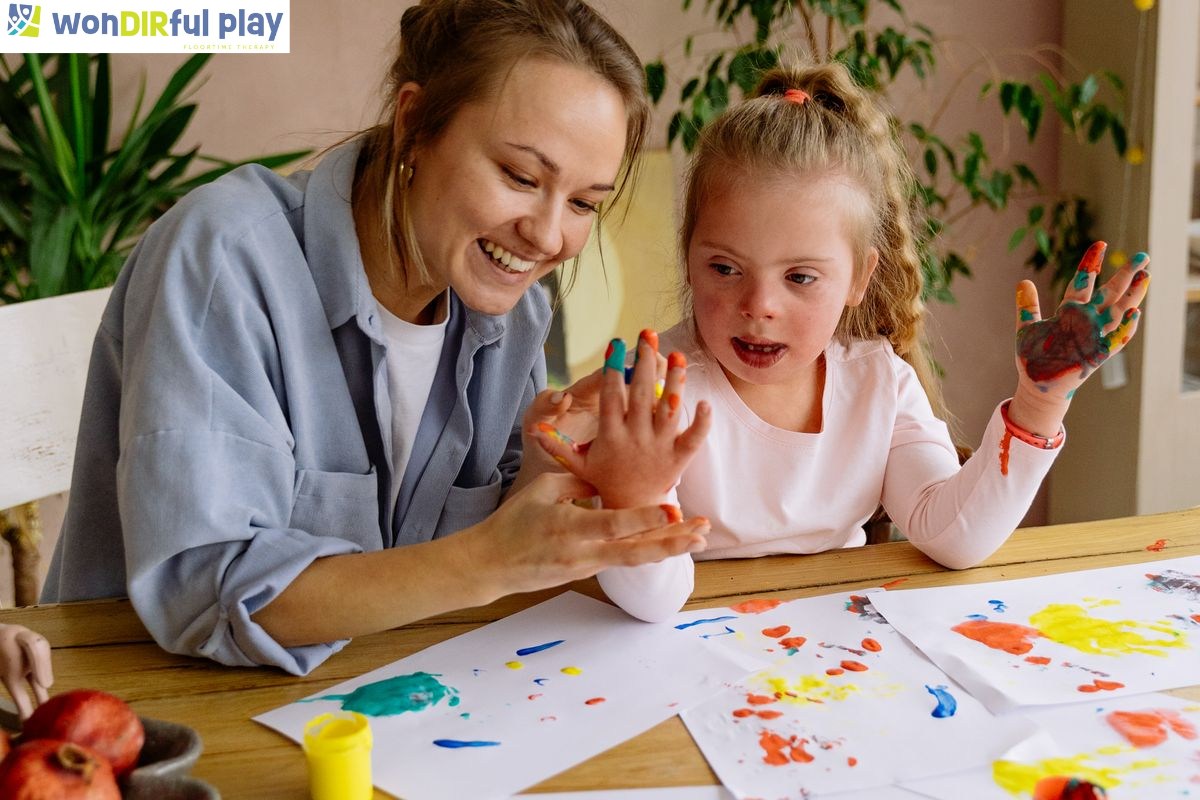
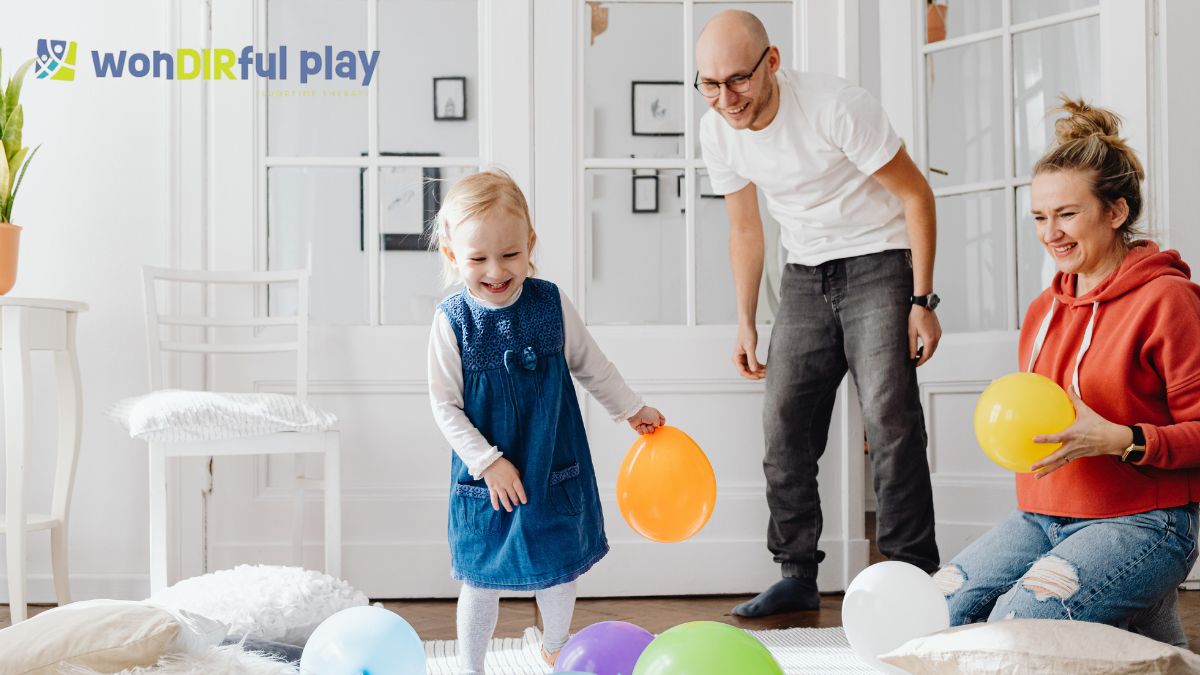
Big emotions are often one of the earliest challenges families notice, especially when children struggle to calm, recover, or express feelings safely. DIR Floortime emotional regulation focuses on helping children understand and manage those emotions through connection rather than control. During play therapy for emotional regulation, therapists meet children at their current developmental level and use shared play to practice coping skills in real time.
This form of emotional development therapy helps children feel understood before they are asked to adapt. Over time, floortime self regulation skills grow as children experience consistent emotional support therapy within playful interactions. Instead of correcting behavior, developmental emotional therapy helps children build internal tools for calming, flexibility, and communication. These floortime therapy benefits are especially meaningful for families seeking supportive, relationship based care in New Jersey.
Understanding Emotional Regulation in Early Childhood
Emotional regulation refers to a child's ability to recognize emotions, manage emotional intensity, and return to a calm state with support. In early childhood, these skills are still developing and depend heavily on adult guidance.
Research from child development institutes shows that the brain areas responsible for self-control and emotional balance mature gradually through early childhood and beyond. Young children rely on caregivers to co-regulate, meaning adults help them calm down before they can do it themselves. When emotional demands exceed a child's developmental capacity, emotional outbursts are a natural response, not misbehavior.
Common signs of emotional regulation challenges include:
- Intense reactions to small frustrations
- Difficulty transitioning between activities
- Trouble expressing feelings with words
- Needing significant help to calm down
Helping children regulate emotions requires understanding emotional development rather than expecting adult-like control. DIR/Floortime is designed around this principle, supporting emotional growth at the child's current level.
What DIR/Floortime Therapy Is and How It Works
DIR stands for Developmental, Individual differences, and Relationship-based. Floortime refers to meeting the child at their level and joining them in play that feels meaningful to them. Together, they form a framework often described as developmental emotional therapy.
The goal is not to direct behavior but to build emotional and relational capacities step by step. Therapists and parents follow the child's lead, respond to emotional cues, and create playful interactions that encourage communication, problem-solving, and emotional engagement.
Key elements include:
- Developmental understanding of emotional milestones
- Respect for individual sensory and emotional differences
- Strong emphasis on relationships as the foundation for learning
This approach is widely supported by research from academic and nonprofit organizations focused on early childhood mental health. Studies consistently show that relationship-based interventions improve emotional regulation more effectively than behavior-only methods in young children.
Why Emotional Regulation Is Central to Floortime
In Floortime, emotional regulation is not a side goal. It is the foundation of all learning and interaction. When a child feels emotionally safe and regulated, they are more able to engage, communicate, and think flexibly.
Rather than asking a child to control emotions they cannot yet manage, Floortime helps build those skills from the inside out. Emotional regulation develops through repeated experiences of being understood, soothed, and supported during emotional moments.
This is why play therapy for emotional regulation is so effective. Play allows children to express feelings symbolically, practice emotional responses, and experience success in manageable challenges. Over time, these experiences strengthen neural pathways involved in emotional balance.
The Role of Play in Building Self Regulation
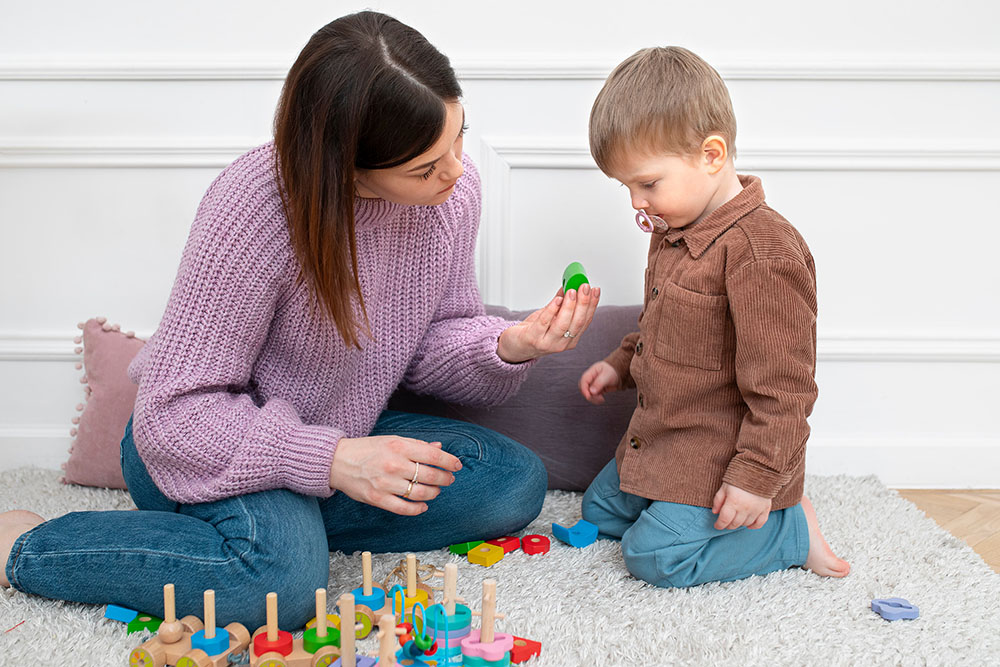
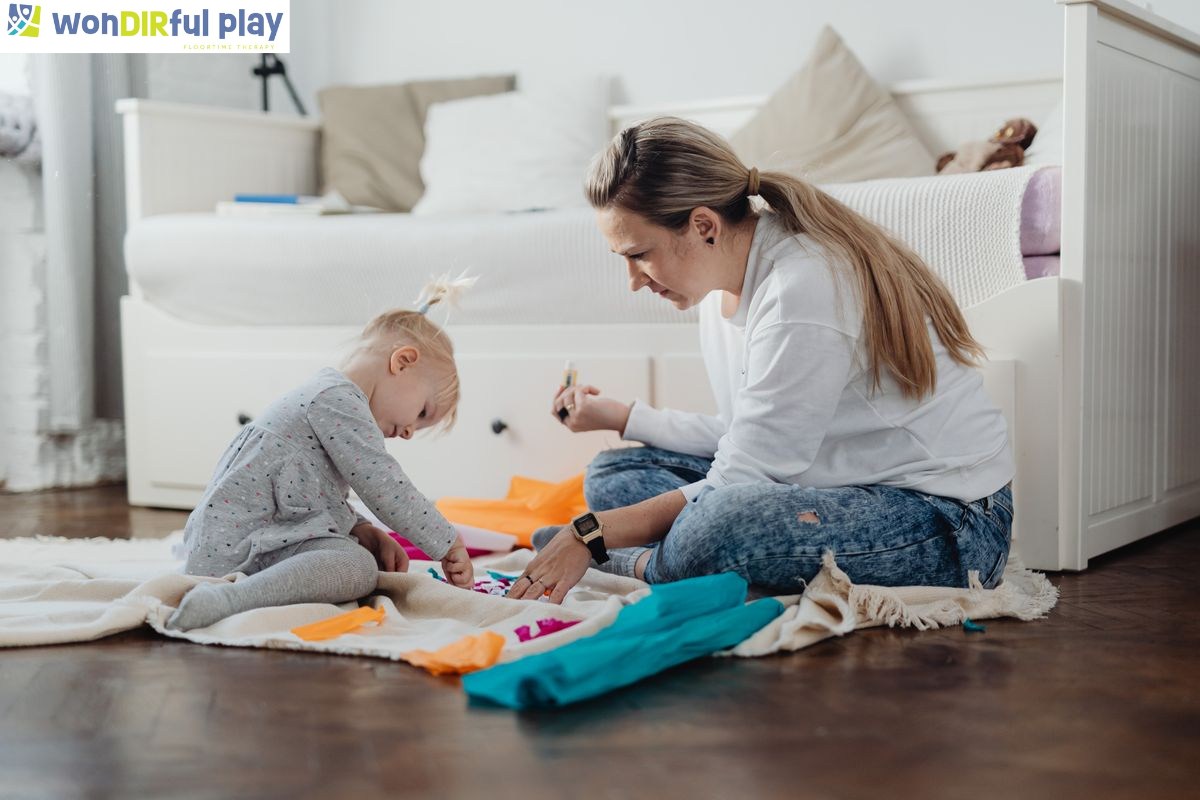
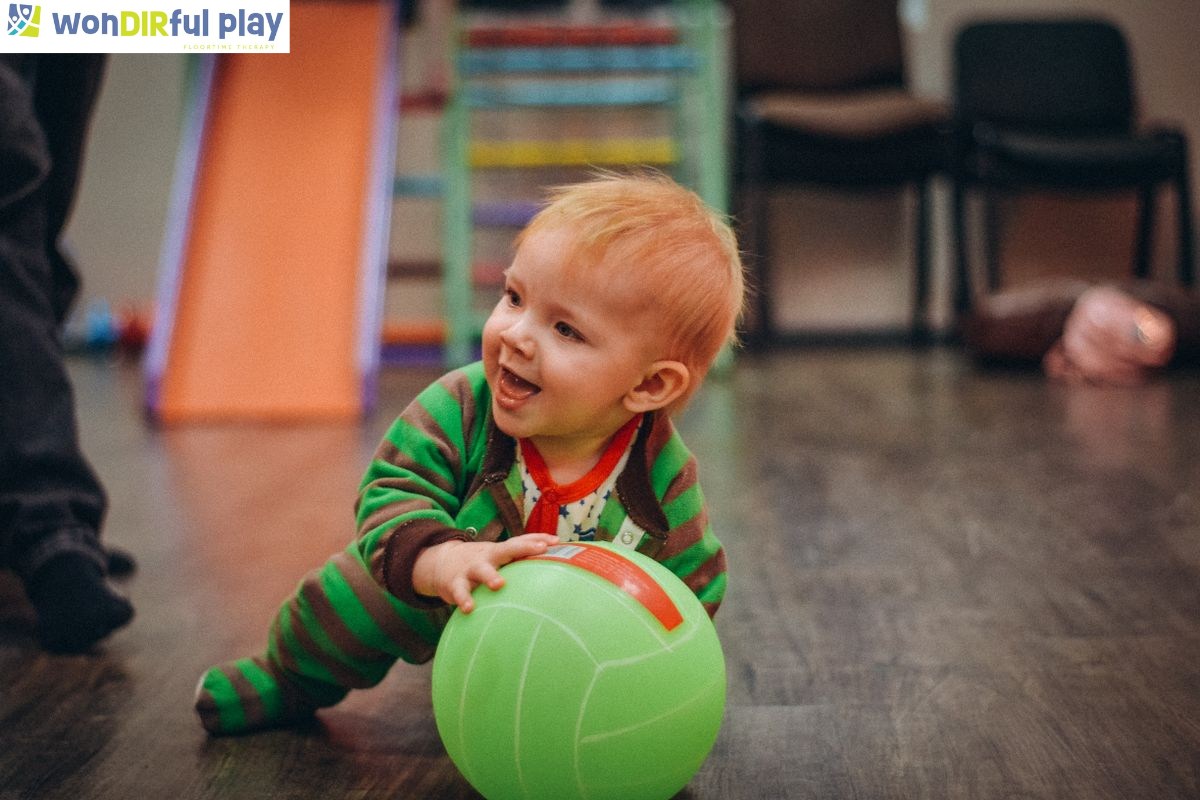
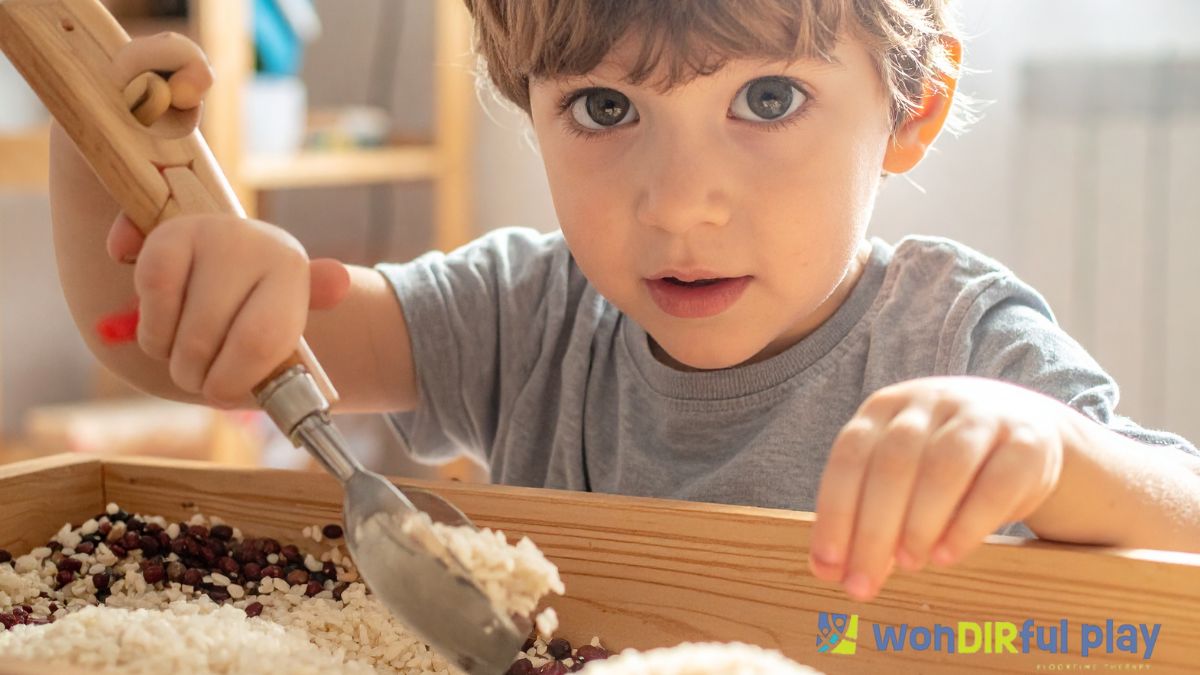
Play is the natural language of children. Through play, children explore emotions, practice coping, and experiment with control in a safe environment. Floortime uses play intentionally to support floortime self regulation skills.
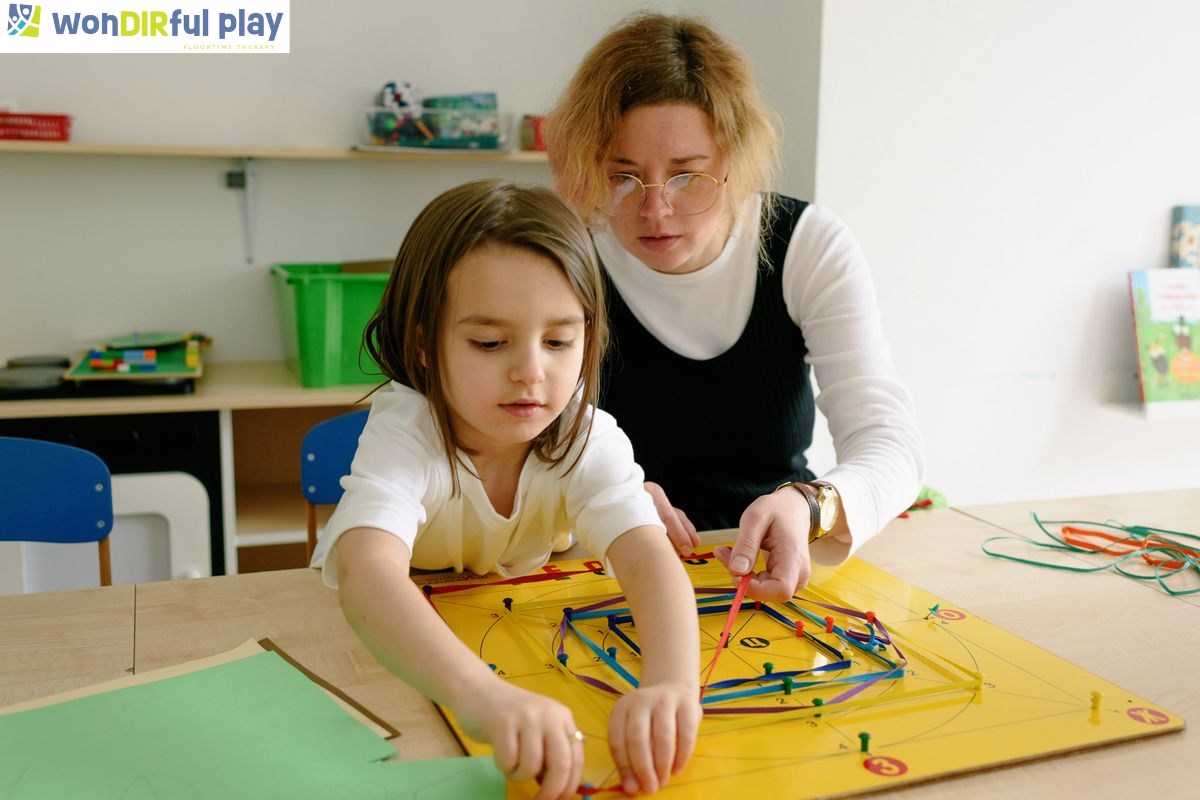
During sessions, play is not random. It is carefully observed and supported to encourage emotional growth. For example, a therapist might:
- Pause play to allow a child to notice feelings
- Add gentle challenges that encourage persistence
- Use playful problem-solving to manage frustration
Research from university psychology departments shows that guided play strengthens executive functioning and emotional regulation more effectively than structured instruction alone. Play-based emotional development supports both emotional awareness and recovery from stress.
This makes emotional development therapy especially valuable for young children who struggle to verbalize feelings or respond well to traditional instruction.
Relationship-Based Support and Emotional Safety
-ink.jpeg)
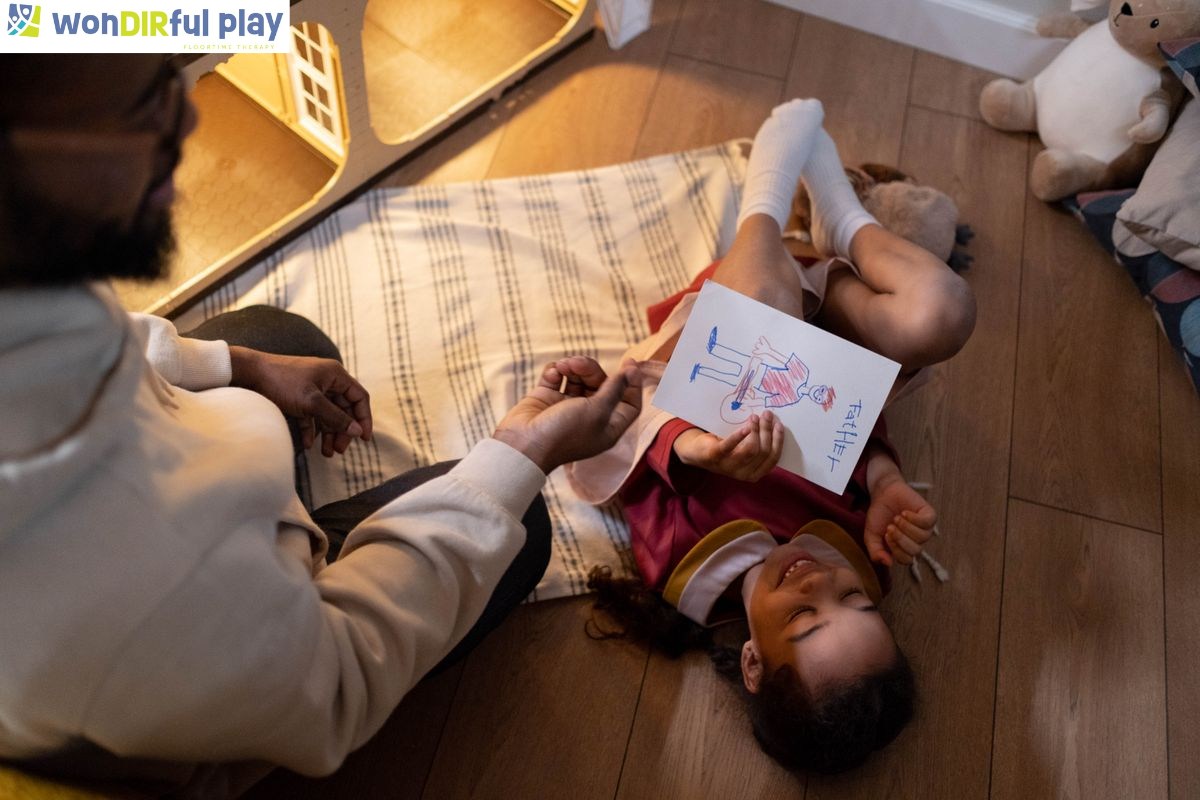
Children regulate emotions best within secure relationships. Floortime emphasizes emotional safety by building trust through consistent, responsive interactions. When children feel seen and understood, their nervous systems are better able to calm.
In sessions, adults reflect emotions rather than dismissing them. A child's frustration is acknowledged before problem-solving begins. This teaches children that emotions are manageable and temporary.
Benefits of relationship-based emotional support include:
- Increased emotional awareness
- Faster recovery from distress
- Improved tolerance for frustration
Studies from child mental health organizations show that secure attachment is directly linked to improved emotional regulation outcomes. Child emotional support therapy grounded in relationships helps children internalize calming strategies over time.
How Floortime Addresses Individual Emotional Differences
Every child experiences emotions differently. Sensory sensitivity, temperament, and past experiences all influence emotional responses. DIR/Floortime recognizes these individual differences rather than applying one-size-fits-all strategies.
Some children become overwhelmed by noise or movement, while others seek intense sensory input. Floortime adapts interactions to match each child's emotional and sensory profile.
Examples include:
- Slower pacing for easily overwhelmed children
- More movement-based play for sensory-seeking children
- Predictable routines to reduce emotional uncertainty
Research from developmental psychology organizations shows that individualized emotional support improves regulation more than standardized approaches. This individualized focus is a key reason for the documented floortime therapy benefits seen in emotional growth.
Supporting Emotional Regulation at Home Through Floortime Principles
Floortime is not limited to therapy sessions. Parents play a central role in helping children build emotional regulation throughout daily life. Simple shifts in interaction can make a meaningful difference.
Practical ways parents can apply Floortime principles include:
- Following the child's lead during playtime
- Naming emotions without judgment
- Staying emotionally present during meltdowns
- Using playful engagement to guide transitions
Research from family-focused intervention programs shows that parent involvement significantly improves emotional regulation outcomes. When caregivers learn how to co-regulate consistently, children gain emotional skills faster and with less stress.
This home-based support is a critical part of emotional regulation therapy for children using a Floortime approach.
Emotional Regulation and Social Development
Emotional regulation is closely tied to social skills. Children who struggle to manage emotions often find peer interactions challenging. Floortime supports social development by strengthening emotional understanding and flexibility.
Through shared play and emotional exchanges, children learn to:
- Read emotional cues in others
- Wait and take turns
- Repair interactions after conflict
Studies from educational research institutions show that emotional regulation predicts social success more strongly than early academic skills. Play therapy for emotional regulation helps children practice these skills naturally, without pressure.
As emotional regulation improves, children often show better cooperation, empathy, and confidence in social settings.
Evidence Supporting DIR/Floortime for Emotional Growth
Multiple studies from nonprofit research organizations and academic centers support the effectiveness of relationship-based developmental therapies. Research shows improvements in emotional regulation, social engagement, and adaptive behavior for young children receiving DIR/Floortime interventions.
Key findings include:
- Increased emotional reciprocity
- Improved ability to calm after distress
- Stronger parent-child relationships
These outcomes are especially meaningful because they address underlying emotional development rather than surface behaviors. Developmental emotional therapy builds skills that support long-term emotional health.
Accessing Floortime Therapy and Regional Considerations
Families seeking Floortime services often look for providers who understand emotional development and family involvement. Availability varies by region, and many families search for specialized support such as floortime therapy new jersey when looking for local options.
When exploring services, families may consider:
- Provider training in DIR principles
- Emphasis on parent coaching
- Focus on emotional regulation goals
Research from public health organizations emphasizes the importance of early intervention for emotional challenges. Accessing appropriate support early can significantly reduce long-term emotional and behavioral difficulties.
Integrating Emotional Regulation Goals Into Daily Routines
-ink.jpeg)
Emotional regulation develops through repeated, everyday experiences. Floortime encourages families to embed emotional support into routines like meals, bedtime, and transitions.
Examples include:
- Turning routines into playful interactions
- Allowing extra time for emotional adjustment
- Using connection before correction
These strategies align with findings from child development research showing that consistent emotional support in daily life accelerates self-regulation skills. Helping children regulate emotions becomes more effective when it is woven into natural interactions rather than isolated interventions.
Frequently Asked Questions
How long does it take to see emotional regulation improvements with Floortime?
Many families notice small changes within weeks, such as quicker calming or increased emotional awareness. Larger emotional regulation gains usually develop gradually over several months of consistent support.
Is DIR/Floortime appropriate for children without diagnoses?
Yes. Floortime supports emotional development for any child struggling with regulation, transitions, or emotional intensity, regardless of diagnosis or developmental label.
Can Floortime replace other emotional support therapies?
Floortime can stand alone or complement other supports. Its relationship-based approach often enhances the effectiveness of additional emotional or developmental interventions.
Help Your Child Build Calm From the Inside Out
Emotional regulation therapy for children works best when it feels safe, engaging, and responsive. DIR Floortime offers a gentle way to support emotional growth without pressure or rigid expectations. Families exploring floortime therapy in New Jersey often choose this approach because it respects a child’s emotional experience while guiding them toward regulation skills.
WonDIRfulPlay uses play-based strategies to help children recognize emotions, recover from frustration, and stay connected during challenging moments. Parents are included in the process so emotional regulation skills continue at home and in daily routines.
If you are looking for a child emotional support therapy model that strengthens connection while building resilience, reach out to learn how floortime therapy can support your child’s emotional development with care and intention.
Recent articles


.jpg)
.jpg)



.jpg)


.jpg)






.jpg)



-ink.jpeg)
-ink.jpeg)
-ink.jpeg)
-ink.jpeg)
-ink.jpeg)
-ink.jpeg)
-ink.jpeg)
-ink.jpeg)
-ink.jpeg)


.jpeg)


.jpg)
-ink.jpeg)

.jpg)

-ink.jpeg)

-ink.jpeg)
-ink.jpeg)
.jpg)
.jpg)
-ink.jpeg)
-ink.jpeg)
-ink.jpeg)
.jpg)

-ink.jpeg)
-ink.jpeg)
-ink.jpeg)
-ink.jpeg)
-ink.jpeg)
-ink.jpg)
-ink.jpeg)
-ink.jpeg)
-ink.jpeg)
-ink.jpeg)
.jpg)
.jpg)
-ink.jpeg)
-ink.jpeg)
.jpg)
-ink.jpeg)
-ink.jpeg)
-ink.jpeg)
-ink.jpeg)
-ink.jpeg)
-ink.jpeg)
-ink.jpeg)
-ink.jpeg)
-ink.jpeg)
-ink.jpeg)
-ink.jpeg)
-ink.jpeg)
-ink.jpeg)
-ink.jpeg)


With WonDIRfulPlay, growth feels effortless and joyful. Our DIR floortime therapy services in Lakewood, NJ focus on building emotional connections, communication, and social confidence while addressing sensory and behavioral challenges.
For compliance matters, please call 732-523-9070 or email compllance@wondirfulplay.com

