
When to Consider DIR/Floortime Therapy for Developmental Delays
February 9, 2026
When to consider DIR/Floortime therapy for developmental delays, including early signs, benefits, research insights, and guidance for families seeking supportive, play based care.
-ink.jpeg)
Key points:
- Learn how dir floortime for developmental delays supports emotional, social, and communication growth through child-led play and strong relationships.
- Recognize early signs a child needs floortime therapy and understand where it fits among common developmental delay therapy options.
- Gain practical guidance on starting early childhood developmental therapy, using child development support services, and finding floortime therapy near me, including floortime therapy new jersey.
Parents often sense when something feels different in their child's development but are unsure when to seek support. DIR Floortime for developmental delays is often considered when children show challenges with communication, play, emotional regulation, or social engagement. Unlike traditional developmental delay therapy options, this approach focuses on relationships and interaction as the foundation for learning.
Early intervention play therapy can be especially effective when started during early childhood developmental therapy stages. Signs a child needs floortime therapy may include limited back and forth play, difficulty adapting to change, or reduced engagement with others.
Play based developmental intervention allows therapists to meet children where they are while gently expanding skills. Families searching for floortime therapy near me in New Jersey often appreciate this supportive and individualized model.
Understanding DIR/Floortime Therapy
DIR floortime for developmental delays is grounded in the DIR model, which stands for Developmental, Individual differences, and Relationship-based. At its core, it recognizes that learning happens best when children feel emotionally connected and understood. Instead of directing a child through tasks, adults join the child in play, follow their interests, and gradually expand interaction.
Research from nonprofit and academic sources shows that relationship-based developmental approaches can support improvements in communication, emotional regulation, and social engagement, especially when parents are actively involved. Studies published through publicly accessible medical research databases note that children who receive consistent, caregiver-implemented play based developmental intervention often demonstrate gains in shared attention, engagement, and functional communication over time.
This approach is commonly used with children who have autism, speech delays, social communication challenges, or global developmental delays, but it is not limited to a single diagnosis. It is best understood as a framework for early childhood developmental therapy rather than a narrow technique.
Why Relationships Matter in Early Development
Early development is not just about learning words, colors, or routines. It is about learning how to connect, communicate needs, and engage with the world. Government and educational research consistently emphasizes that early relationships shape brain development, emotional regulation, and social learning.
In early intervention play therapy, relationships serve as the foundation for all other skills. A child who can stay engaged with another person, share attention, and communicate intent is better positioned to learn language, problem solving, and self-help skills later on. DIR/Floortime directly targets these foundational abilities, making it especially relevant when delays involve interaction rather than isolated academic skills.
How DIR/Floortime Differs from Other Developmental Therapies
Families exploring developmental delay therapy options often encounter a wide range of services. Some focus on behavior, others on speech mechanics or motor skills. DIR floortime for developmental delays differs in several meaningful ways.
- It prioritizes emotional connection before compliance or task completion.
- It adapts goals to the child's developmental level rather than age expectations.
- It encourages parents to be active participants, not observers.
- It integrates learning into everyday routines and play, not only therapy sessions.
Structured approaches may be helpful for teaching specific skills, but they do not always address why a child struggles to engage or communicate. Floortime focuses on the underlying developmental capacities that support learning across all areas.
Signs a Child May Benefit from Floortime
Recognizing signs a child needs floortime therapy can help families seek support early. These signs do not always indicate a diagnosis, but they suggest that relational development may need support.
- Limited eye contact or shared attention during play
- Difficulty engaging in back-and-forth interaction
- Minimal pretend or imaginative play
- Challenges expressing emotions or responding to others' emotions
- Frequent frustration or withdrawal during interaction
Educational and public health research emphasizes that addressing these signs early leads to better developmental outcomes. Children do not need to wait for a formal diagnosis to benefit from child development support services focused on social and emotional growth.
When Is the Right Time to Start DIR/Floortime Therapy
-ink.jpeg)
There is no single perfect moment, but earlier is often better. Early childhood developmental therapy is most effective when the brain is rapidly developing and flexible. Infants, toddlers, and preschool-aged children can all benefit from DIR floortime for developmental delays, especially when challenges with engagement or communication are present.
Parents may consider this approach when:
- Developmental delays impact interaction more than isolated skills
- Progress in other therapies feels limited or fragmented
- The child struggles with emotional regulation or connection
- Families want a therapy that fits naturally into home life
Publicly funded early intervention programs often recommend relationship-based approaches for young children because of their strong alignment with developmental science.
What a Floortime Session Looks Like
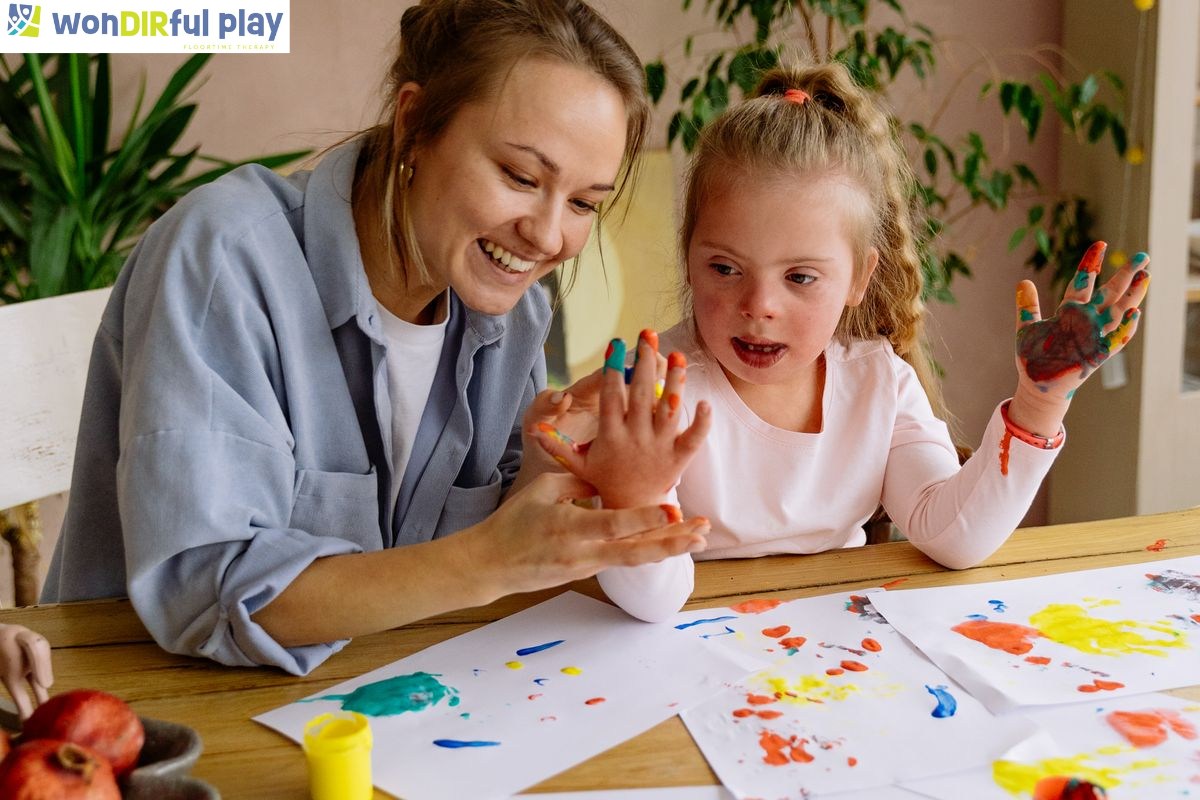
A floor-time session does not look like a traditional lesson. Instead, it begins with observing what captures the child's interest. The adult joins the activity at the child's level, whether that means sitting on the floor, following a toy car, or joining a pretend game.
During the session, the adult aims to:
- Sustain engagement through shared attention
- Encourage communication, verbal or nonverbal
- Expand play themes gently and responsively
- Support problem solving within interaction
Sessions may be brief but frequent, woven into daily routines like playtime, meals, or transitions. This flexibility makes floortime a practical play based developmental intervention for families.
The Role of Parents and Caregivers
One of the most powerful aspects of developmental therapy for children through floortime is caregiver involvement. Parents are coached to recognize developmental milestones, respond to cues, and build interaction throughout the day.
Research from nonprofit child development organizations highlights that children make stronger gains when caregivers are confident and consistent. Rather than relying solely on weekly sessions, floortime transforms everyday moments into opportunities for growth.
Combining Floortime with Other Services
DIR/Floortime works best as part of a comprehensive plan. Many children benefit from combining it with speech therapy, occupational therapy, or other child development support services.
- Speech therapy may focus on language clarity and vocabulary.
- Occupational therapy may support sensory processing or motor skills.
- Floortime strengthens the emotional and relational foundation that supports both.
This collaborative approach ensures that progress in one area supports development in others.
Measuring Progress Over Time
Progress in DIR floortime for developmental delays is often gradual but meaningful. Instead of counting isolated skills, progress is measured by changes in engagement, communication, and emotional regulation.
Parents may notice:
- Longer periods of shared play
- Increased initiation of interaction
- Improved ability to recover from frustration
- Greater flexibility in play and routines
Educational research emphasizes that these foundational changes predict long-term success in learning and relationships.
Finding Floortime Therapy in Your Area
Families searching for floortime therapy near me can explore early intervention programs, developmental clinics, and community-based providers. Training in relationship-based developmental approaches is an important factor when choosing a provider.
In areas like floortime therapy new jersey, services may be available through state early intervention systems, private practices, or integrated developmental programs. Asking about parent coaching, goal setting, and collaboration with other services can help families choose the right fit.
Supporting Floortime at Home
-ink.jpeg)
Even outside formal sessions, parents can reinforce progress by:
- Following the child's lead during play
- Responding with warmth and curiosity
- Allowing extra time for interaction
- Creating predictable, supportive routines
These small, consistent actions strengthen the emotional connection that drives development. Parents can learn more about using DIR Floortime techniques at home to support their child's growth.
Addressing Common Parent Concerns
Some parents worry that floor-time may be too unstructured or slow. However, research from academic and nonprofit sources suggests that relationship-based approaches support deep developmental change rather than short-term compliance. While progress may look subtle at first, it builds a foundation for communication, learning, and emotional health.
Consistency, support, and realistic expectations are key. Floortime is not about quick fixes, but about helping children grow in ways that feel authentic and lasting.
Frequently Asked Questions
What ages benefit most from floortime therapy?
Floortime is most commonly used in infancy through early elementary years, when social and emotional foundations are still developing and highly responsive to relationship-based intervention.
Is floortime only for children with autism?
No. While commonly used with autism, it also supports children with speech delays, social communication challenges, and broader developmental delays.
Can parents use floortime without a therapist?
Parents can use many strategies at home, but professional guidance helps ensure goals are developmentally appropriate and progress is supported effectively.
Take the Next Step When Development Feels Uncertain
Choosing developmental therapy for children does not have to start with labels or pressure. DIR Floortime offers child development support services that honor each child’s pace and strengths. Families seeking floortime therapy in New Jersey often turn to this approach when they want early support that feels natural and respectful.
WonDIRfulPlay provides play based developmental intervention that focuses on communication, emotional growth, and connection. Parents are supported in understanding their child’s needs and learning how to help progress continue at home.
If you are noticing signs your child may benefit from additional support, reach out today to explore how DIR Floortime can offer meaningful guidance during critical developmental years.
Recent articles


.jpg)
.jpg)




.jpg)


.jpg)







.jpg)





-ink.jpeg)
-ink.jpeg)
-ink.jpeg)
-ink.jpeg)
-ink.jpeg)
-ink.jpeg)
-ink.jpeg)
-ink.jpeg)
-ink.jpeg)


.jpeg)


.jpg)
-ink.jpeg)

.jpg)

-ink.jpeg)

-ink.jpeg)
-ink.jpeg)
.jpg)
.jpg)
-ink.jpeg)
-ink.jpeg)
-ink.jpeg)
.jpg)

-ink.jpeg)
-ink.jpeg)
-ink.jpeg)
-ink.jpeg)
-ink.jpeg)
-ink.jpg)
-ink.jpeg)
-ink.jpeg)
-ink.jpeg)
-ink.jpeg)
.jpg)
.jpg)
-ink.jpeg)
-ink.jpeg)
.jpg)
-ink.jpeg)
-ink.jpeg)
-ink.jpeg)
-ink.jpeg)
-ink.jpeg)
-ink.jpeg)
-ink.jpeg)
-ink.jpeg)
-ink.jpeg)
-ink.jpeg)
-ink.jpeg)
-ink.jpeg)
-ink.jpeg)


-ink.jpeg)


With WonDIRfulPlay, growth feels effortless and joyful. Our DIR floortime therapy services in Lakewood, NJ focus on building emotional connections, communication, and social confidence while addressing sensory and behavioral challenges.
For compliance matters, please call 732-523-9070 or email compllance@wondirfulplay.com

