
DIR Floortime Milestones: Tracking Progress at Each Developmental Level
March 19, 2025
Track key DIR Floortime milestones and understand progress at each developmental level. Learn how to support growth effectively.

Key Points:
- DIR Floortime milestones help track a child’s developmental progress by assessing functional emotional and cognitive capacities.
- Each level builds upon the previous, focusing on regulation, engagement, problem-solving, and higher-level thinking.
- Parents and caregivers play a key role in supporting progress through consistent, child-led interactions.
The Developmental, Individual-difference, Relationship-based (DIR) model, commonly known as Floortime, emphasizes guiding children through six core developmental milestones to foster emotional and intellectual growth. These milestones range from self-regulation and interest in the world to complex logical thinking. To effectively track progress at each developmental level, practitioners utilize tools such as the Functional Emotional Developmental Capacities (FEDC) Basic Chart, which serves as a guide for assessment and monitoring. Research has demonstrated that Floortime therapy can lead to significant improvements in social skills, communication, and daily living abilities among children with autism. By following the child's lead in interactive play sessions, Floortime supports the development of these essential capacities, tailoring interventions to each child's unique needs.
What are the Core Developmental Levels in DIR Floortime?
DIR Floortime follows a developmental hierarchy, focusing on six core levels that build upon each other. These levels guide a child’s progress from basic regulation to complex problem-solving and reasoning.
1. Regulation and Interest in the World
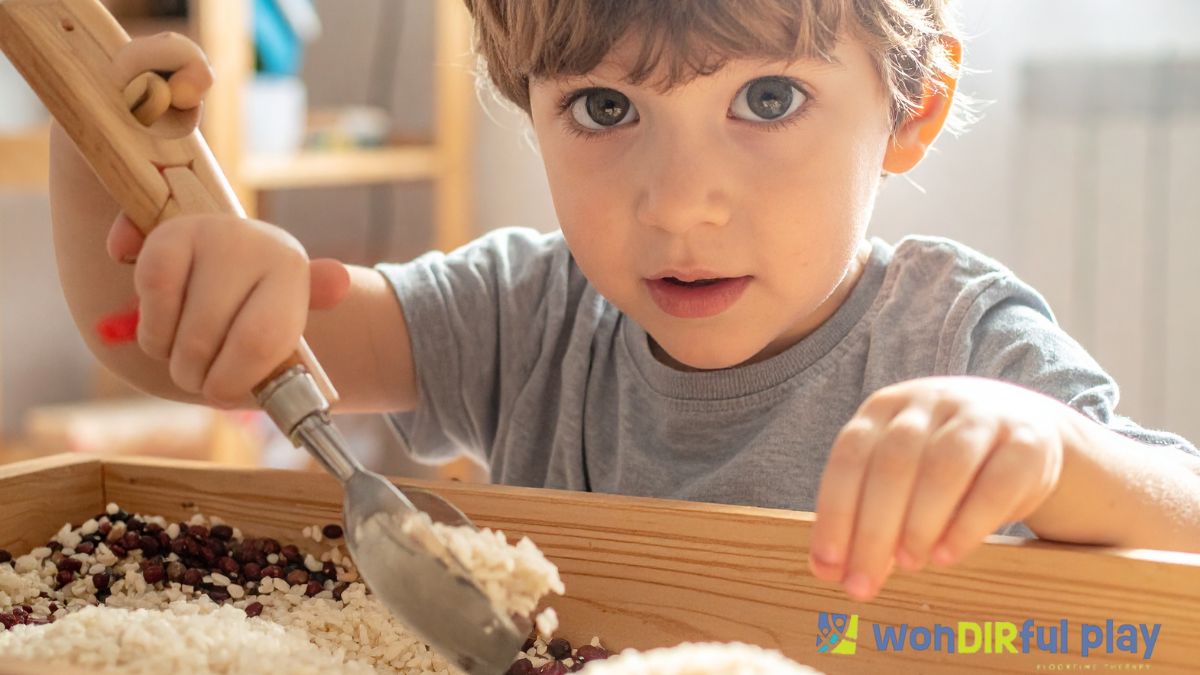
At the foundational level, children develop emotional regulation and sensory processing skills. Before engaging in complex interactions, a child must feel safe and regulated.
- Sensory Responsiveness: Can the child process sights, sounds, and textures comfortably?
- Self-Soothing: Are there strategies in place to help manage distress?
- Interest in the Environment: Does the child demonstrate curiosity about people and objects?
Strategies for Support:
- Establish predictable routines to enhance emotional security.
- Use gentle touch and movement activities to help with sensory processing.
- Introduce calming techniques, such as deep pressure or slow rocking, to aid self-regulation.
2. Engagement and Relating to Others
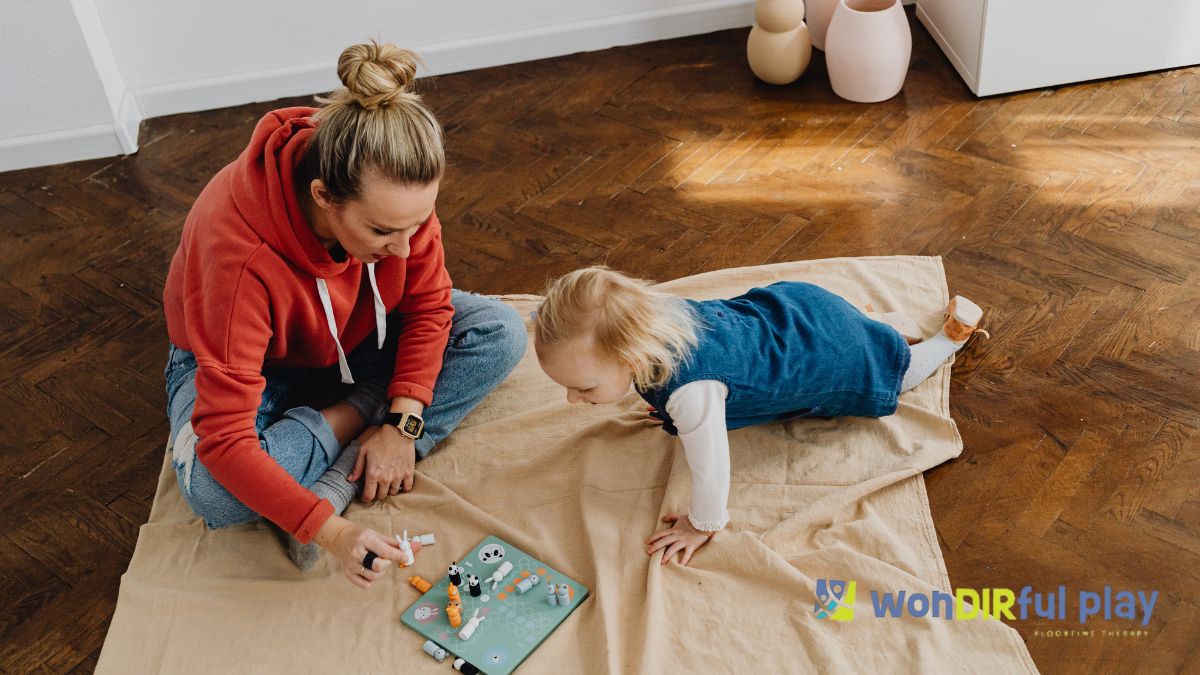
Once a child can regulate emotions, they move towards deeper engagement. This stage is about building meaningful connections with caregivers and responding to interactions.
- Sustained Eye Contact: Can the child maintain visual connection during interactions?
- Emotional Responses: Do they react with joy, distress, or curiosity?
- Back-and-Forth Interactions: Is there an effort to maintain communication, even through gestures?
Strategies for Support:
- Use playful imitation to encourage engagement.
- Provide emotionally expressive responses to build connections.
- Use interactive songs and games to sustain attention and interest.
3. Two-Way Communication and Shared Problem-Solving
This milestone focuses on expanding reciprocal interactions and intentional communication. Children begin to initiate and respond with greater awareness.
- Gestural Communication: Does the child point, wave, or use facial expressions?
- Cause-and-Effect Awareness: Can they anticipate responses to their actions?
- Problem-Solving Attempts: Do they try different methods to achieve a goal?
Strategies for Support:
- Expand Play Sequences: Encourage using objects in multiple ways to foster creativity.
- Model Simple Problem-Solving: Show different approaches to solving a task.
- Offer Gentle Challenges: Provide small obstacles to encourage persistence.

4. Complex Communication and Emotional Ideas
At this level, children begin to express feelings, preferences, and desires more clearly. Their play becomes more symbolic, and their ability to problem-solve improves.
- Symbolic Play: Does the child use objects to represent real-world scenarios?
- Emotionally Charged Interactions: Can they express joy, frustration, or excitement?
- Increased Language Use: Do they string together multiple words or phrases?
Strategies for Support:
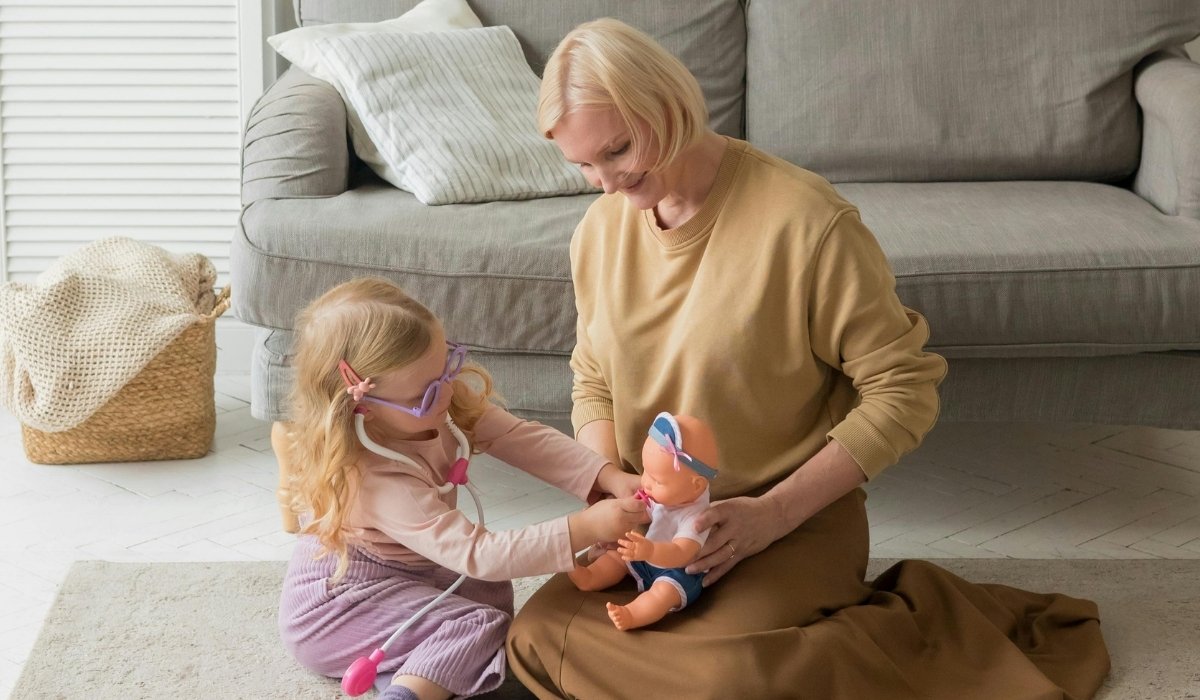
- Use pretend play scenarios to explore emotional concepts.
- Encourage descriptive storytelling to enhance expressive language.
- Support emotion labeling to help children understand and manage feelings.
5. Emotional Thinking and Multi-Step Problem-Solving
Children in this stage develop flexible thinking and can process multiple emotions simultaneously. They also engage in extended dialogues and logical reasoning.
- Perspective-Taking: Can the child recognize different viewpoints?
- Multi-Step Planning: Do they strategize before attempting a task?
- Understanding Consequences: Are they aware of how actions affect outcomes?
Strategies for Support:
- Introduce social stories that highlight different perspectives.
- Play games that require strategy and prediction.
- Discuss real-life situations to encourage emotional reflection.
6. Higher-Level Thinking and Reflection
At the most advanced stage, children develop abstract thinking, complex problem-solving, and self-reflection. They form deeper relationships and can regulate emotions independently.
- Moral and Ethical Thinking: Can the child evaluate right from wrong?
- Future Planning: Do they express ideas about their goals and aspirations?
- Advanced Social Skills: Are they capable of negotiating, cooperating, and compromising?
Strategies for Support:
- Engage in role-playing activities that involve ethical dilemmas.
- Discuss hypothetical situations to foster critical thinking.
- Encourage journaling or self-reflection exercises to deepen awareness.
How to Track Progress Through DIR Floortime Milestones
Monitoring a child's progress is crucial to ensuring steady development. Parents and therapists can track milestones using the following approaches:

Tracking milestones allows for timely adjustments in intervention strategies, ensuring each child receives the best possible support for their development.
Take the Next Step with DIR Floortime Therapy in New Jersey
Supporting a child's developmental growth requires the right guidance and resources. At WonDIRfulPlay, we specialize in DIR Floortime therapy, providing individualized sessions that help children build emotional, social, and cognitive skills through meaningful interactions.
If you're looking for expert support in New Jersey, we’re here to help. Contact us today to learn more about our approach and how we can support your child’s journey.
Recent articles




































Our team is ready to answer your questions and address your concerns.


With WonDIRfulPlay, growth feels effortless and joyful. Our DIR floortime therapy services in Lakewood, NJ focus on building emotional connections, communication, and social confidence while addressing sensory and behavioral challenges.
For compliance matters, please call 732-523-9070 or email compllance@wondirfulplay.com


