
Declarative Language: How to Talk So Your Child Can Connect (A DIR Approach)
November 10, 2026
Learn how declarative language helps your child connect, with plain examples and tips from a DIR approach you can try today.
Key points:
- Comments that share what you see or think invite your child to join in without a demand.
- Commands and quiz questions still have a place. Mix in comments and pauses so your child has room to reply.
- Try one comment, then wait. Silence gives your child time to think and respond.
You say, "Put your shoes on." Your child freezes. You say it again, louder. Sound familiar? Many of us do this without even noticing. Parents give dozens of directions a day, since directions get things done. They can also leave a child feeling pushed. Declarative language offers another path.
This style shares what you notice, think, or feel. It does not ask for one right answer. DIR stands for Developmental, Individual Differences, and Relationship-based, and this approach treats talk as a way to connect, not a way to control.
This guide shows the difference, gives real examples, and explains how to start. You can also see how in-home sessions work and ask a therapist to coach you. Small shifts in your words can change the mood of a whole day. You do not need a script or special training. A few comments and a lot of waiting go a long way.
Declarative vs Imperative Language in Plain Words
Imperative language gives commands or asks quiz questions. It wants a specific response. Comments are different. A comment shares an observation, a feeling, or a wonder, and it leaves the reply open. Parents often wonder about declarative vs imperative language when a child ignores every direction.
Neither style is bad. You need both. A research review found that young autistic children's own comments, known as declarative communication, were linked with language skills. That link does not prove cause. Another study found that children's requests also predicted later speech, so keep both in your day. Think of it as adding spice, not changing the whole recipe.
Why Parents Reach for Commands
Commands feel efficient. School mornings, buses, and bedtime push us to hurry. There is no shame in that. The goal is to add a few comments, not to talk like a textbook.
What Commands Do Well
- Keep your child safe
- Move routines along
- Give clear steps for new skills
- Answer your child when they ask what to do
DIR/Floortime therapists use this balance in every session, and the full range of services includes family training so you can practice it too.
How Declarative Language Helps Your Child Connect

Demands ask a child to perform. Comments invite a child to join. That small shift lowers pressure. Your child does not have to guess the right answer or obey on the spot. When pressure drops, connection often rises.
Wait Time Matters
After you comment, silence can feel awkward. Stay with it. Many children need extra seconds to process, plan, and respond. Count slowly in your head. Keep your face warm, and your body relaxed. Your child may answer with a look, a sound, a gesture, or a word.
Comments also model language. Each time you say what you see, your child hears words attached to real things and feelings. Over time, that gives your child more words to borrow.
Declarative Language in Autism
Many autistic children find rapid questions and commands hard to process. Declarative language in autism gives them more time and fewer ways to be wrong. A comment like "That block tower is tall" asks for nothing, yet it opens a door.
- No wrong answer to give
- More time to think
- Room to start the talk
- Less pressure in tricky moments
It is not magic, and it will not fit every child. Watch your child's face and body. If a comment brings a calmer look and a glance your way, you are on track. A therapist who provides DIR Floortime therapy can help you read those signals. WonDIRful Play also offers center-based sessions in Lakewood.
Declarative Language Examples You Can Use Today
During Play
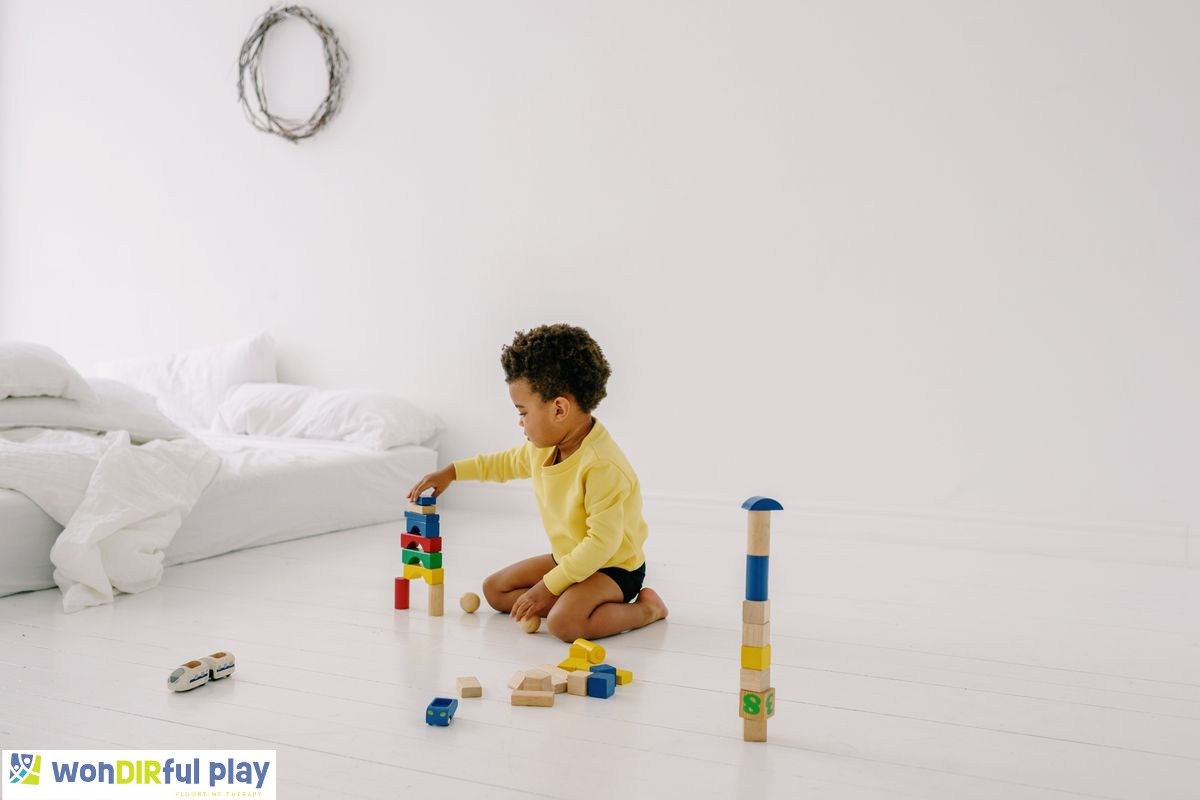
- I see a big tower.
- That car is going fast.
- Uh oh, the block fell.
During Meals
- The soup is steaming.
- I like the green cup.
- That bread looks crunchy.
During Routines
- The coat is by the door.
- It is getting close to bedtime.
- I need my shoes too.
Say one comment, then wait. Declarative language examples like these work best when you count a slow five before adding more. Families in Newark or Jersey City can ask a therapist to practice them live.
Turn Questions Into Comments
Quiz questions put a child on the spot. Swap them for comments. Instead of "What is this?" try "That looks like a giraffe." Instead of "How was school?" try "I thought about you today." Stay curious, not corrective. Try one swap a day for a whole week, and notice what changes.
At Bedtime
- The lights are soft.
- Your pajamas are on the chair.
- I hear rain outside.
When You Still Need a Direction
Safety comes first. Use short, clear directions when your child is in danger, like "Stop!" near a road. Plain declarative language is a tool, not a rule.
Declarative Language for Parents: How to Start
Declarative language for parents takes practice, like any habit. Start small:
- Watch first, and notice what your child likes
- Make one short comment about it
- Wait a slow five seconds
- Welcome any response, even a look
- Cut back on quiz questions
Track What Happens
- Note which comments get a response
- Note which times of day go best
- Share your notes with your therapist
Teach Others the Same Style
Share the idea with grandparents, siblings, and teachers. Offer one example and ask them to try it for a week. Consistency helps your child feel the same calm everywhere.
Declarative Language for PDA
Some families use comments to lower pressure for children who avoid everyday demands. That profile, called pathological demand avoidance (PDA), is still debated. Declarative language for PDA can feel gentler, but check with a clinician about your child's needs.
What If My Child Does Not Answer?
Silence is not failure. Your child may be listening, thinking, or taking in the moment. Keep commenting gently, and try again later. Over weeks, many children begin to respond more.
How DIR/Floortime Uses Comments

In a Floortime session, the therapist follows the child, joins the play, and comments on what happens. WonDIRful Play also offers school-based support, including in Woodbridge, so teachers can use the same style.
Parents are the primary caregivers, so family training is built in, and your input is gathered along the way. Using declarative language across home and school keeps the message steady.
Frequently Asked Questions
What are some declarative language examples for mealtime?
Try "The pasta is hot," "I like the green cup," or "I wonder if the rice is ready." Each comment shares a thought and leaves space for your child to join, with no demand attached.
Is declarative vs imperative language an either-or choice?
No. Your child needs both. Commands keep things safe and moving. Comments build connection and thinking. Aim to add more comments, not to ban directions or questions from your home.
Does declarative language in autism work for every child?
No single tool fits every child. Some children respond with a glance or a smile, others with words. Watch for calmer bodies and more eye gaze, and ask your therapist to adjust.
Is declarative language for PDA backed by research?
Research on PDA is still young, so no one can promise results. Many families find lower-pressure talk helpful, though. Ask your clinician how to track what works for your child.
Is declarative language for parents hard to learn?
It takes practice, like any habit. Start with one comment a day, then add more. Most parents slip back into commands sometimes, and that is normal. Keep going, and be kind to yourself.
Say Less, Connect More
"The soup is steaming." Say that at dinner tonight, then wait. If your child glances up, you have just had a conversation. Even a glance counts as a reply. That small habit is declarative language in real life.
WonDIRful Play offers DIR Floortime therapy at home, in a center, and through school-based support. Parents join through family training, and the team helps with intake and insurance. Sessions follow your child's lead, and therapists join the play instead of directing it.
Ready to practice with a gentle coach? Contact us and share how your child connects best at home. The team will start there. You do not have to change how you talk overnight. One comment at a time is enough.
Recent articles


Our team is ready to answer your questions and address your concerns.


With WonDIRfulPlay, growth feels effortless and joyful. Our DIR floortime therapy services in Lakewood, NJ focus on building emotional connections, communication, and social confidence while addressing sensory and behavioral challenges.
For compliance matters, please call 732-523-9070 or email compllance@wondirfulplay.com


