
DIR Floortime for Children with Down Syndrome: Building Connection Beyond Autism
August 10, 2026
DIR Floortime for Down syndrome builds connection through play. See how this relationship-based approach supports growth beyond autism.

Key points:
- DIR Floortime for Down syndrome meets kids where they are, using play and connection instead of drills.
- The DIR model for non-autism diagnoses works because it targets development broadly, not one specific condition.
- Down syndrome early intervention in NJ gives families access to play-based, relationship-focused support close to home.
DIR Floortime gets talked about as an autism therapy so often that a lot of parents assume it stops there. That is not the full picture. DIR Floortime for Down syndrome has grown into one of the more requested developmental approaches for families outside the autism community, and for good reason.
The same building blocks that help autistic kids build connection and communication work just as well for children with Down syndrome, developmental delays, and a range of other diagnoses. In this guide, you will see why a relationship-based approach fits Down syndrome so well, which developmental areas DIR Floortime actually targets, and what families in New Jersey can expect from getting started.
Many pediatricians and early intervention teams now recommend a relationship-based option like this one specifically because it does not require a narrow diagnosis to qualify. If your child has Down syndrome and you have wondered whether Floortime applies to your family, the answer is almost always yes.
What Makes DIR Floortime for Down Syndrome Different From Autism-Only Therapy?
DIR stands for Developmental, Individual Differences, and Relationship-based. None of those three words mentions autism specifically, and that is on purpose.
The model was built around how children develop, not around a single diagnosis. That is why the DIR model for non-autism diagnoses has found a home with Down syndrome, ADHD, sensory processing differences, and general developmental delays.
Families exploring this approach often start with in-home sessions, where a therapist works inside the child's own environment. Many pair this with family training and support, so parents pick up the same strategies the therapist uses. Some school-age kids also benefit from school-based support, which carries these same principles into the classroom.
Traditional therapy models often start by naming a target skill and building a lesson plan around it. DIR Floortime flips that order. A therapist watches first, learns what genuinely interests a child, and only then decides which skills to layer into that interest. For families who have tried more rigid programs first, this shift in starting point often feels like a relief rather than a compromise.
Why Down Syndrome Benefits From a Relationship-Based Approach

Kids with Down syndrome often move through developmental milestones at their own pace, and they tend to respond well to warm, back-and-forth interaction.
Relationship-based therapy for Down syndrome leans into exactly that strength. Instead of pushing a child toward a fixed skill on a fixed timeline, a therapist follows the child's own interests and builds skills inside that interest.
This looks like:
- Joining a child's play instead of redirecting it toward a "correct" activity.
- Reading small cues, like a glance or a change in energy, and responding right away.
- Building parent-child bonds through repeated, playful back-and-forth.
- Layer in new challenges only once a child feels safe and engaged.
Over time, this steady responsiveness builds trust, and trust tends to open the door to new skills faster than pressure does. Many families notice stronger emotional connections show up within the first few months.
Kids with Down syndrome sometimes get talked over or get skills demonstrated to them rather than built with them. A relationship-based approach corrects that imbalance. The therapist waits for the child to initiate, then responds in a way that keeps the interaction going a little longer each time. Those extra few seconds of shared attention add up over weeks and months.
Core Developmental Areas DIR Floortime Targets
Developmental therapy for Down syndrome usually needs to cover more than one area at once, since motor, sensory, and social skills tend to develop together.
DIR Floortime works across several areas at the same time.
- Sensory processing helps kids manage input from sound, touch, and movement without becoming overwhelmed.
- Motor planning skills, which support everything from crawling to eventually forming words.
- Social-emotional development, building the back-and-forth that later turns into conversation and friendship.
- Communication, which grows out of shared attention and shared enjoyment during play.
Because Down syndrome often comes with its own mix of motor and communication differences, this multi-area approach tends to fit better than a therapy built around one narrow skill.
None of these areas gets treated in isolation during a session. A single fifteen-minute stretch of play might touch on balance, eye contact, and a first attempt at a new word, all within the same activity. That kind of overlap mirrors how real development actually happens outside of a clinical setting.
Play-Based Therapy in Everyday Moments
Play-based therapy for Down syndrome does not need a special room full of equipment. Some of the best moments happen in ordinary play.
Simple activities that fit naturally into a DIR Floortime approach include stacking blocks together and narrating each move, splashing through a few minutes of sensory play, or working through a round of pretend play with dolls or toy animals.
None of these activities look like therapy from the outside. That is the point. A child who is having fun stays engaged far longer than one who feels like they are being tested.
Parents often worry that play does not look serious enough to count as real therapy. It helps to remember that skill building for young children has always happened through play, long before formal programs existed. DIR Floortime simply makes that natural process more intentional and more consistent over time.
Down Syndrome Early Intervention in New Jersey
Getting support early tends to make a real difference, and New Jersey families have several ways to access it close to home.
Families in Woodbridge and Princeton can access in-home Floortime sessions built around their child's schedule rather than a clinic's. Down syndrome early intervention in NJ tends to work best when a family can fit sessions into their week without a long commute eating into the actual time with a therapist.
Early intervention does not mean rushing a child. It means giving a young child's brain the input it needs while it is still building its fastest connections.
Families do not need a formal autism diagnosis to request an evaluation. Many children with Down syndrome qualify for early intervention services based on developmental delay alone, which opens the door to DIR Floortime well before kindergarten begins.
What a DIR Floortime Session Looks Like
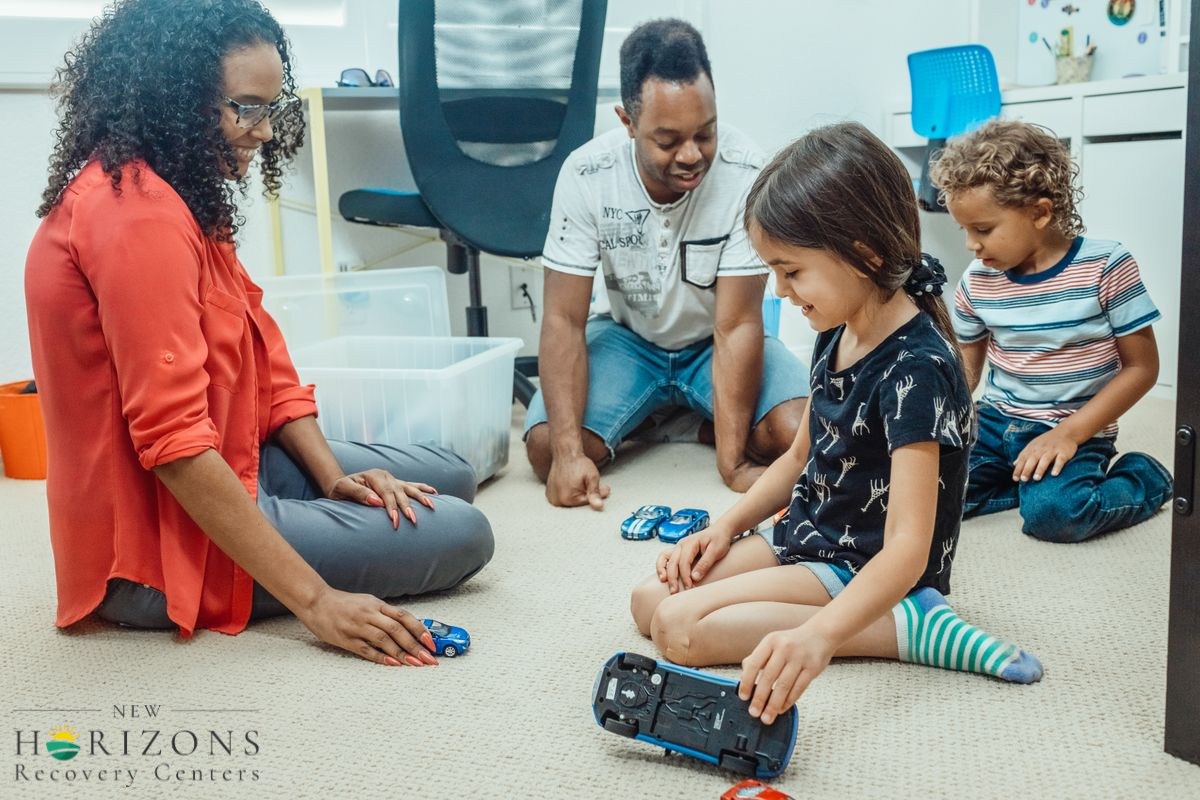
A typical session looks less like a lesson and more like guided play.
- The therapist starts by observing what the child is already doing and is interested in.
- Play follows child-led direction, with the therapist joining rather than directing.
- Small challenges get folded in once the child feels comfortable and engaged.
- Parents often watch or join in, especially during a first session, so they can carry strategies home.
Sessions typically run somewhere between thirty and sixty minutes, though the exact length depends on a child's age and stamina. Consistency across a few sessions each week tends to matter more than the length of any single visit.
Frequently Asked Questions
Is DIR Floortime only for autistic children?
No. It works for a wide range of developmental profiles, including Down syndrome, ADHD, and general developmental delays.
Will my child with Down syndrome need a different version of Floortime?
The core approach stays the same. Sessions get shaped around each child's own pace, interests, and developmental profile.
How young can a child start DIR Floortime?
Many children start in toddlerhood, though the approach can work at other ages too, depending on individual needs.
Does insurance cover DIR Floortime for Down syndrome in New Jersey?
Coverage varies by plan and provider. Ask your therapy team directly about your specific policy.
How is progress measured in Floortime for Down syndrome?
Therapists track functional milestones, like shared attention, communication, and motor skills, rather than a single test score.
Building Connection, One Playful Moment at a Time
Down syndrome brings its own strengths and its own pace, and DIR Floortime for Down syndrome was built to work with both instead of against them.
WondirfulPlay supports New Jersey families with a relationship-first approach that grows alongside each child's own developmental timeline.
Contact us to talk through what Floortime therapy for Down syndrome could look like for your child, starting right where they are today.
Recent articles


.jpg)


%20(1).jpg)
.jpg)
.jpg)
.jpg)
.jpg)
.jpg)
.jpg)
.jpg)
.jpg)

.jpg)


With WonDIRfulPlay, growth feels effortless and joyful. Our DIR floortime therapy services in Lakewood, NJ focus on building emotional connections, communication, and social confidence while addressing sensory and behavioral challenges.
For compliance matters, please call 732-523-9070 or email compllance@wondirfulplay.com

