
DIRFloortime vs ABA Therapy: Understanding Different Developmental Approaches for Your Child
February 25, 2026
Compare DIRFloortime and ABA therapy, understand key differences, benefits, and choose the right autism support for your child in NJ.
-ink.jpeg)
Key points:
- Understand the core principles behind DIRFloortime vs ABA therapy and how each approach supports children with autism differently.
- Learn the real difference between Floortime and ABA in daily practice, goals, and parent involvement.
- Get guidance on choosing between Floortime and ABA based on your child’s needs, age, and family values.
When your child is diagnosed with autism, one of the first and most important decisions you face is selecting the right therapeutic approach. Parents often encounter discussions around DIRFloortime vs ABA therapy, and it can quickly feel overwhelming. Both approaches are widely used and supported by research, yet they differ in philosophy, structure, and daily implementation.
You may be wondering, "Which therapy is better for autism?" or "Should I choose Floortime or ABA for my child?" These are deeply personal questions. The right answer depends on your child's developmental profile, your family's goals, and how you define progress.
This guide provides a clear, family-centered autism therapy comparison between Floortime and ABA, grounded in research and practical insight. By the end, you will feel more confident navigating your options and advocating for what truly fits your child.
What Is DIRFloortime?
DIRFloortime is a developmental, relationship-based approach designed to support emotional growth, communication, and thinking skills. DIR stands for Developmental, Individual differences, Relationship-based. The model focuses on helping children build foundational skills through warm, playful interactions.
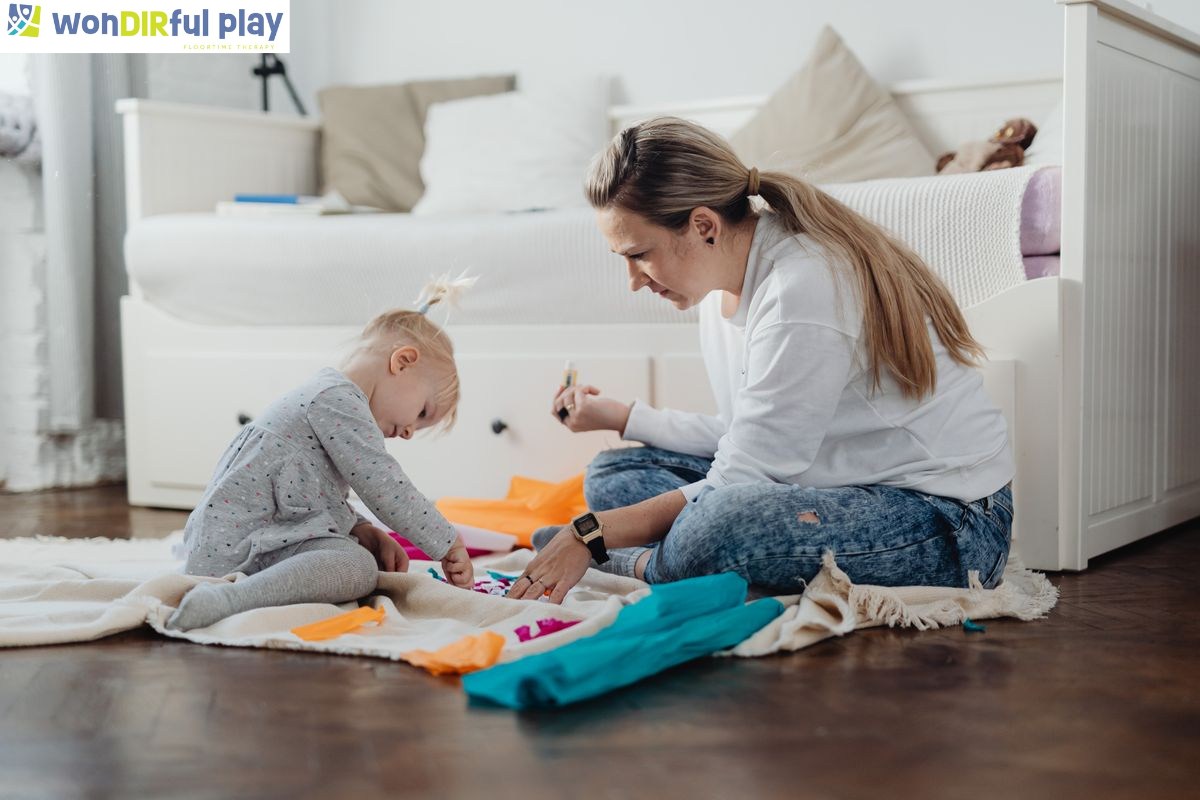
Instead of directing behavior, adults follow the child's lead during play. The goal is to enter the child's world and gradually expand their engagement, communication, and problem-solving abilities.
Research from university and nonprofit developmental centers has shown that relationship-based interventions can improve emotional regulation and social communication in young children with autism. Floortime sessions often involve:
- Joining your child in preferred activities
- Expanding back-and-forth communication circles
- Supporting sensory regulation
- Encouraging symbolic and imaginative play
For families exploring Floortime vs ABA for toddlers, Floortime can feel natural because it is embedded in everyday routines. Parents are not observers. They are active partners.
What Is ABA Therapy?
Applied Behavior Analysis, commonly called ABA, is a structured, evidence-based therapy rooted in learning theory. It focuses on teaching skills and reducing behaviors that interfere with learning or safety.
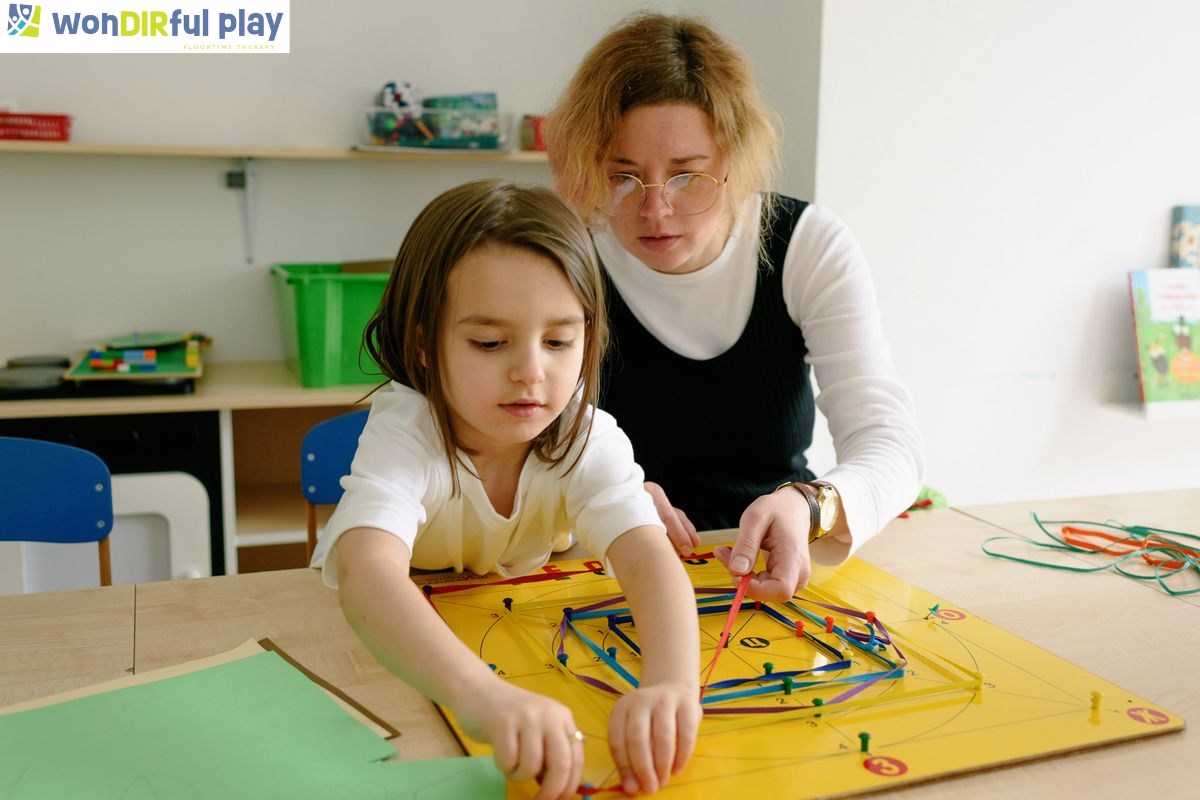
ABA therapy breaks skills into small, measurable steps. Therapists use reinforcement strategies to strengthen positive behaviors. Progress is tracked through data collection and frequent assessments.
Government and educational research bodies recognize ABA as an evidence-based intervention for autism, particularly for improving communication, academic readiness, and adaptive skills. ABA may include:
- Structured teaching sessions
- Discrete trial training
- Natural environment teaching
- Behavior intervention plans
- Parent training components
When considering Floortime therapy vs applied behavior analysis, it is important to understand that ABA is often more structured and goal-driven. It focuses on observable behaviors and measurable outcomes.
The Core Difference Between Floortime and ABA
Understanding the difference between Floortime and ABA begins with philosophy.
DIRFloortime views emotional connection as the foundation for learning. It emphasizes internal motivation, developmental stages, and relationships.
ABA views learning through the lens of behavior and reinforcement. It emphasizes external structure, skill acquisition, and measurable change.
In practical terms:
- Floortime starts with your child's interests, ABA often starts with targeted goals
- Floortime measures progress through developmental milestones, ABA measures progress through data and skill mastery
- Floortime sessions feel like guided play, ABA sessions may feel more structured and repetitive
When exploring DIRFloortime compared to ABA, neither is inherently superior. They are built on different assumptions about how children learn.
Which Therapy Is Better for Autism?
-ink.jpeg)
Parents often ask which therapy is better for autism. The honest answer is that effectiveness depends on the individual child.
Research suggests that early intervention of any type improves outcomes. Children who receive consistent, developmentally appropriate therapy often show gains in communication, adaptive skills, and social interaction.
ABA has the strongest volume of published research supporting measurable behavior change. DIRFloortime research, while smaller in scale, shows promising results in emotional development and parent-child engagement.
You might consider:
- Does your child struggle more with emotional regulation and engagement, or with specific skill deficits?
- Does your child respond well to structure, or do they shut down under too much demand?
- How important is play-based interaction in your daily life?
There is no universal best approach. The better question may be, which approach aligns with your child's developmental needs and your family's values?
Floortime or ABA for My Child: Factors to Consider
If you are asking, "Floortime or ABA for my child?" consider these factors carefully.
Age and Developmental Stage
For toddlers and preschoolers, relationship-based approaches can be especially impactful. This is why many parents explore Floortime vs ABA for toddlers. Early emotional engagement lays the groundwork for language and social learning.
Older children who need targeted academic or adaptive skill instruction may benefit from structured ABA programs.
Communication Level
If your child is minimally verbal, ABA may provide clear frameworks for building functional communication. However, Floortime may support spontaneous communication through shared engagement.
Sensory and Emotional Regulation
Children with significant sensory sensitivities often respond well to Floortime's individualized pacing. ABA programs can also incorporate sensory supports, but they may require more structured participation.
Family Involvement
Floortime heavily emphasizes parent participation. ABA programs vary. Some are clinic-based with limited parent presence, while others include strong parent training components.
When choosing between Floortime and ABA, consider how much time and energy you can realistically dedicate.
Benefits of DIRFloortime Over ABA in Certain Situations
Some families notice specific advantages when exploring the benefits of DIRFloortime over ABA.
Floortime may:
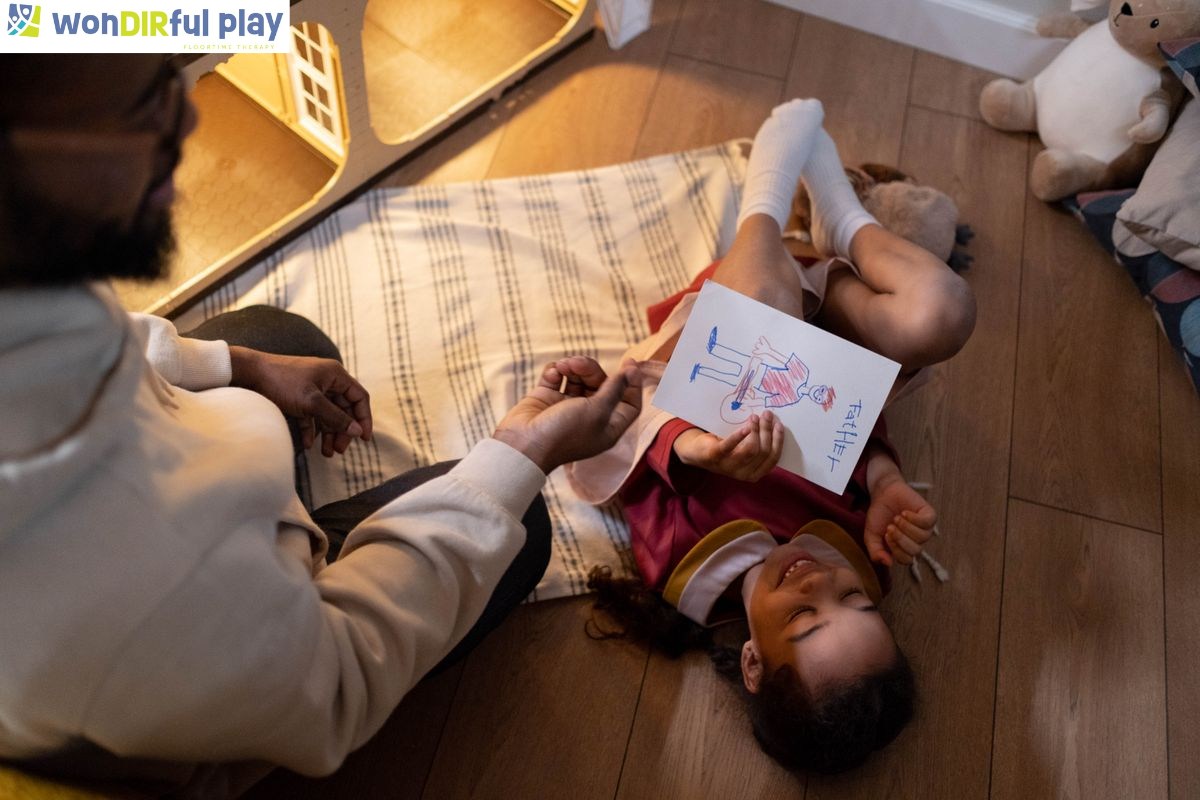
- Strengthen emotional bonding and shared joy
- Increase spontaneous communication
- Support flexible thinking through play
- Reduce pressure during early engagement stages
For children who resist structured demands, Floortime can feel less intrusive. It meets them where they are rather than expecting immediate compliance.
However, this does not mean Floortime replaces skill instruction. It may simply build a different foundation first.
Strengths of ABA Therapy
While comparing Floortime therapy vs applied behavior analysis, it is important to acknowledge ABA's strengths.
ABA may:
- Teach daily living skills like dressing and toileting
- Reduce unsafe behaviors
- Improve classroom readiness
- Provide clear progress tracking
Families who appreciate measurable benchmarks often feel reassured by ABA's data-driven model.
In some regions, including when searching for the best autism therapy approach in NJ, ABA may also be more widely covered by insurance, influencing accessibility.
Combining Floortime and ABA Therapy
Increasingly, families and providers are combining Floortime and ABA therapy rather than viewing them as opposites.
A blended approach might look like:
- Using Floortime techniques to strengthen engagement and regulation
- Applying ABA strategies to teach specific functional skills
- Coordinating goals across therapists
- Ensuring communication between professionals and parents
This integration respects both emotional development and skill acquisition. For many children, this balanced strategy feels comprehensive and practical.
When considering DIRFloortime vs ABA therapy, remember that you are not always forced to choose only one path.
Autism Therapy Comparison Between Floortime and ABA in Daily Life
In everyday life, the autism therapy comparison between Floortime and ABA becomes clearer through routines.
During mealtime:
- Floortime may focus on shared attention and communication attempts
- ABA may focus on using utensils independently
During play:
- Floortime expands imaginative thinking
- ABA may teach turn-taking or requesting
During challenging behaviors:
- Floortime explores emotional triggers and co-regulation
- ABA analyzes behavior patterns and reinforcement
Both aim to support growth. They simply approach the path differently.
Making a Confident Decision
-ink.jpeg)
If you feel stuck between DIRFloortime vs ABA therapy, start with small, informed steps.
- Observe trial sessions if possible
- Ask how progress is measured
- Discuss long-term goals
- Trust your instincts about your child's comfort
You know your child better than anyone. Therapy should feel supportive, not stressful.
Parents often revisit their decision as children grow. What works at age three may shift by age seven. Flexibility is not failure. It is responsive parenting.
If you are researching the best autism therapy approach in nj, focus on quality providers who respect collaboration and family voice, regardless of model.
Frequently Asked Questions
1. What is the main difference between Floortime and ABA?
The main difference lies in philosophy. Floortime focuses on emotional development through play, while ABA emphasizes structured skill-building and measurable behavior change.
2. Is Floortime or ABA better for my child?
The answer depends on your child’s needs, age, and responsiveness. Some children thrive with structure, others benefit from relationship-based engagement.
3. Can I combine Floortime and ABA therapy?
Yes. Many families successfully integrate both, using Floortime for emotional growth and ABA for targeted skills.
4. Is ABA only for reducing problem behaviors?
No. ABA also teaches communication, social skills, and daily living tasks through structured, data-informed methods.
5. Does insurance cover both therapies?
Coverage varies by state and provider. ABA is more commonly covered, while Floortime coverage may depend on practitioner credentials and policy details.
Find the Right Fit, Not Just a Label: Start Your Floortime Journey in NJ
Choosing between Floortime and ABA therapy becomes clearer when you step back and look at your child’s emotional development, communication style, and sensory profile. The question is not simply Floortime therapy vs applied behavior analysis, but which approach supports connection and meaningful progress for your family.
At WonDIRfulPlay, we specialize in a DIRFloortime approach that prioritizes engagement, co-regulation, and developmental milestones through play. Our New Jersey team helps families understand DIRFloortime compared to ABA and explore whether a relationship-based model, or even combining Floortime and ABA therapy, fits their goals.
Reach out today to talk through your options and discover the best autism therapy approach in NJ that feels aligned with your child.
Recent articles



.jpg)
.jpg)




.jpg)


.jpg)







.jpg)





-ink.jpeg)
-ink.jpeg)
-ink.jpeg)
-ink.jpeg)
-ink.jpeg)
-ink.jpeg)
-ink.jpeg)
-ink.jpeg)
-ink.jpeg)


.jpeg)


.jpg)
-ink.jpeg)

.jpg)

-ink.jpeg)

-ink.jpeg)
-ink.jpeg)
.jpg)
.jpg)
-ink.jpeg)
-ink.jpeg)
-ink.jpeg)
.jpg)

-ink.jpeg)
-ink.jpeg)
-ink.jpeg)
-ink.jpeg)
-ink.jpeg)
-ink.jpg)
-ink.jpeg)
-ink.jpeg)
-ink.jpeg)
-ink.jpeg)
.jpg)
.jpg)
-ink.jpeg)
-ink.jpeg)
.jpg)
-ink.jpeg)
-ink.jpeg)
-ink.jpeg)
-ink.jpeg)
-ink.jpeg)
-ink.jpeg)
-ink.jpeg)
-ink.jpeg)
-ink.jpeg)
-ink.jpeg)
-ink.jpeg)
-ink.jpeg)
-ink.jpeg)


-ink.jpeg)


With WonDIRfulPlay, growth feels effortless and joyful. Our DIR floortime therapy services in Lakewood, NJ focus on building emotional connections, communication, and social confidence while addressing sensory and behavioral challenges.
For compliance matters, please call 732-523-9070 or email compllance@wondirfulplay.com

