
Can DIRFloortime Help Children with ADHD? What Parents Should Know
April 21, 2026
Can DIRFloortime support children with ADHD? Learn how play-based developmental therapy helps attention, emotional regulation, and family connection.
-ink.jpeg)
Key Points
- DIRFloortime therapy for ADHD focuses on emotional connection and development through play, helping children strengthen attention, regulation, and communication in natural everyday interactions.
- Play-based therapy for children with ADHD supports brain development by encouraging curiosity, shared attention, and flexible thinking instead of relying only on reward-driven behavior systems.
- Parents play an active role in relationship-based therapy for ADHD, learning practical ways to connect with their child, guide attention, and support emotional growth during daily routines.
Attention-deficit hyperactivity disorder affects millions of children and families. Many parents search for support that improves focus and behavior without making their child feel pressured or misunderstood. Traditional behavioral strategies can help some children, yet many families hope for a therapy that strengthens emotional development and connection at the same time.
DIRFloortime therapy for ADHD offers a different path. This developmental approach uses play and meaningful interaction to help children build attention, communication, and self-regulation skills. Instead of focusing only on correcting behavior, the approach looks at the child's emotional and developmental needs.
Research in child development shows that strong relationships support learning, attention, and problem-solving. Relationship-centered therapies take advantage of this connection between emotional engagement and brain growth.
This guide explains how Floortime therapy for attention deficit disorder works, what parents can expect, and how this play-based approach may support children with ADHD in everyday life.
Understanding ADHD in Children
ADHD is a neurodevelopmental condition that affects attention, impulse control, and activity level. Many children experience challenges in school, friendships, and family routines.
Common signs include difficulty sustaining attention during tasks, impulsive behavior or acting without thinking, high activity levels and restlessness, trouble organizing tasks or following instructions, and emotional outbursts when frustrated.
Research suggests that ADHD affects brain networks responsible for executive function. These networks help children plan, regulate emotions, and shift attention between tasks.
Current estimates suggest that about 9 to 10 percent of school-aged children in the United States are diagnosed with ADHD. Many families seek therapies that address both behavior and emotional development.
Developmental approaches such as DIRFloortime therapy for ADHD focus on strengthening the foundations that support attention and self-control rather than targeting symptoms alone.
What Is DIRFloortime Therapy
DIRFloortime is a developmental therapy designed to build social, emotional, and cognitive skills through interactive play. The name reflects three core ideas: Developmental levels, Individual differences, and relationship-based interactions.
Children progress through emotional and developmental milestones during early childhood. These milestones include shared attention, emotional communication, and flexible thinking.
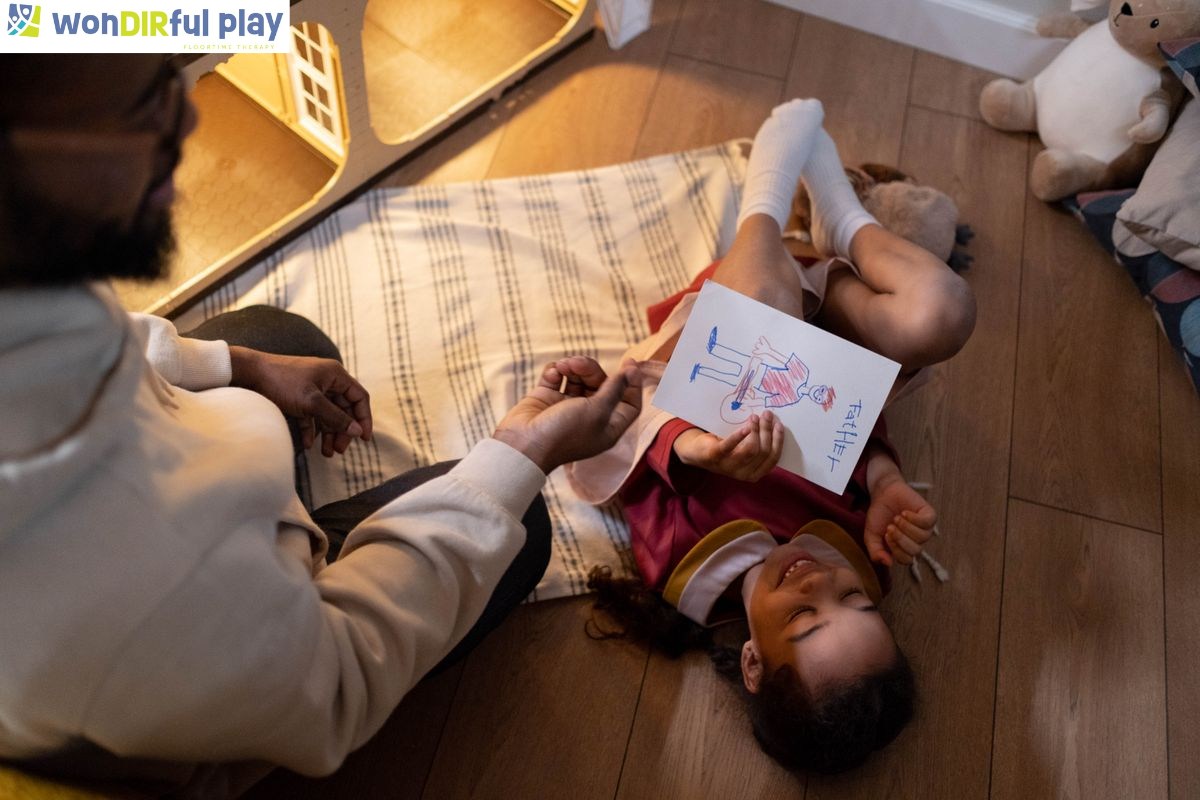
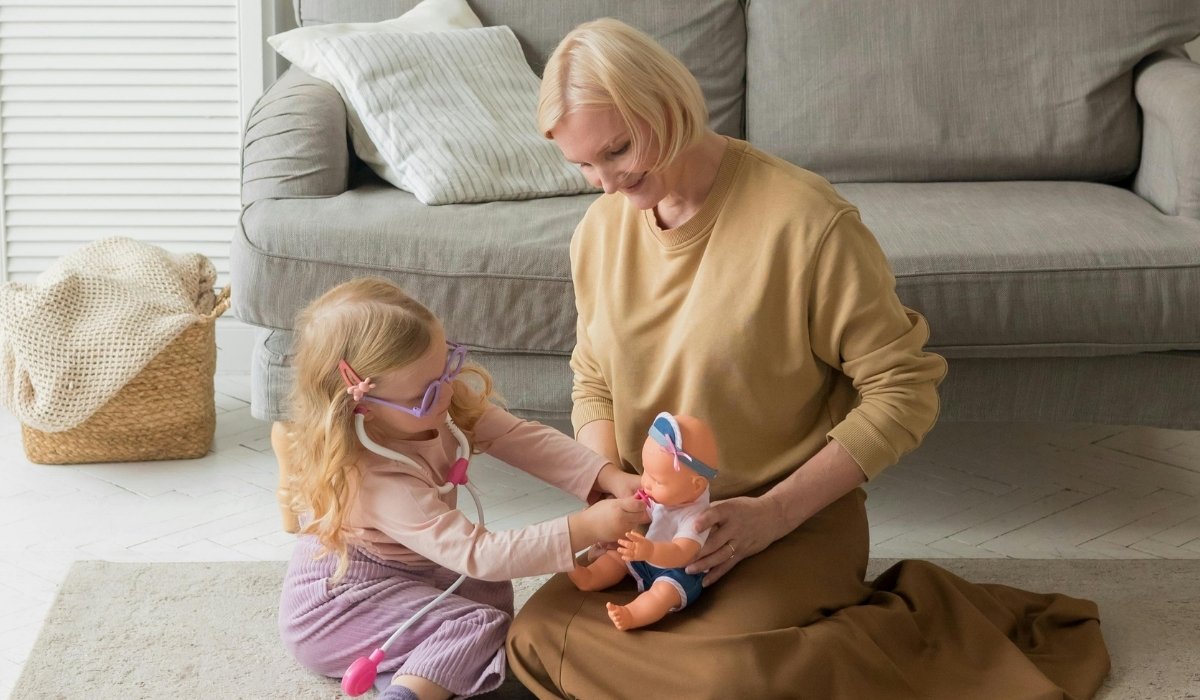
In DIRFloortime therapy for ADHD, a parent or therapist joins the child in play and follows the child's interests. The adult gently expands the activity by encouraging interaction, communication, and problem-solving.
Instead of directing the child or correcting behavior immediately, the adult focuses on connection and engagement. When a child becomes emotionally invested in an activity, attention and learning often increase naturally.
This relationship-based therapy for ADHD can be used at home, in therapy sessions, or during everyday routines.
Why Play-Based Therapy Helps Children with ADHD
-ink.jpeg)
Play is one of the most powerful tools for childhood development. During playful interaction, the brain forms connections that support learning, attention, and emotional regulation.
Play-based therapy for children with ADHD works by activating several developmental systems at once.
- Shared attention: Children practice focusing on an activity together with another person.
- Emotional regulation: Playful interaction helps children experience excitement, frustration, and problem-solving within a supportive relationship.
- Motivation: Children remain engaged longer when activities match their interests.
- Flexible thinking: Imaginative play encourages shifting ideas, solving problems, and adapting to changes.
Neuroscience research shows that emotional engagement increases activity in brain areas linked with attention and learning. When children feel connected and curious, the brain becomes more receptive to new skills.
For many families, Floortime therapy for attention deficit disorder offers a way to support attention development without constant correction or pressure.
How DIRFloortime Builds Attention and Self-Regulation
Attention difficulties in ADHD often involve more than distraction. Many children struggle to regulate emotions, manage sensory input, and stay engaged in social interaction.
DIRFloortime therapy for ADHD targets these underlying developmental skills.
- Strengthening shared engagement: The therapist or parent enters the child's play and builds interaction around the child's interests. This shared engagement encourages longer attention spans.
- Expanding communication: Children are encouraged to express ideas through gestures, words, or actions during play. Each back-and-forth interaction strengthens attention and social awareness.
- Supporting emotional regulation: Children learn to manage frustration during playful challenges. Adults guide the child through problem-solving rather than correcting mistakes immediately.
- Building flexible thinking: Play scenarios often change during Floortime sessions. These changes help children practice shifting attention and adapting to new ideas.
Over time, many children develop stronger focus, improved communication, and better emotional regulation through consistent play-based interaction.
The Role of Parents in Floortime
One unique aspect of relationship-based therapy for ADHD is the active role parents play in the process.
Parents learn simple interaction techniques that can be used throughout the day. These moments often occur during ordinary activities such as playing with toys, reading books together, outdoor play, mealtime conversations, and bedtime routines.
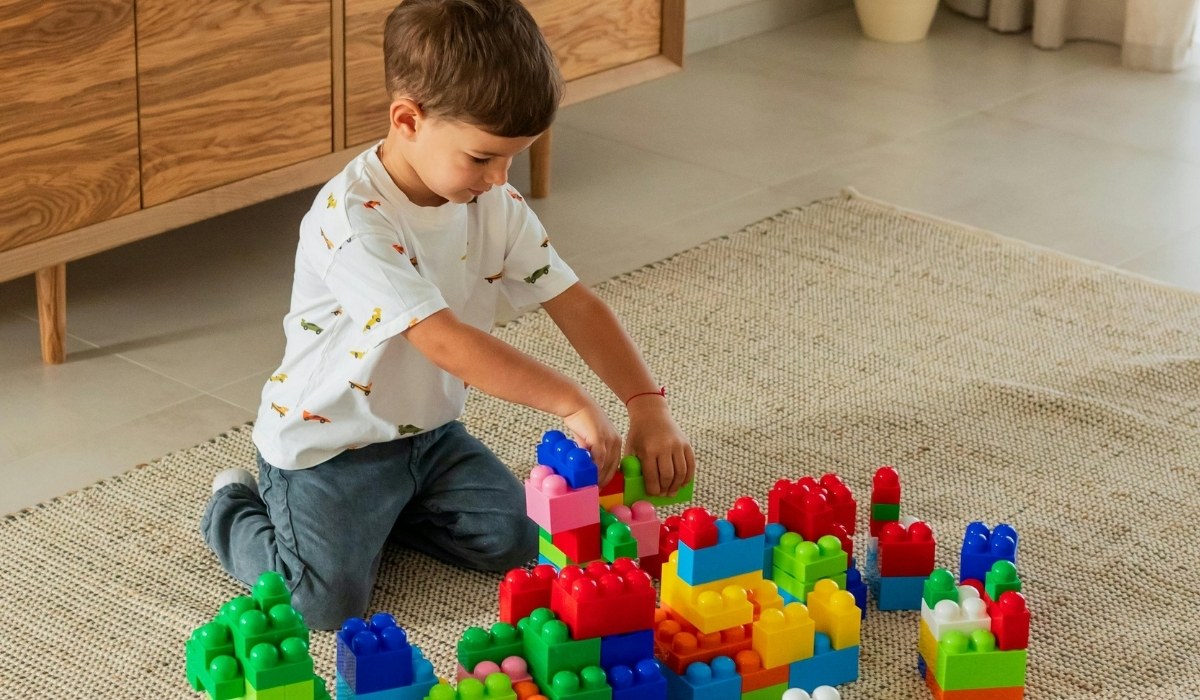
A parent may join a child building with blocks and gently expand the activity by asking questions, introducing a challenge, or creating a playful story.
These interactions support attention, language, and emotional connection.
Parents often report that Floortime reduces power struggles at home. When children feel understood and engaged, cooperation tends to increase naturally.
Developmental therapy for children with ADHD in NJ frequently includes parent coaching sessions so families can apply strategies in daily life.
DIRFloortime vs Behavioral Therapy for ADHD
Many families wonder how Floortime compares with traditional behavioral approaches.
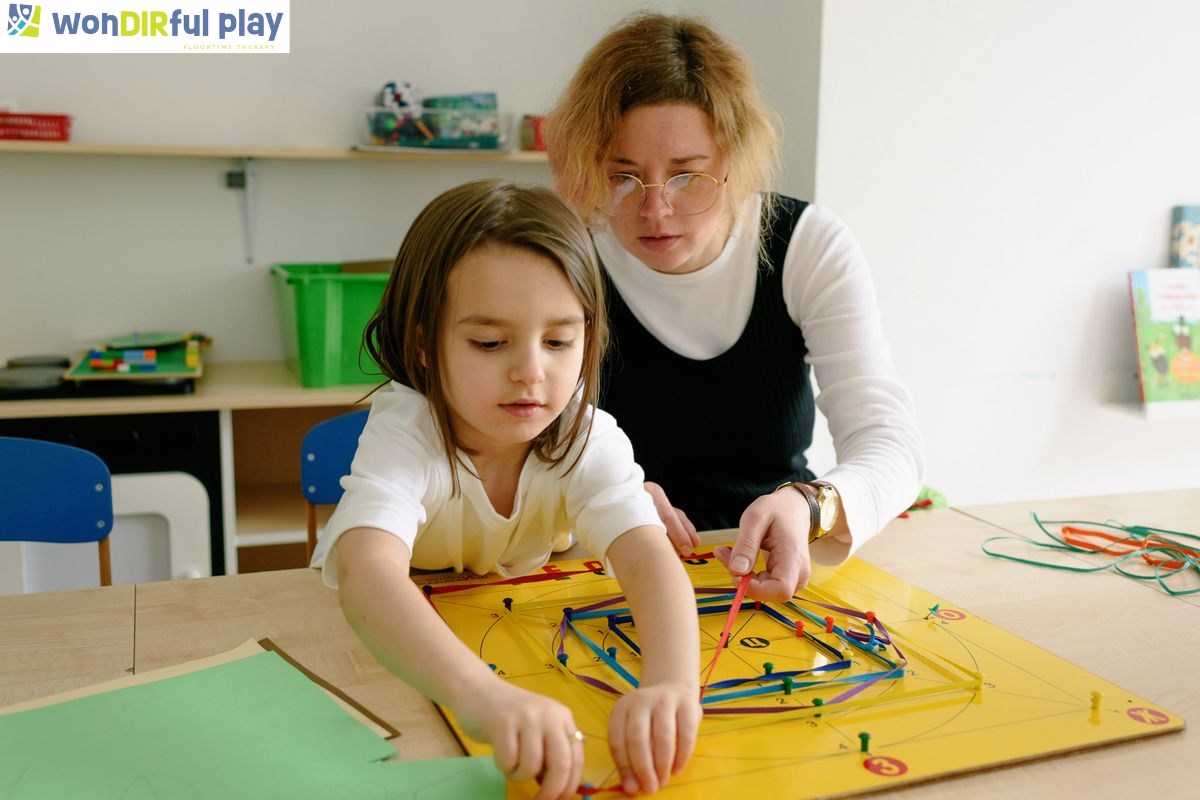
Behavioral therapy focuses on teaching specific behaviors through rewards, consequences, and structured routines. This method can help children learn skills such as following instructions or completing tasks.
The difference between Floortime vs behavioral therapy for ADHD lies in the starting point. Behavioral therapy focuses on behavior change. DIRFloortime focuses on emotional development and relationship-based interaction that supports learning.
Key differences include: Floortime emphasizes connection and shared play; behavioral therapy often uses structured reward systems; Floortime supports emotional and developmental growth; behavioral therapy targets specific behaviors directly.
Some families combine both methods. Developmental therapy strengthens emotional and social foundations, while behavioral strategies support daily routines and expectations.
Each child responds differently, so many parents explore multiple approaches while observing what helps their child feel engaged and confident.
Accessing the DIR Model for ADHD in New Jersey
-ink.jpeg)
Families searching for the DIR model for ADHD in New Jersey can find therapists trained in developmental and relationship-based approaches.
Programs often provide developmental assessments, parent coaching sessions, individual Floortime therapy, and support for home and school collaboration.
Developmental therapy for children with ADHD in NJ often includes guidance for creating play-based interactions at home.
Parents are encouraged to observe their child's interests and use those interests as starting points for engagement. For example, a child who loves trains may practice problem-solving through building train tracks together, or a child interested in animals may explore storytelling and role play during playtime.
The goal is to create interaction that feels natural and enjoyable while supporting developmental growth.
Practical Ways Parents Can Use Floortime at Home
Parents do not need specialized equipment to begin using Floortime strategies. The focus is on interaction and connection.
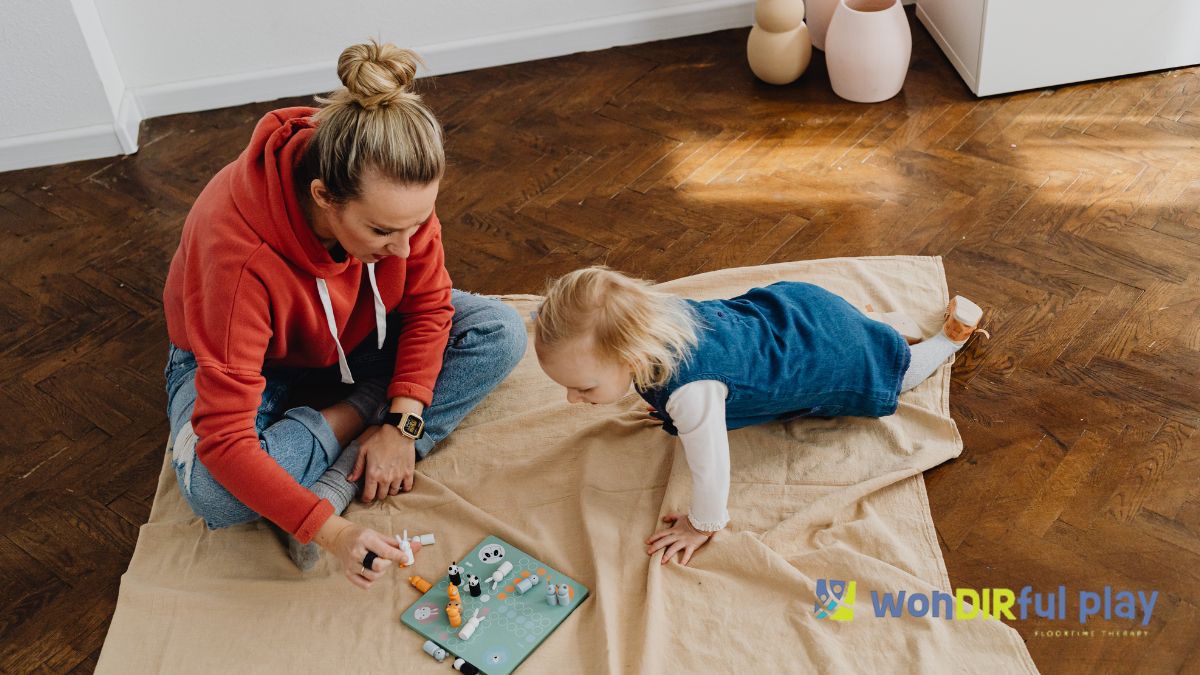
Simple ways to start include following your child's interests by joining activities they already enjoy, getting down on your child's level by sitting on the floor or beside them during play, creating playful challenges that encourage problem solving, encouraging back and forth communication by waiting for your child to respond or contribute to the activity, and celebrating interaction by praising shared moments of attention and communication.
Short play sessions throughout the day can make a meaningful difference. Many families notice a stronger connection and increased engagement over time.
Frequently Asked Questions
Can DIRFloortime help improve attention in children with ADHD
Yes. DIRFloortime therapy for ADHD builds shared attention through engaging interaction. Children practice focusing during meaningful play, which gradually strengthens attention span, communication, and emotional regulation in everyday situations.
Is Floortime therapy only for autism, or can it help ADHD
Floortime began as a developmental approach for autism, yet many therapists now use it with ADHD. The play-based developmental focus supports attention, emotional regulation, and flexible thinking for children with various developmental challenges.
How often should Floortime activities happen
Short daily interactions can be effective. Many specialists suggest several 15 to 20-minute play sessions each day. Consistent playful engagement during routines often supports steady developmental progress.
What age group benefits most from Floortime therapy
Floortime works well for toddlers, preschoolers, and elementary-age children. Early childhood is an ideal time for developmental therapy, yet older children with ADHD can gain social and emotional skills through guided play.
Can Floortime work alongside other ADHD treatments
Yes. Many families combine play-based therapy for children with ADHD with school supports, behavioral strategies, or medical guidance. Developmental approaches often complement other treatments by strengthening emotional engagement and attention foundations.
Build Attention Through Connection: Discover Floortime Support for ADHD in NJ
Parents looking beyond traditional behavior programs often search for therapy that supports attention and emotional growth at the same time. Relationship-based therapy for ADHD focuses on engagement, co-regulation, and shared interaction rather than simple behavior correction.
DIRFloortime therapy encourages children to build attention and self-regulation through meaningful play experiences. By following a child’s interests and expanding communication step by step, therapists help strengthen focus and flexible thinking.
At WonDIRful Play, families exploring developmental therapy for children with ADHD in NJ can learn how the DIR model supports attention development in a supportive environment. If you are considering relationship-based therapy for ADHD or exploring developmental therapy for children with ADHD in NJ, we would be glad to talk with you.
Contact WonDIRful Play to learn how the DIR model can support attention, engagement, and emotional development.
Recent articles





-ink.jpeg)
-ink.jpeg)
-ink.jpeg)
-ink.jpeg)
-ink.jpeg)
-ink.jpeg)
-ink.jpeg)
-ink.jpeg)
-ink.jpeg)


.jpeg)
.jpg)



.jpg)
-ink.jpeg)

.jpg)

-ink.jpeg)

-ink.jpeg)
-ink.jpeg)
.jpg)
.jpg)
-ink.jpeg)
-ink.jpeg)
-ink.jpeg)
.jpg)

-ink.jpeg)
-ink.jpeg)
-ink.jpeg)
-ink.jpeg)
-ink.jpeg)
-ink.jpg)
-ink.jpeg)
-ink.jpeg)
-ink.jpeg)
-ink.jpeg)
.jpg)
.jpg)
-ink.jpeg)
.jpg)
-ink.jpeg)
-ink.jpeg)
-ink.jpeg)
-ink.jpeg)
-ink.jpeg)
-ink.jpeg)
-ink.jpeg)
-ink.jpeg)
-ink.jpeg)
-ink.jpeg)
-ink.jpeg)
-ink.jpeg)
-ink.jpeg)
-ink.jpeg)


-ink.jpeg)

-ink.jpg)
-ink.jpeg)

-ink.jpeg)
-ink.jpeg)
-ink.jpeg)
















With WonDIRfulPlay, growth feels effortless and joyful. Our DIR floortime therapy services in Lakewood, NJ focus on building emotional connections, communication, and social confidence while addressing sensory and behavioral challenges.
For compliance matters, please call 732-523-9070 or email compllance@wondirfulplay.com

