
Speech and Language Development in Children
September 23, 2026
A clear guide to speech and language milestones, signs of delay, and how to support your child's communication development.
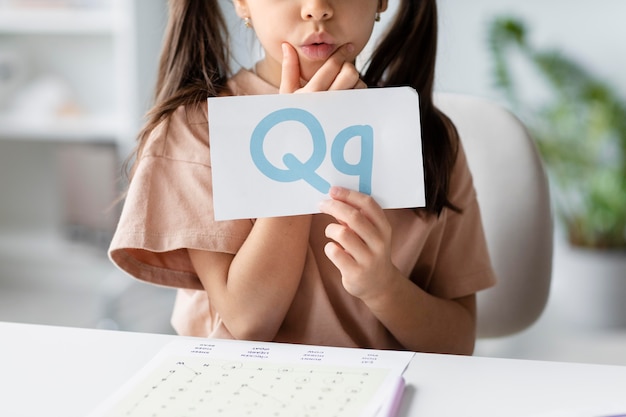
Speech and language development is one of the clearest windows into how a child is growing overall. Knowing roughly what to expect at each stage helps parents notice real progress and, just as importantly, notice early when something might need a closer look.
Language Milestones by Age
Every child develops at their own pace, but there's a general pattern most children follow. Based on typical developmental guidance, including from Stanford Children's Health:
- 0 to 12 months: Babbling, using gestures, recognizing familiar names and voices.
- 12 to 18 months: First real words appear, along with a small vocabulary of four to six words that grows toward around 50 words by 18 months.
- 18 months to 2 years: Combining two words together ("more milk"), using simple pronouns like "mine," and starting to make simple requests.
- 2 to 3 years: Vocabulary grows to roughly 200 to 300 words, short sentences appear, and kids begin using plurals and past tense, even if imperfectly ("shoes," "jumped").
- 3 to 4 years: Vocabulary reaches around 1,000 words, most speech sounds are used even if some are still distorted, and kids start asking questions and telling simple stories.
- 4 to 5 years: Full sentences, understanding of multi-step instructions, and real back-and-forth conversation, including simple made-up stories.
These ranges are guidelines, not strict deadlines. Individual variation is normal, but a child who's noticeably behind several of these markers is worth a closer look.
Signs of a Possible Speech or Language Delay
A few specific signs are worth paying attention to at key ages:
- By 12 months: little to no response to sounds or their own name
- By 18 months: very few words, or speech that's much less clear than other kids the same age
- By 2 years: trouble combining even two words together
- By 3 years: difficulty understanding simple spoken instructions
According to KidsHealth, other signs worth watching for include speech that's hard for others to understand, or a child who doesn't seem to respond much to verbal communication in general.
What Can Cause a Delay
A speech or language delay usually has an identifiable underlying factor, though not always:
- Hearing problems. Even mild or intermittent hearing loss, including from chronic ear infections, can slow language acquisition significantly.
- Oral-motor difficulties. Trouble coordinating the muscles used for speech can make clear articulation harder.
- Developmental Language Disorder (DLD). A specific condition where a child's language skills lag well behind their other development, sometimes not producing much speech until age three or four.
- Speech disorders like apraxia. These affect a child's ability to coordinate the physical movements needed for clear speech, separate from language comprehension itself.
Does Speaking Multiple Languages Cause Delays?
No, and this is worth saying clearly because it's a common worry. Speaking to a child in more than one language does not cause language delay. Research shows children exposed to multiple languages from early on can actually distinguish between them by around four months old, and skills learned in one language tend to transfer to the other rather than compete with it.
Code-switching, where a child mixes languages mid-sentence, is also a normal and healthy part of learning more than one language, not a sign of confusion. If a bilingual or multilingual child is genuinely delayed, the cause is the same as it would be for any child, not the multiple languages themselves.
When to See a Speech-Language Pathologist
If you're concerned about your child's speech or language development, a speech-language pathologist (SLP) is the right professional to consult. An evaluation typically looks at:
- Speech clarity: how clearly the child produces individual sounds
- Language comprehension: how well they understand spoken and written language
- Expressive language: how well they can put their own ideas and feelings into words
- Social communication: how they use language in real conversation and interaction
Early evaluation matters. Getting an assessment sooner rather than later gives a child more time to benefit from intervention, and there's little downside to checking even if it turns out nothing is wrong.
How Speech Therapy Works
Speech therapy is built around the individual child, but a few core techniques show up often:
- Modeling, where the therapist demonstrates correct speech patterns for the child to pick up on
- Imitation, encouraging the child to practice sounds or words directly
- Extension, building on whatever the child already says to model a fuller or more correct version
- Repetition, using repeated practice to reinforce new skills
- Auditory and visual supports, using cues that help a child notice sounds or understand meaning more easily
Research has found that early intervention, especially for three- and four-year-olds, leads to real gains in both understanding and producing speech sounds, and those gains tend to hold up over time. A good SLP will also send home specific strategies so progress continues outside of sessions, not just during them.
What Influences Language Development
A few outside factors play a bigger role in language development than people often realize.
Parental interaction matters a lot. Reading together, narrating daily activities, and simply talking with a child regularly builds vocabulary and comprehension in a very direct way. This is especially valuable for children with autism, where tailored, responsive interaction can make a real difference in communication growth.
Economic disadvantage is a real risk factor. The UK's Bercow: Ten Years On report, a major government-commissioned review of children's speech and language needs, found that while roughly 10% of children nationally have some form of speech, language, or communication need, that number rises to as much as 50% in areas of significant social disadvantage. Less access to books, enriching play, and early intervention services all play a role here, which is part of why parent involvement matters so much regardless of a family's circumstances.
Other risk factors include prematurity, low birth weight, and certain environmental exposures during early development, alongside genetic and neurological factors. None of these guarantee a delay on their own, but they're worth mentioning to your pediatrician if they apply to your child.
For more on how a strong parent-child relationship supports this kind of growth, see our guide to parent-child interaction therapy.
Frequently Asked Questions
What's the difference between a speech delay and a language delay?
A speech delay usually refers to trouble physically producing sounds clearly, while a language delay refers to trouble understanding or using words and sentences to communicate meaning. A child can have one, both, or neither, and an SLP evaluation will clarify which is actually going on.
Is it ever too early to get an evaluation?
No. If you notice your child isn't meeting the milestones for their age, an early evaluation is almost always the right move. Speech-language pathologists can assess children well before typical school-age screenings happen.
Can autism and a speech delay overlap?
Yes, communication delays are common in children with autism, though not every autistic child has a speech delay and not every speech delay indicates autism. If you're seeing both social communication differences and speech delay together, it's worth discussing both with your child's doctor or an SLP directly.
How WonDIRfulPlay Supports Communication Development
Speech-language therapy is essential for many children, but it works especially well alongside approaches that build a child's underlying motivation to communicate. That's the focus of DIR Floortime and speech therapy together, and of our approach to DIR therapy for speech delay more broadly. If your child is working through a speech or language delay, our DIR Floortime therapy services in New Jersey are built to support that alongside formal speech therapy. Contact us today to learn more.
Recent articles


.jpg)
.jpg)


.jpg)


.jpg)






.jpg)


-ink.jpeg)
-ink.jpeg)
-ink.jpeg)
-ink.jpeg)
-ink.jpeg)
-ink.jpeg)
-ink.jpeg)
-ink.jpeg)
-ink.jpeg)


.jpeg)

.jpg)
-ink.jpeg)

.jpg)

-ink.jpeg)

-ink.jpeg)
-ink.jpeg)
.jpg)
.jpg)
-ink.jpeg)
-ink.jpeg)
-ink.jpeg)
.jpg)

-ink.jpeg)
-ink.jpeg)
-ink.jpeg)
-ink.jpeg)
-ink.jpeg)
-ink.jpg)
-ink.jpeg)
-ink.jpeg)
-ink.jpeg)
-ink.jpeg)
.jpg)
.jpg)
-ink.jpeg)
-ink.jpeg)
.jpg)
-ink.jpeg)
-ink.jpeg)
-ink.jpeg)
-ink.jpeg)
-ink.jpeg)
-ink.jpeg)
-ink.jpeg)
-ink.jpeg)
-ink.jpeg)
-ink.jpeg)
-ink.jpeg)
-ink.jpeg)
-ink.jpeg)
-ink.jpeg)

-ink.jpeg)


With WonDIRfulPlay, growth feels effortless and joyful. Our DIR floortime therapy services in Lakewood, NJ focus on building emotional connections, communication, and social confidence while addressing sensory and behavioral challenges.
For compliance matters, please call 732-523-9070 or email compllance@wondirfulplay.com

